The **Iran crypto market** faces an alarming decline. Recent data reveals a significant slump in activity. Geopolitical tensions and critical security breaches have severely impacted investor confidence. This downturn highlights the fragility of digital asset markets in politically sensitive regions. Consequently, many investors are now re-evaluating their positions.
Unpacking the Decline in Iran’s Crypto Trading Volume
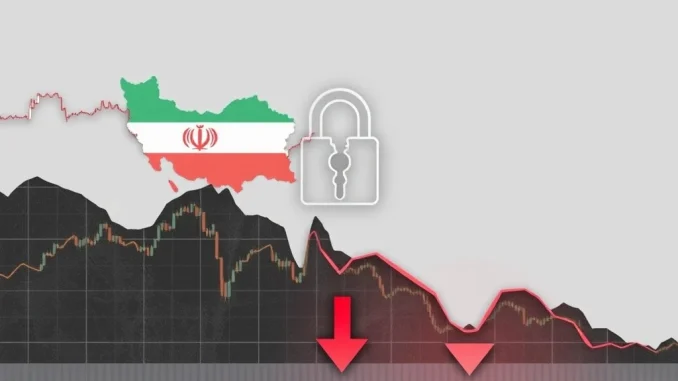
Iran’s cryptocurrency market has experienced a notable stagnation. Blockchain analytics firm **TRM Labs** reported this, as cited by Cointelegraph. The firm found that total **crypto trading volume Iran** reached $3.7 billion from January to July this year. This figure represents an 11% decrease compared to the same period last year. The decline was particularly sharp in June and July. This contraction points to significant underlying issues within the market.
Several factors contributed to this downturn. TRM Labs specifically highlighted two major influences. Firstly, the ongoing geopolitical conflict involving the country played a significant role. Secondly, a major security breach at a prominent exchange further eroded trust. These events collectively created a challenging environment for digital asset trading. Therefore, investors became more cautious.
Geopolitical Risks Crypto: A Major Headwind for Investment
Geopolitical tensions significantly affect global financial markets. In Iran, these tensions have directly impacted the **Iran crypto market**. The country’s conflict with Israel, for instance, created immense uncertainty. Such conflicts typically deter both domestic and international investment. Investors perceive higher risks when political stability is compromised. This perception leads to reduced trading activity and capital outflow. Consequently, market liquidity suffers.
The broader regional instability further exacerbates the situation. Economic sanctions already complicate Iran’s integration into global financial systems. Cryptocurrency often serves as an alternative for citizens in sanctioned countries. However, heightened geopolitical risks undermine even this alternative. Fear of escalating conflict or further economic isolation impacts all asset classes. Therefore, the crypto market is not immune to these external pressures. This creates a difficult operating environment.
The Nobitex Hack: Eroding Trust in Cryptocurrency Iran
A significant blow to the **Cryptocurrency Iran** ecosystem came from the **Nobitex hack**. Nobitex is recognized as Iran’s largest cryptocurrency exchange. The security breach at such a prominent platform severely damaged investor sentiment. When an exchange is compromised, users lose faith in the security of their assets. This loss of trust often leads to a withdrawal of funds. Furthermore, it discourages new participants from entering the market.
The specifics of the Nobitex incident caused widespread concern. An exchange hack can result in substantial financial losses for users. It also raises questions about the platform’s security protocols. TRM Labs specifically noted that this hack led to a sharp contraction in investor confidence. Consequently, the overall **crypto trading volume Iran** suffered. This incident underscores the critical need for robust security measures in digital asset exchanges. Without trust, market growth becomes unsustainable.
The Broader Landscape of Iran Crypto Market Challenges
The challenges facing the **Iran crypto market** extend beyond immediate conflicts and hacks. Iran operates under a complex web of international sanctions. These sanctions limit access to traditional global financial services. As a result, cryptocurrencies have offered an alternative for many Iranians. They use digital assets for remittances, international trade, and protecting savings from inflation. However, the current downturn complicates these uses.
The government’s stance on cryptocurrency also plays a role. While some mining operations are officially sanctioned, the broader regulatory framework remains evolving. This uncertainty can deter large-scale institutional investment. Furthermore, the lack of clear guidelines creates operational difficulties for exchanges. Therefore, the market struggles to achieve stable growth. This environment makes it difficult for **Cryptocurrency Iran** to thrive.
Navigating Uncertainty: Future of Crypto in Iran
Despite the current slump, the future of **Cryptocurrency Iran** is not entirely bleak. The underlying demand for alternative financial tools remains strong. Iranians still seek ways to circumvent sanctions and preserve wealth. However, significant hurdles must be overcome. Restoring investor confidence is paramount. This requires enhanced security measures across all exchanges. Clearer regulatory frameworks would also help.
The market’s recovery will depend on several factors. A de-escalation of **geopolitical risks crypto** would undoubtedly boost sentiment. Furthermore, improvements in cybersecurity practices are essential. The adoption of advanced encryption and multi-factor authentication can prevent future hacks. These steps are crucial for the long-term viability of the **Iran crypto market**. Ultimately, a more stable environment is needed for growth.
In conclusion, Iran’s cryptocurrency market faces a difficult period. Geopolitical conflicts and significant exchange hacks have severely impacted its growth. The 11% drop in **crypto trading volume Iran** highlights this challenge. Moving forward, addressing security vulnerabilities and mitigating geopolitical tensions will be critical. Only then can the **Iran crypto market** hope for a robust recovery and renewed investor trust.
Frequently Asked Questions (FAQs)
1. What caused the recent slump in Iran’s crypto market?
The slump is primarily attributed to two main factors: heightened geopolitical conflict involving Iran, particularly with Israel, and the hack of Nobitex, Iran’s largest cryptocurrency exchange. Both events severely eroded investor confidence and led to decreased trading activity.
2. How much did Iran’s crypto trading volume decrease?
According to TRM Labs, the total crypto trading volume in Iran from January to July this year was $3.7 billion. This represents an 11% decrease compared to the same period in the previous year, with a particularly pronounced decline in June and July.
3. What is the significance of the Nobitex hack?
Nobitex is Iran’s largest cryptocurrency exchange. Its hack significantly damaged investor sentiment and trust in the security of digital assets within the country. This breach contributed to a sharp contraction in the overall Iran crypto market activity.
4. How do geopolitical risks impact the Cryptocurrency Iran market?
Geopolitical risks, such as conflicts and regional instability, create uncertainty and deter investment. They increase perceived risk for traders, leading to reduced capital flow and lower crypto trading volume. This makes the market less attractive for both domestic and international participants.
5. What role do cryptocurrencies play for Iranians under sanctions?
Under international sanctions, cryptocurrencies have served as an alternative financial tool for many Iranians. They use digital assets for cross-border transactions, remittances, and as a hedge against local currency inflation, offering a way to bypass traditional banking restrictions.
6. What steps are needed for the Iran crypto market to recover?
Recovery requires addressing key issues. These include enhancing cybersecurity measures for exchanges, establishing clearer and more stable regulatory frameworks, and a de-escalation of geopolitical tensions. Restoring investor trust through robust security and clear policies is paramount for sustainable growth.