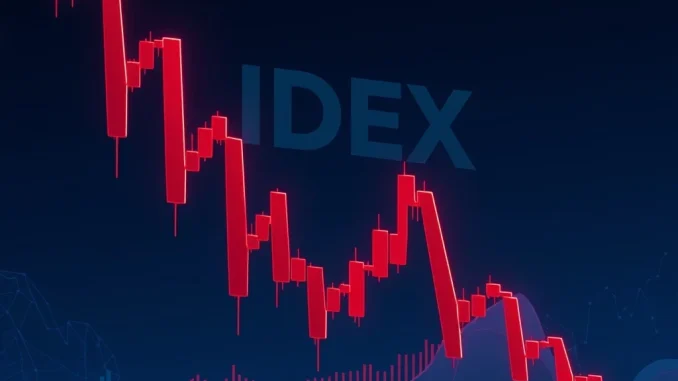
The world of cryptocurrencies is no stranger to dramatic price swings, but a recent alert sent shockwaves through the market: the IDEX Token reportedly experienced an unprecedented 558.34% drop within a single 24-hour period. While mathematically perplexing for a direct price decline, this reported figure underscores the extreme Crypto Volatility that continues to define the digital asset landscape. On July 25, 2025, IDEX’s price reportedly plummeted to $0.0301, a stark contrast to its remarkable gains of over 4700% in the preceding week and over 5500% in the last month. This bewildering intraday movement highlights the inherent risks and unpredictable nature of trading in the Decentralized Finance (DeFi) sector.
Understanding the IDEX Token’s Tumultuous Ride
The reported dramatic decline of the IDEX Token comes despite a period of significant positive momentum. For weeks leading up to this event, IDEX had been a standout performer, showcasing the immense potential for growth within the DeFi space. However, the sudden and sharp reversal serves as a potent reminder that even projects with strong fundamentals can be susceptible to market-wide shifts or unique internal pressures. This incident prompts crucial questions about market dynamics, algorithmic trading, and the overall investor sentiment that can lead to such extreme reported price movements.
What’s Driving This Extreme Crypto Volatility?
The cryptocurrency market is a complex ecosystem influenced by a myriad of factors. While the reported 558.34% drop for IDEX is an anomaly that warrants closer scrutiny regarding its exact calculation or context, it undeniably points to significant turbulence. Several factors typically contribute to such dramatic price action in the broader market:
- Liquidity Shocks: Large buy or sell orders in illiquid markets can cause prices to move drastically.
- News & Sentiment: Positive or negative news (e.g., regulatory crackdowns, major hacks, project updates) can trigger rapid investor reactions.
- Whale Activity: Large holders (whales) moving significant amounts of tokens can create ripples across the order book.
- Technical Malfunctions: Exchange glitches or data reporting errors can sometimes lead to misreported figures, though the impact on actual trading can still be real.
- Broader Market Trends: A general downturn or upturn in Bitcoin and Ethereum often pulls altcoins along.
The IDEX incident, regardless of the precise mathematical interpretation of the reported percentage, serves as a vivid illustration of the high-stakes environment where fortunes can shift in moments. It emphasizes the need for traders to exercise extreme caution and conduct thorough due diligence.
IDEX’s Strategic Moves: Reshaping the Decentralized Finance Landscape
Despite the recent market turbulence, IDEX has been proactively implementing significant changes to its platform, aiming to strengthen its position within the competitive Decentralized Finance (DeFi) landscape. These strategic initiatives demonstrate the project’s commitment to long-term growth and adaptation:
- Enhanced Liquidity: A primary focus has been on improving liquidity across its trading pairs, which is crucial for mitigating extreme price swings.
- Cross-Chain Bridging: The integration of a new cross-chain bridging solution is a pivotal step. This allows seamless asset transfers between various blockchain networks, enhancing accessibility and utility for a wider user base.
- User Experience: Efforts are ongoing to simplify the platform’s interface and trading mechanisms, making DeFi more approachable for both novice and experienced traders.
These developments are critical as IDEX navigates the evolving DeFi space, where innovation and user-centric design are paramount for sustained success.
Revamped IDEX Tokenomics: Incentivizing Long-Term Holders
A cornerstone of IDEX’s recent strategy has been a significant overhaul of its native Tokenomics Model. These adjustments are designed to create a more sustainable and rewarding ecosystem for its participants, particularly those committed to the project’s long-term vision:
- Staking Rewards Adjustments: The platform has refined its staking reward structure to better incentivize long-term holding and active participation in the network’s security.
- Revised Burn Schedule: A new token burn schedule has been implemented. This deflationary mechanism aims to gradually reduce the circulating supply of IDEX tokens over time, potentially increasing scarcity and value.
Such tokenomics updates are vital for any DeFi project, as they directly influence investor confidence, token utility, and the overall health of the ecosystem. By aligning incentives, IDEX aims to foster a more robust and engaged community.
Strengthening On-chain Governance and Community Engagement
In a bid to further decentralize its operations and empower its community, IDEX has placed a strong emphasis on enhancing its On-chain Governance framework. This move aligns with the broader ethos of decentralized autonomous organizations (DAOs) within the crypto space:
- New Voting Mechanism: A new voting system allows token holders to directly propose and vote on key platform upgrades and strategic decisions. This fosters a sense of ownership and collective responsibility.
- Community Initiatives: IDEX has launched various community-driven initiatives, including a dedicated token holder forum and regular Q&A sessions with the development team. These efforts aim to increase transparency and build trust.
By empowering its community through robust governance, IDEX seeks to build a more resilient and adaptable platform, capable of responding effectively to market demands and user feedback.
Navigating Regulatory Waters: IDEX’s Compliance Focus
As regulatory scrutiny intensifies across the global crypto landscape, IDEX has proactively taken steps to bolster its compliance infrastructure. This foresight is crucial for long-term sustainability and institutional adoption:
- Third-Party Compliance Audits: Partnerships with external compliance firms ensure regular audits and adherence to evolving regulatory standards.
- Enhanced KYC Checks: IDEX has updated its user verification process to include more robust Know Your Customer (KYC) checks. While this might temporarily slow down new user onboarding, it signals a commitment to operating within a legal and secure framework.
These measures are vital for building credibility, attracting institutional investors, and preparing the platform for future regulatory requirements, which are becoming an undeniable part of the crypto industry’s maturation.
The Road Ahead: What’s Next for the IDEX Token?
The journey for the IDEX Token is likely to remain dynamic. Analysts anticipate continued market volatility, influenced by both broader cryptocurrency trends and the successful execution of IDEX’s ambitious roadmap. The platform’s ability to deliver on its promises regarding its new Tokenomics Model, enhanced On-chain Governance, and commitment to regulatory compliance will be critical in shaping investor sentiment. While the recent reported price anomaly highlights the extreme risks, IDEX’s strategic advancements in Decentralized Finance suggest a forward-looking approach. As the crypto market evolves, projects like IDEX that prioritize innovation, community, and compliance may find themselves better positioned for long-term success, even amidst the inevitable periods of intense Crypto Volatility.
The IDEX story serves as a powerful reminder that while the crypto world offers immense opportunities, it demands vigilance, adaptability, and a deep understanding of the underlying technology and market forces. Investors and enthusiasts alike will be watching closely to see how IDEX navigates these turbulent waters and solidifies its place in the future of decentralized finance.
Frequently Asked Questions (FAQs)
1. What caused the reported 558.34% drop in IDEX Token price?
The article reports a dramatic 558.34% drop in the IDEX Token price within 24 hours on July 25, 2025. While a direct price drop cannot exceed 100%, this figure indicates extreme market turbulence and volatility. Potential contributing factors for such reported movements in the broader crypto market include liquidity shocks, news events, large whale movements, or even data reporting anomalies, all of which contribute to high Crypto Volatility.
2. How is IDEX adapting to the evolving Decentralized Finance (DeFi) landscape?
IDEX is actively reshaping its platform by implementing a major update to its Tokenomics Model, enhancing liquidity, and incentivizing long-term holders. It has also integrated a new cross-chain bridging solution to improve asset transfer between various blockchain networks, aiming to improve accessibility and usability within the Decentralized Finance space.
3. What changes have been made to IDEX’s Tokenomics Model?
IDEX has updated its native Tokenomics Model to enhance liquidity and incentivize long-term token holders. Key changes include adjustments to staking rewards and a revised burn schedule designed to reduce the circulating supply of tokens over time, aiming for a more sustainable ecosystem.
4. How is IDEX enhancing its On-chain Governance?
IDEX has introduced a new voting mechanism that allows token holders to propose and vote on key platform upgrades, decentralizing decision-making. This is part of a broader strategy to increase community participation and strengthen On-chain Governance, fostering greater transparency and trust among users.
5. What steps is IDEX taking regarding regulatory compliance?
Amid increasing global regulatory scrutiny, IDEX has partnered with a third-party compliance firm for regular audits and adherence to evolving standards. They have also updated their user verification process with enhanced KYC (Know Your Customer) checks, aiming to build institutional credibility and operate within a robust compliance framework.