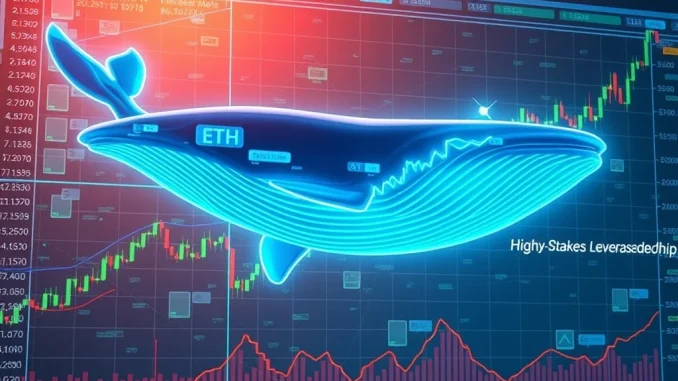
A dramatic shift has occurred in the high-stakes world of **crypto trading strategy**. A prominent **Hyperliquid whale**, known as AguilaTrades, has made a significant move. This top trader recently opened a substantial 15x **ETH long position**. This bold decision follows a series of three unsuccessful short trades. These previous attempts resulted in considerable financial losses for the whale.
Hyperliquid Whale Takes a New Direction
On-chain analyst @ai_9684xtpa reported this development on X. AguilaTrades, a notable trader on the **decentralized exchange** Hyperliquid, has committed 10,000 ETH to this new long position. The entry price for this substantial trade was set at $4,318.12. Consequently, the liquidation price now stands at $3,851.90. This means a drop to this level would result in the loss of the entire collateral for this specific trade.
This latest move marks a stark departure from the whale’s recent approach. Previously, AguilaTrades had focused on shorting Ethereum. These attempts, however, did not yield the desired results. In fact, they led to significant losses. The total deficit from these three consecutive ETH short positions amounted to approximately $3.7 million. Such a substantial loss often prompts a re-evaluation of one’s **crypto trading strategy**.
Understanding the 15x ETH Long Position
An **ETH long position** at 15x leverage signifies a strong bullish bet on Ethereum’s price. When a trader takes a long position, they anticipate the asset’s value will rise. Leveraging this position by 15 times amplifies both potential gains and losses. For example, a 1% increase in ETH’s price could yield a 15% return on the invested capital. Conversely, a small price drop can quickly lead to liquidation. The liquidation price of $3,851.90 is a critical threshold. Should Ethereum’s price fall to or below this point, the entire collateral backing the 10,000 ETH position would be lost. This highlights the inherent risks of **leveraged trading**.
Hyperliquid, as a **decentralized exchange**, facilitates these types of trades. It offers high leverage options to its users. Unlike centralized exchanges, DEXs operate without an intermediary. This provides traders with more control over their funds. However, it also places full responsibility for risk management on the individual trader. There are no central entities to intervene or offer protection in cases of rapid market movements. Therefore, understanding the mechanics of such platforms is crucial for participants.
The Psychology Behind a Trading Strategy Shift
Traders often adjust their strategies based on market conditions and past performance. AguilaTrades’ shift from repeated shorts to a massive **ETH long position** suggests a change in market outlook. After experiencing significant losses from shorting, the whale might now believe Ethereum is poised for an upward trend. This change could stem from various factors:
- Technical Analysis: New chart patterns might indicate a bullish reversal.
- Fundamental Shifts: News or developments related to Ethereum’s ecosystem could signal growth.
- Market Sentiment: A general shift in investor confidence towards ETH could be observed.
- Liquidation Avoidance: Learning from past liquidations might lead to stricter risk parameters.
Such a dramatic pivot is not uncommon in highly volatile markets. However, the sheer size of this 10,000 ETH position makes it particularly noteworthy. It also underscores the conviction of the trader in their new outlook. Every **crypto trading strategy** carries risk, but high leverage amplifies this significantly.
Navigating Risks in Leveraged Trading
**Leveraged trading** offers immense potential for profit. Yet, it also carries substantial risks. A 15x leverage means that even minor price fluctuations can have a major impact on a trader’s capital. For instance, a drop of just over 15% from the entry price would lead to liquidation for this specific **ETH long position**. Traders employing high leverage must maintain a vigilant eye on the market. They also need robust risk management protocols. This includes setting stop-loss orders or monitoring liquidation prices closely. On a **decentralized exchange** like Hyperliquid, these responsibilities fall entirely on the trader.
The previous losses incurred by AguilaTrades serve as a stark reminder. Even experienced whales can face significant setbacks. These losses highlight the unpredictable nature of cryptocurrency markets. They also emphasize the importance of adapting one’s **crypto trading strategy**. A successful strategy often involves continuous learning and adjustment. Furthermore, it requires a disciplined approach to risk. Without proper risk management, even the largest trading accounts can face severe drawdowns.
The Role of Decentralized Exchanges in Whale Trading
Hyperliquid is a leading **decentralized exchange** for perpetual futures. It enables high-leverage trades without traditional intermediaries. This setup offers several advantages. Traders can maintain custody of their assets. They also benefit from increased transparency. All transactions are recorded on the blockchain. However, this decentralized nature also means a lack of centralized customer support. There are no mechanisms for chargebacks or account recovery. Therefore, traders must exercise extreme caution. They must ensure their own security and manage their positions diligently. The accessibility of such high leverage on a DEX attracts large traders like AguilaTrades. They seek efficiency and liquidity for their substantial positions. The platform’s design facilitates rapid execution of complex **crypto trading strategy** decisions.
Market Implications of a Whale’s ETH Long Position
When a significant **Hyperliquid whale** opens such a large **ETH long position**, it can sometimes influence market sentiment. Other traders might observe these large moves. They could then interpret them as a signal of confidence in Ethereum’s future. This observation can lead to a ripple effect. Smaller traders might follow suit, creating positive buying pressure. However, this is not guaranteed. The market’s reaction can be complex and multi-faceted. Furthermore, the whale’s previous failed shorts demonstrate that even large positions do not guarantee success. The market remains inherently unpredictable. This particular trade will be closely watched. Its outcome could provide insights into the current market dynamics for Ethereum. It also highlights the ongoing evolution of **crypto trading strategy** among major players.
Conclusion: A High-Stakes Gamble or Calculated Move?
AguilaTrades’ decision to pivot to a 15x **ETH long position** on Hyperliquid is a bold one. It follows substantial losses from previous short positions. This move underscores the dynamic and often unforgiving nature of **leveraged trading** in cryptocurrency markets. The **Hyperliquid whale** has staked a considerable sum. This puts their new **crypto trading strategy** to the ultimate test. The outcome of this high-stakes trade will undoubtedly capture the attention of the crypto community. It serves as a potent reminder of both the immense opportunities and the significant risks present in the digital asset space.
Frequently Asked Questions (FAQs)
Q1: Who is AguilaTrades?
AguilaTrades is identified as a whale trader on the decentralized exchange Hyperliquid. This means they are an individual or entity with a very large amount of capital, capable of making significant trades that can potentially influence market dynamics.
Q2: What is a 15x ETH long position?
A 15x ETH long position means the trader is betting that the price of Ethereum (ETH) will increase, and they are using 15 times their initial capital (collateral) to amplify their potential gains. For example, if they put up $100,000, they are controlling $1,500,000 worth of ETH. This also means their losses are magnified, leading to a higher risk of liquidation.
Q3: What is Hyperliquid?
Hyperliquid is a decentralized exchange (DEX) that allows users to trade perpetual futures with high leverage. Unlike centralized exchanges, Hyperliquid operates on a blockchain, giving users more control over their funds and offering transparency, but also placing full responsibility for security and risk management on the trader.
Q4: What does ‘liquidation price’ mean?
The liquidation price is the specific price point at which a leveraged trading position will be automatically closed by the exchange to prevent the trader’s losses from exceeding their initial collateral. If the asset’s price reaches or crosses this point, the trader loses their entire collateral for that position.
Q5: Why would a trader switch from shorting to longing after losses?
A trader might switch their strategy after losses due to a change in their market outlook. This could be based on new technical analysis, fundamental developments, shifts in market sentiment, or simply a re-evaluation of their previous approach. The goal is often to adapt to current market conditions and seek new opportunities for profit.
Q6: What are the risks of leveraged trading on a decentralized exchange?
The primary risks include magnified losses that can lead to rapid liquidation, smart contract vulnerabilities inherent in DEXs, and the absence of centralized customer support or recovery mechanisms. Traders are solely responsible for managing their positions, security, and understanding the complex mechanics of the platform.