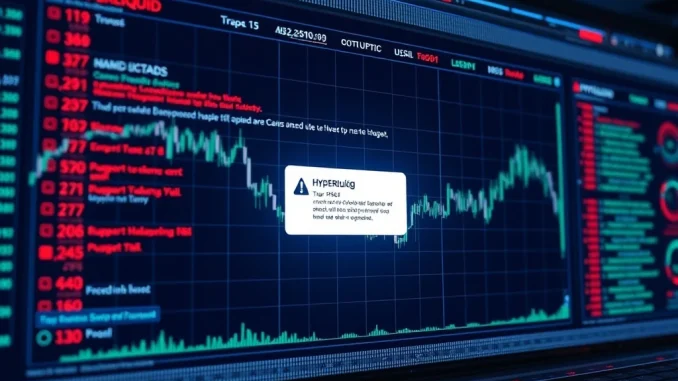
In March 2024, Hyperliquid, a decentralized perpetual futures exchange, faced critical system failures that left traders in chaos. During periods of high market volatility, users reported being unable to place new orders, close positions, or add margin to avoid forced liquidations. This incident has raised serious questions about the reliability of decentralized platforms when traders need swift execution the most.
What Caused Hyperliquid’s System Failures?
The issues, first highlighted by Wu Blockchain on X, stemmed from multiple technical challenges:
- Network congestion on Arbitrum delayed order confirmations
- Oracle inaccuracies potentially triggered erroneous liquidations
- Frontend-backend desynchronization misled users about trade status
The Impact on Order Execution During Volatility
Traders described harrowing scenarios where stop-loss orders failed to execute as prices moved against them. The table below summarizes key impacts:
| Issue | Consequence |
|---|---|
| Failed order placement | Traders couldn’t enter or exit positions |
| Margin deposit failures | Positions liquidated despite attempts to add collateral |
| Stop-loss non-execution | Unprotected positions suffered unexpected losses |
Decentralized Exchange Reliability Under Scrutiny
This incident highlights the fundamental trade-offs in decentralized systems. While they eliminate single points of failure, they lack mechanisms for real-time intervention during technical glitches. Hyperliquid’s team acknowledged the problem and promised updates, but the damage to trader confidence was already done.
Lessons for Traders Using Decentralized Platforms
To mitigate such risks in future:
- Diversify across multiple trading platforms
- Monitor network status during volatile periods
- Use smaller position sizes to limit exposure
- Have emergency contingency plans ready
The Future of Decentralized Trading Infrastructure
This event serves as a catalyst for needed improvements in DeFi infrastructure. The industry must develop better solutions for handling extreme market conditions, more rigorous smart contract audits, and improved user communication protocols.
Frequently Asked Questions
What exactly happened with Hyperliquid in March 2024?
Hyperliquid experienced system failures that disrupted order execution and liquidation processes during periods of high market volatility, leaving traders unable to manage their positions effectively.
How did Hyperliquid respond to the system failures?
The team acknowledged the issues, stated they were under investigation, and promised updates through official channels while urging users to monitor these for information.
What are the risks of trading on decentralized exchanges like Hyperliquid?
While they offer autonomy and self-custody, decentralized exchanges can suffer from technical issues during high volatility, with limited options for real-time intervention or support.
Can traders expect compensation for losses from these failures?
As of now, Hyperliquid hasn’t announced any compensation plans. Traders should monitor official communications for updates on this matter.
How can traders protect themselves from similar incidents?
Diversifying across platforms, using smaller position sizes, and having contingency plans can help mitigate risks when technical failures occur.