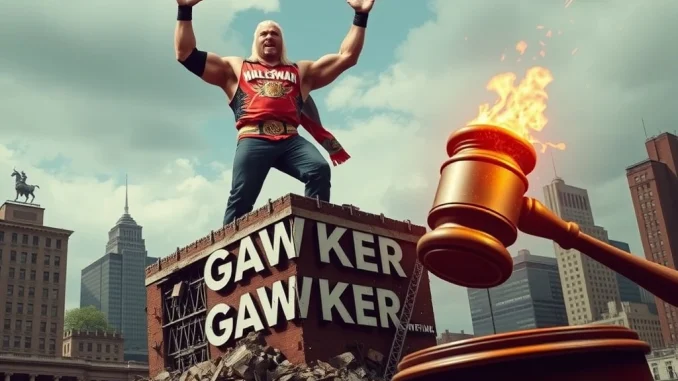
In an era where digital information spreads at lightning speed and personal privacy often feels like a relic of the past, the landmark legal battle involving professional wrestling icon Terry Bollea, famously known as **Hulk Hogan**, offers profound lessons. Much like the disruptive forces we see in decentralized technologies and cryptocurrency challenging traditional finance, Hogan’s unprecedented $140 million legal verdict against Gawker Media ignited a massive **media law shift**, fundamentally altering the landscape for online publishers and public figures alike. This case serves as a powerful reminder of the evolving boundaries between press freedom and individual rights in our increasingly interconnected world.
The Enduring Legacy of **Hulk Hogan**: Beyond the Ring
Terry Bollea, the legendary professional wrestler Hulk Hogan, passed away on July 24, 2025, at 71. His passing marks the end of a career that transcended sports entertainment, leaving an indelible mark on popular culture and, significantly, American media law. Hogan’s ‘Hulkamania’ persona transformed WWE into a global phenomenon, captivating millions with his charisma and iconic ring antics. From headlining the first WrestleMania to starring in Hollywood films, Hogan’s influence was undeniable. Yet, his legacy is not solely defined by his athletic prowess or entertainment ventures; it is equally shaped by a pivotal legal confrontation that reverberated across the digital publishing world.
Unpacking the **Gawker Bankruptcy**: A Precedent-Setting Case
The core of Hogan’s enduring legal legacy lies in his 2012 lawsuit against Gawker Media. The online publication had posted a leaked sex tape involving Hogan, leading to a fiercely contested invasion of privacy claim. In 2016, a Florida jury delivered a staggering **legal verdict** in Hogan’s favor: $115 million in compensatory damages and an additional $25 million in punitive damages, totaling $140 million. This monumental ruling sent shockwaves through the media industry. Here’s why it was so impactful:
- Financial Devastation: The immense judgment pushed Gawker Media, once a prominent voice in online journalism, into bankruptcy. Despite a subsequent $31 million settlement, the damage was irreversible.
- Billionaire Backing: The case gained notoriety due to the revelation that Silicon Valley billionaire Peter Thiel secretly funded Hogan’s lawsuit. Thiel, who had been ‘outed’ by Gawker years prior, openly admitted his desire to undermine the publication, adding a layer of strategic vengeance to the legal proceedings.
- Digital Journalism Under Scrutiny: The verdict forced a critical re-evaluation of editorial practices, particularly concerning the publication of private, sensitive content about public figures.
The Gawker bankruptcy stands as a stark reminder of the financial and reputational risks media outlets face when navigating the complex intersection of public interest and private lives.
The Profound **Media Law Shift**: Balancing Freedom and Privacy
The Hogan v. Gawker case became a benchmark for discussions surrounding press freedom versus individual **privacy rights**. Critics argued that the verdict, especially with its secret billionaire backing, could chill investigative journalism and empower wealthy individuals to silence critical reporting. Conversely, supporters contended it established a necessary boundary, affirming that even public figures retain a right to privacy, particularly concerning highly personal and non-newsworthy content.
This case highlighted several key tensions:
Press Freedom vs. Individual Privacy: A Balancing Act
| Perspective | Argument | Potential Impact |
|---|---|---|
| Press Freedom Advocates | Worried about a ‘chilling effect’ on journalism, fearing that large verdicts or strategic lawsuits could deter reporting on powerful individuals. | May lead to self-censorship, reduced investigative reporting, and less transparency from media outlets. |
| Privacy Rights Supporters | Emphasized the importance of protecting personal dignity and private life, even for celebrities, arguing that not all information is newsworthy. | Establishes stronger legal precedents for individuals seeking redress for privacy violations, particularly with sensitive content. |
The outcome undoubtedly prompted media organizations to review their content policies, especially regarding explicit or highly personal material. It underscored the increasing legal liability associated with digital publishing and the heightened scrutiny over what constitutes ‘public interest.’
What Does This **Legal Verdict** Mean for Public Figures and Platforms?
The Hogan **legal verdict** has left an enduring impact on how public figures manage their digital presence and how platforms approach content moderation. For celebrities and high-profile individuals, it reinforced the idea that legal recourse against privacy invasions is possible, even against powerful media entities. For online platforms and publishers, it served as a stern warning about the potential consequences of disseminating private information without proper justification.
This case also brought into sharp focus the role of third-party funding in litigation, a practice that can dramatically alter the power dynamics in legal battles. Peter Thiel’s involvement demonstrated how significant financial resources can be leveraged to achieve specific outcomes, raising ethical questions about the fairness and accessibility of justice.
Navigating **Privacy Rights** in the Digital Age
Hulk Hogan’s case remains a critical reference point in ongoing debates about **privacy rights** in the digital age. As technology continues to evolve and new forms of media emerge, the lines between public and private will likely become even blurrier. The challenge lies in crafting legal frameworks that protect individual privacy without stifling legitimate journalistic inquiry or the free flow of information essential for a democratic society.
For individuals, the case highlights the importance of digital literacy and awareness of personal data vulnerability. For media professionals, it underscores the ethical imperative to balance the public’s right to know with an individual’s right to privacy, especially in a world where content can go viral in seconds with irreversible consequences.
A Lasting Impression
Hulk Hogan’s passing closes a chapter on a life marked by both extraordinary professional success and profound personal and legal battles. His **legal verdict** against Gawker was more than just a personal victory; it was a seismic event that forced a re-evaluation of media ethics, the power of private funding in legal disputes, and the evolving nature of **privacy rights** in the digital realm. As media continues to transform, the legacy of Hogan’s fight will undoubtedly remain a subject of analysis, reminding us of the delicate balance required to navigate the complexities of information, freedom, and personal dignity in the 21st century.
Frequently Asked Questions (FAQs)
Q1: What was the main reason Hulk Hogan sued Gawker Media?
A1: Hulk Hogan, whose real name is Terry Bollea, sued Gawker Media for invasion of privacy after the website published a leaked sex tape involving him and the wife of a friend. He argued that the publication of the video was an egregious violation of his personal privacy.
Q2: How much was the legal verdict against Gawker, and what was its immediate impact?
A2: The jury awarded Hulk Hogan $140 million in damages ($115 million compensatory and $25 million punitive). This massive **legal verdict** ultimately led to Gawker Media filing for Chapter 11 bankruptcy, significantly impacting its operations and leading to its eventual sale and closure of its flagship site.
Q3: Who secretly funded Hulk Hogan’s lawsuit against Gawker?
A3: The lawsuit was secretly funded by Silicon Valley billionaire Peter Thiel. Thiel had a personal vendetta against Gawker, which had previously outed him as gay, and he sought to undermine the publication through this legal battle.
Q4: What was the broader significance of the Hulk Hogan vs. Gawker case for media law?
A4: The case triggered a significant **media law shift**, prompting widespread debate about the boundaries of press freedom versus individual **privacy rights**. It became a precedent-setting case for digital journalism, influencing how media outlets handle sensitive personal information and highlighting the potential for high-stakes litigation against online publishers.
Q5: How did this case affect the discussion around **privacy rights** for public figures?
A5: The Hogan case reinforced the idea that even public figures retain certain **privacy rights**, particularly concerning highly personal content that does not serve a legitimate public interest. It set a new benchmark for legal battles involving celebrities and online content, influencing subsequent discussions on digital privacy and accountability.