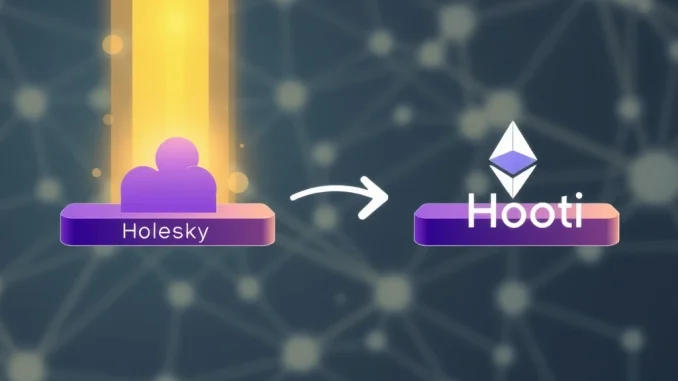
The Ethereum ecosystem is preparing for a significant transition. Consequently, the Holesky testnet, a crucial environment for developers, will soon cease operations. This change, moreover, marks a strategic evolution within the Ethereum network infrastructure. It highlights the ongoing commitment to robust and efficient development tools. Therefore, developers and staking operators must understand these upcoming shifts.
Holesky Testnet Shutdown Imminent
The Ethereum Foundation recently announced a major update. Specifically, they plan to shut down the Holesky testnet. This action will occur within two weeks following the upcoming Pectra upgrade. Cointelegraph initially reported this development. Indeed, Holesky has served as a vital testing ground for many projects. It allowed developers to test smart contracts and network upgrades safely. Therefore, its impending closure signals a move towards newer, more optimized solutions.
Understanding the Holesky Testnet’s Role
For context, testnets are essential for blockchain development. They mirror the mainnet’s functionality without using real value. This allows for experimentation and bug fixing. Holesky testnet specifically offered a large-scale environment. It provided a significant number of validators. This made it ideal for testing staking operations and infrastructure. Furthermore, the foundation continuously evaluates its testnet strategy. This ensures the best resources are available to the community.
The Pectra Upgrade and Its Role
The Pectra upgrade is central to this transition. The Ethereum Foundation intends to deploy Pectra on the Holesky testnet first. This deployment is scheduled for the end of September. This critical step ensures the upgrade’s stability. Subsequently, after successful testing, a mainnet launch will follow in November. Pectra is expected to bring various enhancements to the Ethereum network. These improvements will boost efficiency and security. Developers are closely monitoring its progress.
What Pectra Means for Ethereum
Pectra represents a combination of the Prague and Electra upgrades. It will introduce several key features. For instance, it aims to refine the execution layer. Moreover, it will enhance the consensus layer. These changes are vital for Ethereum’s long-term scalability. They also support its decentralization goals. The successful deployment on a testnet is a prerequisite. It minimizes risks before the mainnet integration. Ultimately, this prepares the network for future growth.
Transitioning to the Hooti Testnet
Following the Holesky testnet shutdown, a new environment will take center stage. Staking operators and infrastructure currently using Holesky will migrate. They will move to the Hooti testnet. Hooti is designed to offer similar capabilities. However, it will be optimized for future Ethereum network developments. This migration ensures continuity for testing activities. It also provides a stable platform for ongoing innovation. The Ethereum Foundation is providing guidance for this transition.
Preparing for the Hooti Migration
Staking operators must prepare for this move. They should review the migration guidelines. These will be published by the Ethereum Foundation. The goal is a smooth transition. Infrastructure providers will also need to adjust their setups. Hooti aims to be a robust successor. It will support the evolving needs of the developer community. This forward-looking approach is characteristic of Ethereum’s development cycle. Therefore, timely action is advised.
Implications for the Ethereum Network
This strategic shift has broader implications. It signals a continuous refinement of Ethereum’s infrastructure. The retirement of Holesky testnet is not a setback. Instead, it represents progress. It allows resources to be focused on newer, more efficient testnets. This ultimately benefits the entire Ethereum network. Developers can expect a more streamlined testing experience. This supports the rapid deployment of new features and dApps. Consequently, the ecosystem will thrive.
Ensuring Network Stability and Innovation
The Ethereum Foundation prioritizes network stability. Therefore, thorough testing on dedicated environments is crucial. Migrating to Hooti helps maintain this standard. It ensures that the core Ethereum network remains secure. Furthermore, it fosters an environment for innovation. Developers can continue to build and experiment confidently. This proactive management of testnets is key to Ethereum’s success. It safeguards the platform’s future.
Ethereum Foundation’s Strategic Move
The decision to retire Holesky is a strategic one. It reflects the Ethereum Foundation‘s commitment to efficiency. They constantly seek to optimize development resources. This move aligns with the broader roadmap for the Ethereum network. It ensures that the tools available to developers are always cutting-edge. The foundation aims to provide the best possible support. This facilitates a vibrant and productive ecosystem. Thus, the community benefits greatly.
In conclusion, the Holesky testnet is nearing its end. Its shutdown follows the Pectra upgrade deployment. This significant change will see a migration to the Hooti testnet. This strategic decision by the Ethereum Foundation aims to enhance the overall Ethereum network development experience. It ensures a more optimized and forward-looking infrastructure for all participants. The community looks forward to these vital upgrades.
Frequently Asked Questions (FAQs)
Q1: What is the Holesky testnet?
A1: The Holesky testnet is a public test network for the Ethereum blockchain. It allows developers to test applications and upgrades in a simulated environment without using real Ether. It specifically provided a large-scale testing ground for staking operations.
Q2: When will the Holesky testnet be shut down?
A2: The Holesky testnet is scheduled to shut down within two weeks after the Pectra upgrade is deployed on it. The Pectra upgrade deployment on Holesky is planned for the end of September.
Q3: What is the Pectra upgrade?
A3: The Pectra upgrade is a significant upcoming update for the Ethereum network. It combines elements from the Prague and Electra upgrades. It aims to introduce improvements to both the execution and consensus layers of Ethereum.
Q4: Where will staking operators migrate after Holesky shuts down?
A4: Staking operators and infrastructure currently on the Holesky testnet will migrate to the Hooti testnet. This new testnet will serve as the primary testing environment moving forward.
Q5: What is the purpose of the Hooti testnet?
A5: The Hooti testnet will replace Holesky as a crucial testing environment. It is designed to support future Ethereum network developments. It offers a stable platform for developers and staking operators to test new features and upgrades.
Q6: Why is the Ethereum Foundation shutting down Holesky?
A6: The Ethereum Foundation is shutting down Holesky as part of its ongoing strategy to optimize development resources. This move ensures that the community has access to the most efficient and relevant testing environments for the evolving Ethereum network.