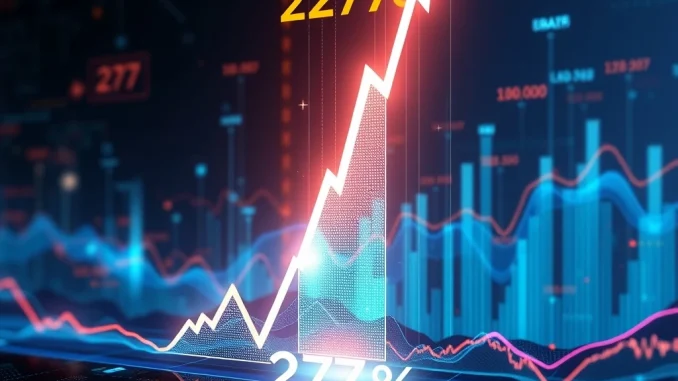
In the fast-paced world of digital assets, unexpected movements are the norm, but a recent event has sent ripples across the market: HFT, the token linked to high-frequency trading, witnessed an astonishing HFT surge of 277.47% in just 24 hours. This dramatic spike, occurring amidst broader crypto market volatility, has captivated traders and analysts alike. What exactly fueled this explosive growth, and what does it signify for the future of automated trading?
Understanding the HFT Surge Phenomenon
The sudden ascent of HFT on July 27, 2025, caught many off guard. While a 277.47% gain in a single day is remarkable, especially when coupled with a 631.46% increase over seven days, it’s crucial to place this in context. The token has experienced significant long-term declines, with a 2821.71% drop over one month and a staggering 5411.3% decline over one year. This divergence between short-term gains and long-term trends highlights the inherent complexities and risks within the crypto space.
High-frequency trading (HFT) itself refers to automated trading platforms that execute a large number of orders at extremely high speeds, leveraging complex algorithms to capitalize on tiny price discrepancies. The recent HFT surge suggests that something fundamental shifted, allowing these systems to find new opportunities.
Regulatory Shifts Driving High-Frequency Trading
One of the primary catalysts identified for this dramatic movement is a series of recent regulatory shifts crypto markets are experiencing. Changes in trading protocols and oversight have introduced new parameters, creating a fresh landscape for high-frequency trading strategies. Analysts suggest these adjustments temporarily benefit algorithmic traders by:
- Reducing Latency: New rules might streamline data transmission, allowing for faster order execution.
- Improving Market Data Access: Enhanced access to real-time market feeds gives HFT firms an edge.
- Defining Clearer Boundaries: While often seen as restrictive, clear regulations can sometimes create defined pathways for certain trading styles to thrive, at least in the short term.
Major industry players are already recalibrating their systems, investing in enhanced data processing and tighter integration with real-time analytics platforms to align with the revised framework. This proactive adaptation is a testament to the industry’s agility in navigating evolving compliance landscapes.
Navigating Crypto Market Volatility
The broader crypto market remains notoriously volatile, and the HFT surge is a stark reminder of this. While the immediate outlook may favor those engaged in algorithmic trading, the long-term picture remains susceptible to significant swings. The contrast between short-term gains and long-term declines in HFT’s value underscores a critical lesson for all participants: short-term spikes do not necessarily indicate a sustained recovery or a fundamental shift in value.
Traders must exercise caution and conduct thorough due diligence. Relying solely on 24-hour or seven-day performance metrics in such a dynamic environment can be misleading. A holistic view, incorporating historical performance and market fundamentals, is essential for informed decision-making.
The Role of Algorithmic Trading and Tech Upgrades
Beyond regulatory changes, technological advancements have played a pivotal role in bolstering HFT’s short-term momentum. The backbone of high-frequency trading relies heavily on cutting-edge technology. Recent upgrades across the trading infrastructure include:
- Faster Execution Speeds: Millisecond advantages can translate into significant profits in HFT.
- Improved Latency Management: Minimizing delays in data processing and order routing.
- Enhanced Machine Learning Models: More sophisticated AI-driven algorithms can identify patterns and execute trades with greater precision and speed.
These technological leaps enable traders to respond even more effectively to market shifts, contributing significantly to the recent upward movement. The integration of such advancements is a key factor driving the current performance spike, demonstrating the ever-increasing synergy between technology and finance.
What Do These Regulatory Shifts Mean for You?
For individual investors and seasoned traders alike, understanding these regulatory shifts crypto ecosystems are undergoing is paramount. While the HFT surge is exciting, it’s a nuanced situation:
- Short-Term Opportunity: Algorithmic traders with advanced systems may find immediate benefits from reduced latency and improved data access.
- Long-Term Caution: The significant long-term decline of HFT indicates that underlying value propositions might still be challenged.
- Increased Complexity: The interplay between regulations, technology, and market behavior makes predicting sustained trends difficult.
Market participants are urging continued monitoring of these evolving conditions. The current gains are viewed as part of a larger, more complex narrative that includes both opportunities for rapid profit and significant inherent risks.
The HFT surge serves as a potent reminder of the intricate dance between regulation, technology, and market dynamics in the cryptocurrency world. While the immediate gains are impressive, the broader context of long-term declines and ongoing crypto market volatility necessitates a cautious yet informed approach. As the digital asset landscape continues to evolve, staying ahead of these shifts will be key to navigating its inherent challenges and unlocking its potential rewards.
Frequently Asked Questions (FAQs)
What is HFT (High-Frequency Trading)?
High-Frequency Trading (HFT) refers to a type of algorithmic trading characterized by extremely fast execution speeds, high order-to-trade ratios, and short holding periods for positions. HFT firms use powerful computers and complex algorithms to execute a large number of orders in fractions of a second, often capitalizing on tiny price discrepancies across different exchanges.
Why did HFT surge by 277% recently?
The recent 277% HFT surge is primarily attributed to a combination of factors: recent regulatory shifts that have created new parameters for trading strategies, and significant technological upgrades across trading infrastructure. These changes have temporarily benefited algorithmic traders by reducing latency and improving access to market data.
How do regulatory changes impact HFT?
Regulatory changes can significantly impact HFT by altering trading protocols, data access rules, and oversight. In this case, new regulations appear to have streamlined certain aspects, allowing HFT firms to operate with greater efficiency, leading to reduced latency and improved access to critical market information, which can translate into short-term gains.
What role do technology upgrades play in HFT performance?
Technology upgrades are fundamental to HFT performance. Recent advancements like faster execution speeds, improved latency management, and enhanced machine learning models have enabled HFT systems to react more quickly and precisely to market shifts. These technological leaps are crucial for maintaining the competitive edge required for high-frequency trading.
Is the recent HFT surge sustainable?
While the short-term HFT surge is notable, analysts highlight mixed implications. The significant long-term decline (over one month and one year) suggests that the recent gains might be temporary and driven by specific, immediate market conditions and regulatory adjustments. The broader market remains susceptible to long-term volatility, and sustained growth for HFT is not guaranteed based solely on these short-term spikes.
What should traders consider regarding HFT’s performance?
Traders should consider the interplay between regulatory changes, technological enhancements, and overall market behavior. While the 24-hour and seven-day gains are encouraging, they are part of a larger, more complex narrative. It’s crucial to look beyond short-term performance, understand the underlying drivers, and acknowledge the inherent risks and long-term trends in crypto market volatility before making trading decisions.