In a groundbreaking move that sends ripples across the global cryptocurrency landscape, Greek authorities have achieved a monumental milestone: their very first Greece crypto freeze. This isn’t just any seizure; it’s a significant step in tracking down funds allegedly tied to a staggering $1.5 billion hack, bringing a spotlight onto the intricate web of digital asset crime and international cooperation. For anyone following the volatile world of crypto, this development underscores the growing sophistication of law enforcement in combating illicit financial flows in the digital realm.
The Unprecedented Greece Crypto Freeze: A Landmark Moment
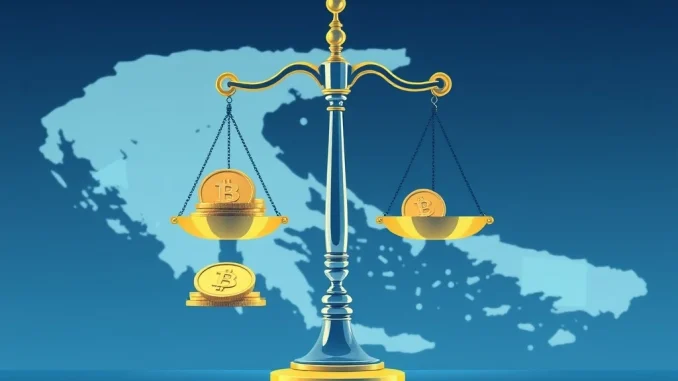
The Hellenic Police’s Cybercrime Division has officially announced the freezing of substantial cryptocurrency assets, marking a historic first for Greece. These funds, totaling $72 million, were meticulously traced to a wallet associated with a Greek exchange. This operation represents a critical juncture, demonstrating Greece’s commitment and capability in navigating the complex world of blockchain forensics and asset recovery. While $72 million has been secured, the scale of the original incident means that a vast sum, specifically $870 million, remains unaccounted for, part of the larger $1.5 billion alleged total. This ongoing pursuit highlights the persistent challenges in recovering stolen digital assets, even as authorities make significant inroads.
This landmark crypto seizure wasn’t a random occurrence. It was the culmination of diligent investigative work, leveraging blockchain’s inherent transparency to follow the digital trail. The successful identification and freezing of these assets serve as a potent warning to cybercriminals that the pseudonymous nature of crypto does not grant absolute impunity. It also signals a growing trend where national law enforcement agencies are developing the expertise and infrastructure necessary to act decisively in the crypto domain.
Diving Deeper into the Bybit Hack: A Multi-Billion Dollar Heist
The frozen funds are reportedly tied to a colossal $1.5 billion incident, widely referred to as the Bybit hack. It’s crucial to clarify that while the funds are ‘tied to’ this event, it doesn’t necessarily mean Bybit’s core systems were directly breached for this entire sum. Often, in such large-scale incidents, funds stolen from various sources (e.g., decentralized finance protocols, bridges, other exchanges, or individual wallets) are then laundered or moved through multiple platforms, including major exchanges like Bybit, making the tracing process incredibly complex.
The incident highlights several vulnerabilities that criminals exploit:
- Smart Contract Exploits: Flaws in the code of decentralized applications can be exploited to drain vast sums.
- Phishing and Social Engineering: Tricking users into revealing private keys or login credentials remains a prevalent method.
- Bridge Vulnerabilities: Cross-chain bridges, designed to transfer assets between different blockchains, have been frequent targets due to their complex architecture.
- Laundering through Exchanges: Stolen funds are often fragmented and moved through various exchanges to obscure their origin, requiring sophisticated forensic tools to track.
The sheer scale of the $1.5 billion figure underscores the immense financial incentives driving these criminal enterprises and the devastating impact they have on individuals and the broader crypto ecosystem. The fact that only a fraction has been recovered emphasizes the long road ahead for victims.
Unmasking the Lazarus Group: North Korea’s Cyber Warfare Arm
At the heart of many high-profile crypto thefts, including the one linked to this Greek seizure, is the notorious Lazarus Group. This state-sponsored hacking collective, widely believed to be operated by North Korea’s Reconnaissance General Bureau, has gained infamy for its sophisticated cyber operations aimed at generating revenue for the isolated nation. Their primary objective: to circumvent international sanctions and fund North Korea’s weapons programs, particularly its nuclear and ballistic missile development.
The Lazarus Group’s modus operandi often involves:
- Sophisticated Malware: Deploying custom-built malware designed to infiltrate networks and steal credentials.
- Targeting Crypto Businesses: Focusing on exchanges, DeFi protocols, and venture capital firms with significant crypto holdings.
- Elaborate Laundering Techniques: Utilizing mixers, multiple wallet addresses, and various exchanges to obscure the trail of stolen funds.
- Patience and Persistence: Carrying out long-term campaigns, sometimes over months, to achieve their objectives.
Their track record includes some of the largest crypto heists in history, such as the $625 million Ronin Bridge hack (Axie Infinity) and the $100 million Harmony Bridge hack. The identification of Lazarus Group’s involvement in this case further solidifies the link between state-sponsored cybercrime and the illicit financing of dangerous regimes, making the North Korea cybercrime threat a global concern that extends beyond financial markets.
The Mechanics of Crypto Seizure: How Authorities Track Digital Assets
How exactly do authorities like those in Greece manage a crypto seizure? It’s a complex process that combines traditional law enforcement techniques with cutting-edge blockchain analytics. Unlike traditional banking, where intermediaries can freeze funds relatively quickly, crypto assets reside on decentralized ledgers. However, every transaction is publicly recorded, creating a permanent, immutable trail.
Key steps and challenges in tracking and seizing crypto include:
- Initial Tracing: Using blockchain forensic tools to follow the movement of stolen funds from the point of compromise through various wallets and transactions.
- Exchange Collaboration: Working with centralized exchanges (CEXs) that often have KYC (Know Your Customer) and AML (Anti-Money Laundering) policies. If stolen funds land on a CEX, authorities can issue legal requests to freeze accounts and identify the account holder.
- Wallet Identification: Identifying specific wallet addresses linked to suspects. This often involves correlating on-chain activity with off-chain intelligence.
- Legal Frameworks: Developing and applying appropriate legal frameworks to issue freezing orders, search warrants, and extradition requests for digital assets.
- International Cooperation: Given the borderless nature of crypto, collaboration between law enforcement agencies across different countries is paramount.
The success of the Greece crypto freeze is a testament to the increasing sophistication of these methods and the growing global network dedicated to combating crypto-related crime. However, the pseudonymous nature of many wallets and the existence of decentralized exchanges (DEXs) and mixers still pose significant hurdles for investigators.
Combating North Korea Cybercrime: Global Efforts and Future Challenges
The global community is increasingly aware of the severe threat posed by North Korea cybercrime. The United States, the United Nations, and various international bodies have imposed sanctions on North Korea, specifically targeting entities and individuals involved in its illicit financing activities. However, the country’s reliance on cyber theft as a primary revenue stream means the battle is far from over.
Efforts to counter this threat include:
- Enhanced Intelligence Sharing: Agencies worldwide are sharing threat intelligence to track Lazarus Group’s evolving tactics.
- Sanctions Enforcement: Strict enforcement of existing sanctions against individuals and entities facilitating North Korea’s illicit activities.
- Capacity Building: Helping countries, especially those with emerging crypto markets, to develop their own capabilities in blockchain forensics and cybercrime investigation.
- Public Awareness: Educating individuals and businesses about the risks of phishing, social engineering, and the importance of robust cybersecurity practices.
The challenge remains immense. The rapid evolution of blockchain technology, the increasing decentralization of financial services, and the political complexities of dealing with a rogue state like North Korea mean that law enforcement and cybersecurity professionals must constantly adapt. The Bybit hack saga, and the subsequent Greece crypto freeze, serve as a stark reminder of the persistent and evolving nature of this global threat.
The Broader Implications for Crypto Security and Regulation
This landmark seizure has significant implications beyond just the immediate recovery of funds. It reinforces the idea that:
- Crypto is Not Untraceable: While challenging, tracking illicit crypto funds is becoming increasingly feasible for skilled investigators.
- Regulatory Scrutiny Will Intensify: Governments worldwide will likely push for stricter regulations on crypto exchanges and services to enhance KYC/AML compliance and facilitate asset recovery.
- International Cooperation is Key: Cross-border collaboration is essential to tackle crimes that transcend national boundaries.
- Security is Paramount: Both individual users and crypto platforms must prioritize robust security measures to protect against sophisticated attacks.
Conclusion: A Glimmer of Hope in the Fight Against Crypto Crime
The Greece crypto freeze represents a significant victory in the ongoing battle against sophisticated cybercrime, particularly that orchestrated by groups like the Lazarus Group. While the vast majority of the funds from the alleged $1.5 billion Bybit hack remain unrecovered, this successful crypto seizure sends a clear message: the digital frontier is not a lawless one. It highlights the growing capabilities of law enforcement to penetrate the veil of anonymity in the crypto world and hold perpetrators accountable. As nations continue to bolster their cyber defense and forensic capabilities, we can anticipate more such successes, bringing a much-needed sense of security to the rapidly evolving digital asset ecosystem. This historic moment for Greece underscores the global commitment to making the crypto space safer for everyone.
Frequently Asked Questions (FAQs)
Q1: What is the significance of the Greece crypto freeze?
The Greece crypto freeze is significant because it marks the country’s first successful seizure of cryptocurrency assets linked to a major international cybercrime. It demonstrates Greece’s growing capability in blockchain forensics and asset recovery, contributing to global efforts against illicit financial flows in the digital realm.
Q2: How was the $72 million in crypto traced and frozen?
The funds were traced through meticulous blockchain forensics, following the digital trail of transactions from the original hack. Once identified, Greek authorities collaborated with relevant entities, likely including the Greek exchange where the wallet was tied, to issue legal orders for the freezing of the assets, preventing their further movement.
Q3: What is the Lazarus Group and why are they involved in crypto hacks?
The Lazarus Group is a state-sponsored cyber-hacking organization widely attributed to North Korea. They are involved in crypto hacks primarily to generate revenue for the North Korean regime, circumventing international sanctions and funding the country’s weapons programs. They employ sophisticated techniques to target exchanges, DeFi protocols, and other crypto entities.
Q4: Does the “Bybit hack” mean Bybit’s exchange was directly breached for $1.5 billion?
While the funds are ‘tied to’ the $1.5 billion Bybit hack, it typically implies that the stolen funds were laundered through or associated with accounts on Bybit, rather than Bybit’s core systems being directly breached for that entire amount. Large hacks often involve funds moving through multiple platforms to obscure their origin.
Q5: What challenges do authorities face in recovering stolen cryptocurrency?
Authorities face several challenges, including the pseudonymous nature of cryptocurrency wallets, the borderless nature of blockchain transactions requiring international cooperation, the rapid evolution of crypto technologies, and the use of sophisticated laundering techniques like mixers. Recovering funds often requires legal frameworks, strong forensic capabilities, and collaboration with exchanges.
Q6: How can individuals protect themselves from similar crypto hacks?
Individuals can protect themselves by using strong, unique passwords and two-factor authentication (2FA), storing large amounts of crypto in hardware wallets (cold storage), being wary of phishing attempts and suspicious links, and only using reputable and secure exchanges. Regularly updating software and being informed about common scam tactics are also crucial.