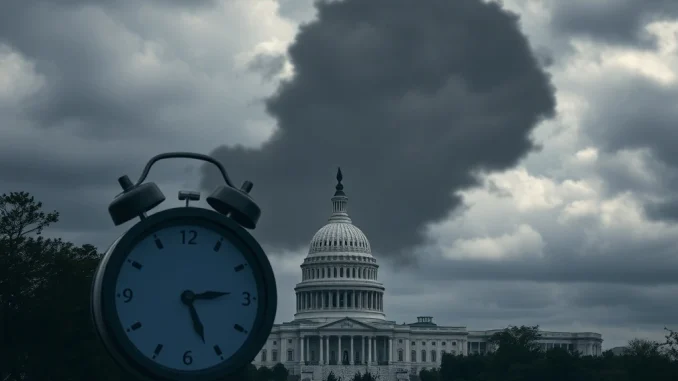
President Trump’s recent statement signals an urgent concern for national finance: a federal government shutdown is likely. This news reverberates across traditional markets. However, it also prompts crucial questions about its potential economic impact on the volatile crypto market and broader financial stability.
Understanding the Impending Government Shutdown
A government shutdown occurs when Congress fails to pass appropriations bills or continuing resolutions. These measures fund federal agencies and operations. Consequently, non-essential government services cease. Many federal employees are furloughed without pay. Essential services, however, often continue. These include national security and emergency response. Past shutdowns demonstrate varying durations and impacts. For example, the 2018-2019 shutdown lasted 35 days. It affected hundreds of thousands of workers. This created significant disruption across the nation.
Direct Economic Impact and Financial Stability Concerns
A government shutdown directly impacts numerous sectors. Federal workers face immediate financial hardship. They often miss paychecks. This reduces consumer spending. Small businesses reliant on government contracts also suffer. Their projects may halt or face delays. Consequently, this can slow economic growth. Analysts frequently warn of a ripple effect. This effect extends throughout the economy. Furthermore, a prolonged shutdown can erode public confidence. It signals instability in governance. This uncertainty contributes to broader financial stability concerns. It makes investors cautious. They might seek safer assets. This shift can impact market liquidity. Ultimately, the overall economic impact can be significant. It affects both individuals and businesses nationwide.
Potential Repercussions for the Crypto Market
The crypto market, while distinct from traditional finance, does not operate in a vacuum. A government shutdown can create indirect pressures. Investors often react to macroeconomic instability. They might view a shutdown as a sign of broader economic weakness. This perception can trigger market volatility. Bitcoin and other cryptocurrencies sometimes act as safe havens. However, they can also experience sell-offs during periods of extreme uncertainty. Moreover, a shutdown could delay crucial regulatory decisions. Agencies like the SEC or CFTC might face staffing reductions. This could postpone rulings on new crypto products. It might also slow enforcement actions. Such delays create regulatory ambiguity. This can hinder innovation and investment within the crypto market. Therefore, market participants watch these developments closely.
Federal Funding and Digital Asset Oversight
Regulatory bodies play a vital role in the digital asset space. Their operations rely on consistent federal funding. A shutdown directly impacts these agencies. Staff may be furloughed. This reduces capacity for ongoing investigations. It also delays reviews of new applications. For instance, decisions on spot Bitcoin ETFs could face postponements. Enforcement actions against illicit crypto activities might slow down. This creates a less predictable environment. Developers and entrepreneurs need clear guidelines. A lack of clarity due to reduced federal funding can stifle growth. It also potentially exposes consumers to greater risks. Consequently, the stability of the regulatory framework is paramount. Any disruption can have far-reaching effects on the industry’s trajectory.
Navigating Uncertainty: Strategies for Crypto Investors
Investors in the crypto market must remain vigilant during periods of economic uncertainty. A government shutdown highlights the need for a robust strategy. Firstly, diversification is key. Spreading investments across various asset classes can mitigate risk. Secondly, staying informed is crucial. Monitor news from both traditional finance and crypto sectors. Understand how macroeconomic events influence market sentiment. Thirdly, consider a long-term perspective. Short-term volatility often accompanies political or economic disruptions. However, the underlying fundamentals of strong projects may remain intact. Finally, practice responsible risk management. Avoid making impulsive decisions based on headlines. Consult financial advisors if needed. These steps can help navigate potential market turbulence effectively.
President Trump’s warning about a likely government shutdown presents a significant challenge. It carries potential for broad economic impact and concerns about financial stability. While the crypto market often exhibits unique dynamics, it remains sensitive to such macroeconomic shifts. Disruptions in federal funding can affect regulatory oversight. Therefore, market participants must prepare for potential volatility. Staying informed and adopting a measured approach will be crucial. This ensures resilience in an evolving financial landscape.
Frequently Asked Questions (FAQs)
Q1: What is a government shutdown?
A government shutdown happens when Congress fails to pass funding legislation. It causes non-essential federal operations to cease. Many federal employees are furloughed without pay.
Q2: How does a government shutdown create economic impact?
A shutdown creates economic impact by reducing consumer spending due to unpaid federal workers. It also halts government contracts. This can slow overall economic growth and erode public confidence.
Q3: Will a government shutdown directly affect my crypto investments?
While not a direct impact, a government shutdown can indirectly affect the crypto market. It creates general economic uncertainty and potential delays in regulatory decisions. This might lead to increased market volatility.
Q4: How might federal funding issues impact crypto regulation?
Issues with federal funding can reduce staffing at regulatory bodies like the SEC. This could delay rulings on new crypto products or slow down enforcement actions. Such delays create regulatory ambiguity for the industry.
Q5: What should crypto investors do during a government shutdown?
Crypto investors should prioritize diversification. They should also stay informed about market developments. Maintaining a long-term investment perspective is advisable. Practicing responsible risk management is always crucial.