While the digital asset landscape constantly evolves, offering new investment frontiers, traditional safe-havens also demonstrate remarkable resilience. Indeed, the gold price has recently commanded significant attention, reaching an extraordinary milestone. This development highlights a broader trend in global finance, where investors balance innovative digital ventures with established stores of value. Understanding the forces behind gold’s ascent is crucial for any investor.
Gold Price Reaches Unprecedented Heights
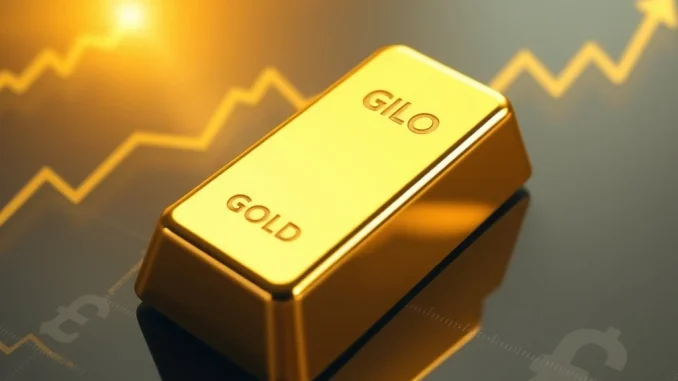
The spot price of gold has once again set a new record. It reached an impressive $3,660 per ounce. This significant milestone was reported by Walter Bloomberg, a recognized source for market data. Such a surge underscores gold’s enduring appeal in uncertain times. Furthermore, this new benchmark surpasses all previous highs, marking a historic moment for the precious metal.
This achievement reflects a sustained period of growth for gold. Investors worldwide are closely monitoring its performance. The consistent upward trajectory of the gold price indicates strong underlying demand. Many factors contribute to this robust performance. Market analysts are now examining the broader implications of this unprecedented rise.
Understanding the Drivers Behind the All-Time High
Several key factors contribute to gold reaching an all-time high. First, geopolitical tensions often drive demand for safe-haven assets. When global stability is uncertain, investors seek refuge in gold. Second, persistent inflation concerns play a significant role. Gold traditionally serves as a hedge against rising prices, protecting purchasing power.
Moreover, central banks globally have increased their gold reserves. This institutional buying signals confidence in gold as a store of value. Consequently, this adds substantial buying pressure to the market. Furthermore, a weaker U.S. dollar can make gold more attractive to international buyers. This makes dollar-denominated gold cheaper in other currencies. These combined forces create a powerful upward momentum.
The Broader Gold Market Landscape
The current state of the gold market reflects complex global economic conditions. Supply-side factors, such as mining output, generally remain stable. However, demand often fluctuates based on investor sentiment and economic outlooks. Jewelry demand, industrial applications, and central bank purchases all influence the market dynamics.
Futures markets provide insights into future price expectations. Current futures contracts often show positive outlooks for gold. This suggests continued investor confidence. Therefore, the overall sentiment within the gold market appears strongly bullish. Understanding these various components is vital for market participants. This helps in anticipating future movements and making informed decisions.
Precious Metals and Portfolio Diversification
Gold stands as a prominent member of the precious metals group. Other notable metals include silver, platinum, and palladium. Each of these metals possesses unique industrial and investment characteristics. However, gold remains the primary choice for wealth preservation. Investors often use gold to diversify their portfolios effectively.
Diversification aims to reduce overall portfolio risk. Gold typically exhibits a low correlation with traditional assets like stocks and bonds. This means it often moves independently or inversely to them. Consequently, adding gold can help stabilize returns during market downturns. This strategy remains a cornerstone for prudent financial planning. The role of precious metals in a balanced portfolio is thus significant.
Investing in Gold: What Investors Should Know
For individuals considering investing in gold, several avenues exist. Physical gold, such as bullion bars and coins, offers direct ownership. Gold Exchange-Traded Funds (ETFs) provide a convenient way to gain exposure without storing physical metal. Additionally, investing in gold mining company stocks can offer leveraged exposure to price movements.
Each investment method carries distinct risks and benefits. Physical gold involves storage and insurance costs. ETFs have management fees. Mining stocks are subject to operational risks of the companies themselves. Therefore, thorough due diligence is essential before making any investment. Consulting a financial advisor can help tailor an investment strategy. This ensures it aligns with individual financial goals and risk tolerance. Understanding these options is key for successful investing in gold.
The recent surge in the gold price to an all-time high underscores its enduring significance in the global financial system. It serves as a testament to its role as a reliable safe-haven asset. Furthermore, it highlights its utility as a hedge against inflation and geopolitical instability. As economic uncertainties persist, gold will likely continue to attract significant investor attention. Its performance offers a crucial barometer for global market sentiment, reflecting a collective search for stability and value preservation.
Frequently Asked Questions (FAQs)
1. What is the new all-time high for gold?
The spot price of gold recently reached a new record high of $3,660 per ounce, as reported by Walter Bloomberg.
2. Who is Walter Bloomberg?
Walter Bloomberg is a well-known source for rapid financial news and market updates, often quoted for breaking market developments.
3. Why is gold considered a safe-haven asset?
Gold is considered a safe-haven asset because it tends to retain or increase its value during periods of economic uncertainty, market volatility, or geopolitical instability, offering a refuge for investors.
4. How do geopolitical events affect gold prices?
Geopolitical events, such as conflicts or political instability, often increase investor anxiety. This drives demand for gold as a safe store of value, pushing its price higher.
5. What are common ways of investing in gold?
Common methods include buying physical gold (bars, coins), investing in Gold Exchange-Traded Funds (ETFs), or purchasing stocks of gold mining companies.
6. Is gold a good hedge against inflation?
Historically, gold has demonstrated its ability to act as a hedge against inflation. Its value tends to rise when the purchasing power of fiat currencies declines, making it an attractive asset during inflationary periods.