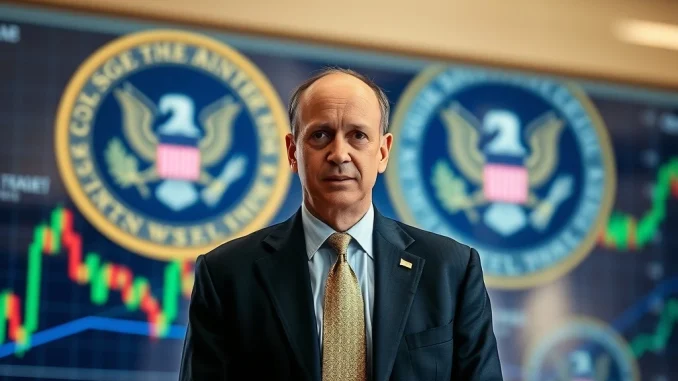
Gary Gensler, the former Chairman of the U.S. Securities and Exchange Commission (SEC), recently reignited widespread discussions within the digital asset community. His appearance on CNBC brought forth a clear and **unwavering** message. He expressed absolutely no regrets about the stringent **crypto regulation** and enforcement actions imposed during his leadership. This stance immediately captured attention across the cryptocurrency landscape, highlighting the ongoing tension between innovation and regulatory oversight.
Gary Gensler’s Firm Stance on Crypto Regulation
During his tenure, **Gary Gensler** emerged as a pivotal figure in shaping the regulatory environment for cryptocurrencies. His recent comments on CNBC reinforced a consistent message. He firmly believes that robust oversight was, and remains, essential. Gensler directly addressed criticisms regarding the SEC’s approach, noting that widespread fraud characterized the industry at the time. This observation provided the fundamental rationale behind the Commission’s aggressive actions. Many market participants, therefore, continue to closely monitor his perspectives, even after his return to academia.
Gensler’s leadership at the SEC saw a significant increase in regulatory scrutiny. He often highlighted the need to apply existing securities laws to digital assets. This principle guided many of the enforcement decisions made by the agency. Consequently, the crypto industry faced a period of intense examination, prompting many firms to re-evaluate their operational frameworks and compliance strategies.
Unpacking SEC Enforcement Actions Under Gensler
Under **Gary Gensler’s** direction, the SEC launched approximately 100 lawsuits against various crypto firms. This figure demonstrates a consistent and active enforcement agenda. Gensler pointed out that this number was comparable to the actions taken by his predecessor. This comparison aimed to contextualize the SEC’s activity, suggesting a continuity in its regulatory mandate rather than an unprecedented crackdown.
The core objective behind these **SEC enforcement** actions was unequivocal: investor protection. Gensler consistently argued that many crypto offerings constituted unregistered securities. Therefore, they fell under the SEC’s jurisdiction. These lawsuits aimed to compel compliance with disclosure requirements and anti-fraud provisions. The Commission sought to shield retail investors from what it perceived as significant risks inherent in an unregulated market. This proactive stance undoubtedly sent a clear message to the rapidly expanding crypto sector.
Bitcoin’s Unique Position Amidst Speculative Assets
A crucial distinction in Gensler’s commentary involves Bitcoin. He consistently separates Bitcoin from the vast majority of other cryptocurrencies. Gensler argues that most digital tokens primarily survive on momentum and hype. He believes they lack genuine value creation. This assessment places many altcoins firmly in the category of **speculative assets**, characterized by high volatility and perceived lack of intrinsic value.
Bitcoin, however, often receives a different assessment from Gensler. He has, on several occasions, acknowledged Bitcoin’s unique characteristics. While still considering it a volatile asset, he suggests it possesses a distinct nature compared to other digital currencies. This nuanced view implies a recognition of Bitcoin’s longer track record and its status as the pioneering cryptocurrency. His perspective suggests a potential for greater longevity for Bitcoin, unlike many newer tokens.
The Rationale Behind Labeling Cryptocurrencies as Speculative
Gensler’s categorization of most cryptocurrencies as **speculative assets** stems from several key observations. He frequently points to the absence of clear underlying fundamentals for many tokens. Unlike traditional stocks, which represent a share in a company’s earnings, or bonds, which offer a fixed return, many cryptocurrencies do not have a clear economic model or revenue stream. Their value, therefore, often relies heavily on market sentiment, social media trends, and speculative trading.
Furthermore, Gensler emphasizes the significant risks associated with these assets. These include:
- Extreme Price Volatility: Sudden and drastic price swings are common.
- Lack of Transparency: Many projects offer insufficient disclosure to investors.
- Market Manipulation Concerns: The unregulated nature can facilitate pump-and-dump schemes.
- Limited Investor Protections: Traditional safeguards often do not apply.
His remarks in April, where he stated that Bitcoin might endure but the rest of the market would not, further underscore this view. This highlights a deeply held belief regarding the long-term viability and inherent risks of the broader crypto ecosystem.
The Future Landscape of Crypto Regulation and Investor Protection
Gensler’s unwavering commitment to **investor protection** serves as a guiding principle for the SEC’s approach to digital assets. His recent comments reaffirm that this focus will not diminish. The regulatory body continues to prioritize safeguarding market participants from potential harm. This involves enforcing existing laws and addressing new challenges posed by the evolving crypto market.
The debate surrounding **crypto regulation** remains dynamic. Industry stakeholders often advocate for tailored frameworks that foster innovation. However, Gensler’s consistent message emphasizes the applicability of established securities laws. This ongoing dialogue shapes the future landscape for digital assets. It also influences how both new and established firms navigate the complex regulatory environment. Ultimately, the SEC’s goal, as articulated by Gensler, centers on ensuring fair and orderly markets for all investors.
Gary Gensler’s persistent advocacy for robust **crypto regulation** signals a continued push for oversight in the digital asset space. His distinction between Bitcoin and other **speculative assets** highlights a core regulatory philosophy focused on investor protection. As the cryptocurrency market matures, the dialogue over digital asset governance will certainly persist, with Gensler’s influence undoubtedly shaping future policy discussions.
Frequently Asked Questions (FAQs)
Q1: Why does Gary Gensler believe strong crypto regulation is necessary?
Gary Gensler believes strong **crypto regulation** is necessary due to widespread fraud and the highly speculative nature of many digital assets. He emphasizes the need to protect investors from risks like market manipulation and inadequate disclosures.
Q2: How many lawsuits did the SEC file against crypto firms under Gensler’s leadership?
Under Gary Gensler’s leadership, the SEC filed approximately 100 lawsuits against various crypto firms. This figure is comparable to the enforcement actions taken by his predecessor.
Q3: What is Gensler’s view on Bitcoin compared to other cryptocurrencies?
Gensler differentiates Bitcoin from most other cryptocurrencies. He views Bitcoin as potentially having more longevity due to its unique characteristics, while he considers most other coins as highly **speculative assets** driven by hype rather than fundamental value.
Q4: What does Gensler mean by calling cryptocurrencies ‘speculative assets’?
When Gensler calls cryptocurrencies ‘speculative assets,’ he implies they are high-risk investments. Their value often relies on market sentiment and price movements rather than underlying economic utility, making them volatile and prone to significant losses for investors.
Q5: What is the primary goal of the SEC’s enforcement actions in the crypto space?
The primary goal of the SEC’s **enforcement actions** in the crypto space is **investor protection**. The Commission aims to ensure compliance with securities laws, prevent fraud, and provide adequate disclosures to safeguard individuals investing in digital assets.