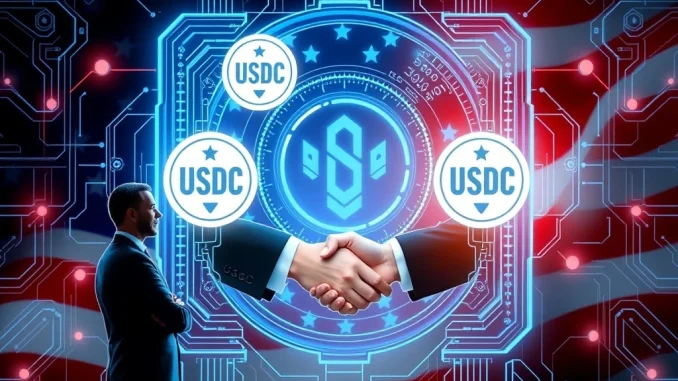
The cryptocurrency landscape is undergoing a seismic shift with the signing of the GENIUS Act by former President Donald Trump. This groundbreaking legislation paves the way for stablecoin integration in traditional banking, with FIS and Circle leading the charge through their strategic USDC payments partnership.
How the GENIUS Act is Reshaping Stablecoin Regulation
The GENIUS Act establishes crucial guidelines for stablecoin operations, addressing long-standing regulatory uncertainties. Key provisions include:
- Clear definitions of stablecoin issuers’ responsibilities
- Enhanced consumer protection measures
- Framework for banking institution participation
- Compliance standards for cross-border transactions
FIS-Circle Partnership: A Game-Changer for USDC Payments
The collaboration between financial services giant FIS and stablecoin issuer Circle represents a major leap toward mainstream cryptocurrency adoption. By 2024, banks using FIS technology will offer:
| Feature | Benefit |
|---|---|
| USDC payment options | Near-instant transfers |
| Blockchain integration | Reduced intermediary costs |
| Regulatory compliance | Enhanced institutional confidence |
What This Means for Cryptocurrency Innovation
The GENIUS Act and subsequent partnerships signal growing institutional acceptance of blockchain technology. Circle’s COO Kash Razzaghi emphasizes how this legitimizes stablecoins as tools for modernizing financial infrastructure while maintaining competitiveness in global markets.
Challenges and Opportunities in Stablecoin Adoption
While the path forward looks promising, several hurdles remain:
- Scalability concerns for mass adoption
- Interoperability between different financial systems
- Varying international regulatory frameworks
- Consumer education and trust-building
FAQs About the GENIUS Act and USDC Integration
Q: When will USDC payments be available through banks?
A: The FIS-Circle partnership aims for a 2024 launch.
Q: How does the GENIUS Act protect consumers?
A: It establishes transparency requirements and reserve backing rules for stablecoin issuers.
Q: Will this make cryptocurrency transactions faster?
A: Yes, USDC transactions settle in seconds compared to traditional bank transfers.
Q: How might this affect other stablecoins?
A: The regulatory clarity could benefit all compliant stablecoins, though USDC gains first-mover advantage.