In the ever-evolving landscape of global finance, shifts in traditional markets often provide crucial insights into broader economic trends that can even ripple into the cryptocurrency world. As the digital asset space matures, understanding the dynamics of major indices like the FTSE 100 becomes increasingly relevant. Recently, this venerable U.K. index has defied expectations, soaring to record highs in July 2025. But what’s truly driving this remarkable ascent, and what can investors, including those focused on crypto, learn from this significant market movement?
Understanding the Surge: Why FTSE 100 is Hitting Record Highs
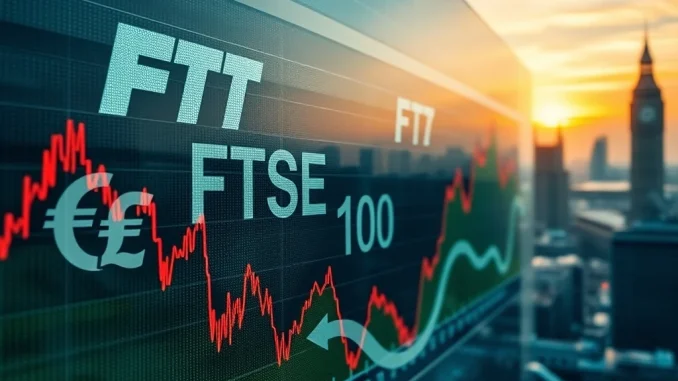
The U.K.’s FTSE 100 index has not only reached but surpassed historical benchmarks in July 2025, signaling a robust turnaround for British equities. This impressive performance is primarily fueled by a potent combination of global capital inflows and aggressive corporate takeover activity. These factors have created a unique environment where previously undervalued blue-chip stocks are now gaining significant traction, challenging long-held perceptions about the index’s historical underperformance.
Analysts pinpoint two core catalysts behind this surge:
- Global Capital Reallocation: A strategic shift of funds away from U.S. dollar-denominated assets.
- Strategic Corporate Activity: A significant increase in cross-border takeovers targeting U.K. companies.
Together, these forces are reshaping the investment landscape, making the FTSE 100 an increasingly attractive destination for international investors seeking value and growth.
The Dollar’s Role: Fueling Capital Inflows into UK Equities
One of the primary drivers behind the FTSE 100’s ascent is the strategic reallocation of global capital, largely influenced by the U.S. dollar’s elevated position and the Federal Reserve’s interest rate trajectory. As the White House indirectly seeks to curb the dollar’s strength through monetary policy adjustments, investors are actively reallocating funds into non-dollar-denominated assets. The FTSE 100, home to large multinational corporations with diverse revenue streams, has emerged as a significant beneficiary of this migration.
Consider the stark valuation disparity: the market capitalization of a single U.S. tech giant like Nvidia can rival that of the entire London Stock Exchange. This makes U.K. shares appear significantly more attractive at a relative discount, especially for international investors looking for global market exposure without the heightened currency risks often associated with a strong dollar. This dynamic encourages substantial capital inflows, providing a foundational boost to the index’s overall market capitalization.
Unlocking Value: The Impact of Takeover Premiums
The second critical factor propelling the FTSE 100 is the surging wave of cross-border takeovers targeting U.K. equities. For years, U.K. stocks have traded at historically low valuations compared to their U.S. counterparts, making them prime targets for foreign acquirers seeking undervalued assets with strong fundamentals. These transactions typically come with substantial takeover premiums, often exceeding 40% above the prevailing market price, which directly inflates the share prices of target companies and, consequently, boosts the broader index.
The ripple effect of this activity extends beyond immediate transactions. As investors anticipate further acquisitions, they often bid up stock prices in anticipation, creating a self-reinforcing cycle of momentum. This trend has been particularly pronounced in sectors characterized by robust balance sheets and extensive global reach, where undervalued assets are being swiftly acquired by overseas buyers keen to capitalize on the perceived discount.
A Contrarian Shift: FTSE 100’s Ascent from Undervaluation
The market’s recent trajectory reflects a profound contrarian shift. For many years, the FTSE 100 was often dismissed as a laggard, struggling to keep pace with its global peers. However, this persistent undervaluation has paradoxically become its greatest tailwind. As significant capital inflows continue to pour into the index and takeover activity accelerates, the FTSE 100’s price-to-earnings ratio has begun to expand from its historically depressed levels.
This positive trend aligns with long-term chart patterns observed by market analysts, who note that the index has definitively broken out of a multi-decade consolidation phase. The 9,000 level, once considered a distant and ambitious target, was decisively achieved in July 2025, signaling a potential inflection point and a new era of growth for the U.K. market.
Navigating the Future: Cautions and Continued Momentum
Despite the prevailing optimism surrounding the FTSE 100’s impressive gains, market participants remain cautiously optimistic. A portion of the index’s recent performance is attributed to speculative positioning, with some investors viewing the index as a strategic “buy low and sell high” opportunity amidst broader global liquidity shifts. However, the index’s reliance on external factors—such as U.S. monetary policy adjustments and the pace of cross-border deal activity—means that volatility could resurface if macroeconomic conditions shift unexpectedly.
Analysts emphasize that while the current environment is highly favorable, sustained momentum will largely depend on the continuation of U.S. dollar weakness and a consistent pace of corporate takeovers. The FTSE 100’s remarkable trajectory underscores the interplay of structural advantages and strategic investor behavior. As global capital continues to reallocate and U.K. equities become increasingly competitive, the index is poised to challenge its historical underperformance. Yet, the path forward remains contingent on these external catalysts, highlighting the need for investors to closely monitor broader market dynamics.
Frequently Asked Questions (FAQs)
1. What is the FTSE 100?
The FTSE 100, pronounced ‘Footsie 100’, is a share index of the 100 companies listed on the London Stock Exchange with the highest market capitalization. It is widely regarded as the best indicator of the performance of major U.K. companies and the broader U.K. economy.
2. What are the main reasons for the FTSE 100’s recent record highs?
The primary drivers are significant capital inflows resulting from a global shift away from the strong U.S. dollar, and a surge in cross-border takeovers targeting undervalued U.K. equities, often with substantial takeover premiums.
3. How do U.S. dollar dynamics influence the FTSE 100?
As the U.S. dollar maintains an elevated position, and the Federal Reserve adjusts monetary policy, investors seek non-dollar denominated assets. The FTSE 100, with its multinational corporations, benefits from this reallocation of funds, as U.K. stocks appear relatively cheaper.
4. Why are U.K. stocks attractive targets for takeovers?
U.K. stocks have historically traded at lower valuations compared to their U.S. counterparts. This undervaluation makes them attractive targets for foreign acquirers looking for strong companies at a discount, leading to competitive bids and significant takeover premiums.
5. Is the FTSE 100’s current performance sustainable?
While the current environment is favorable, sustained momentum is contingent on external factors such as continued U.S. dollar weakness and the ongoing pace of corporate takeover activity. Investors should monitor these macroeconomic conditions for potential volatility.
6. How does this relate to broader investment trends, including cryptocurrency?
The dynamics driving the FTSE 100’s rise highlight a broader theme of capital reallocation and the search for value across global markets. Understanding these shifts in traditional finance can provide insights into investor sentiment, liquidity flows, and risk appetite, which can indirectly influence the cryptocurrency market as investors diversify portfolios or seek alternative asset classes.