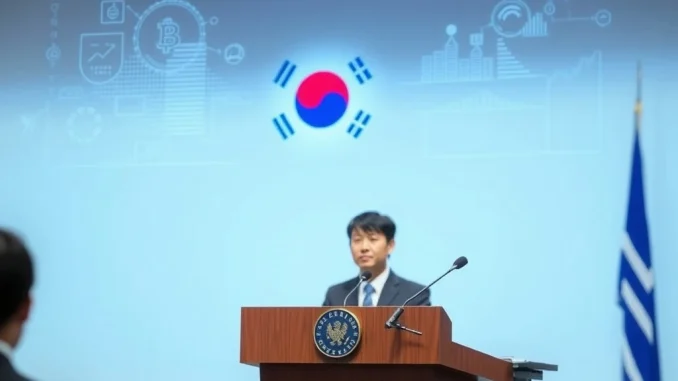
Recent statements from South Korea’s top financial regulator nominee sparked significant discussion within the digital asset community. Investors and industry participants closely watch how officials perceive **virtual assets**. Lee Eog-weon, the nominee to chair the Financial Services Commission (FSC), has now offered a crucial clarification. His updated remarks aim to dispel any misunderstanding regarding his views on the fundamental nature of cryptocurrencies. This development provides welcome insight into the future of **crypto regulation** in the region.
Understanding the Initial Statement on Virtual Assets
Previously, the **FSC chair nominee** submitted a written response for his confirmation hearing. In this document, Lee Eog-weon addressed the inherent characteristics of **virtual assets**. He noted their significant price volatility. Consequently, he stated, these assets struggle to perform the essential functions of money. Specifically, he highlighted their challenges as a reliable store of value or an effective medium of exchange. Many observers interpreted these comments as a broader skepticism about the inherent worth of digital currencies.
This initial assessment raised concerns among cryptocurrency enthusiasts. It suggested a potential for stricter regulatory approaches. The financial market often reacts sensitively to such high-level pronouncements. Therefore, a clear understanding of regulatory perspectives remains vital for market stability. Lee’s original comments, while factual about volatility, needed further context.
FSC Chair Nominee Clarifies Stance on Ontological Value
Lee Eog-weon quickly moved to clarify his position. Digital Asset reported his subsequent statement. He asserted that his earlier comments were not intended to imply that **virtual assets** lack ontological value. Ontological value refers to the inherent existence or fundamental nature of something. It concerns whether an asset possesses a genuine, intrinsic worth, separate from its market price fluctuations. This clarification marks a significant shift in perception. It suggests a more nuanced understanding from the potential regulator.
The nominee’s clarification reassures many in the industry. It indicates that while practical functions like stability are considered, the underlying existence and potential utility of digital assets are acknowledged. This distinction is crucial for policy development. It moves the discussion beyond simple price volatility. Instead, it focuses on the complex nature of these emerging financial instruments.
The Nuance of Ontological Value in Crypto
The concept of ontological value in the context of cryptocurrencies is multifaceted. Traditionally, assets like gold or real estate possess inherent value. They have physical utility or scarcity. For digital assets, this value often stems from their underlying technology. It also comes from their network effects and their utility within specific ecosystems. For instance, Bitcoin’s value derives from its decentralized nature and limited supply. Ethereum’s value comes from its smart contract capabilities and vast developer community.
- Decentralization: Many virtual assets offer freedom from central control.
- Scarcity: Fixed supplies, like Bitcoin’s 21 million limit, create digital scarcity.
- Utility: Tokens can power applications, facilitate transactions, or grant governance rights.
- Network Effects: The more users and developers, the stronger the ecosystem becomes.
Therefore, denying ontological value to **virtual assets** would mean denying their fundamental existence as distinct economic entities. Lee Eog-weon’s clarification acknowledges this. He recognizes that while they may not perfectly fit traditional definitions of money, they still possess a form of inherent worth. This perspective is vital for developing appropriate and forward-thinking **crypto regulation**.
Broader Implications for South Korea Crypto Market
The Korean market remains a significant player in the global cryptocurrency landscape. Statements from high-ranking officials like the **FSC chair nominee** carry considerable weight. His clarification can foster a more stable and predictable regulatory environment. This predictability is essential for both domestic and international investors. It also encourages innovation within the **South Korea crypto** sector. A regulatory body that acknowledges the fundamental value of digital assets is more likely to craft policies that support growth, rather than stifle it.
Historically, South Korea has shown a dynamic approach to cryptocurrencies. The nation has experienced periods of intense speculation and subsequent regulatory crackdowns. Yet, it has also embraced blockchain technology and digital innovation. This latest statement helps to balance the narrative. It moves away from a purely skeptical view. Instead, it promotes a more measured understanding of digital assets. This approach is beneficial for long-term market health and investor confidence.
Navigating Price Volatility and Market Functions
Lee Eog-weon’s initial concerns about price volatility are certainly valid. Many **virtual assets** experience dramatic price swings. This volatility can indeed hinder their function as stable stores of value or reliable mediums of exchange. However, this observation does not negate their ontological value. Rather, it highlights challenges for their practical application in traditional financial systems. It also underscores the need for robust regulatory frameworks.
Furthermore, the cryptocurrency market is evolving rapidly. Stablecoins, for example, aim to mitigate volatility. Central Bank Digital Currencies (CBDCs) explore new forms of digital money. These innovations address some of the very concerns raised by the nominee. Regulators worldwide are grappling with these complexities. They seek to balance innovation with financial stability and consumer protection. Acknowledging the inherent value of **virtual assets** allows for a more constructive dialogue about their future roles.
The Path Forward for Crypto Regulation
Global financial authorities continue to develop comprehensive frameworks for **crypto regulation**. South Korea’s FSC plays a pivotal role in this international effort. The nominee’s clarified stance suggests a willingness to engage with the nuanced realities of digital assets. This engagement is crucial for creating effective policies. These policies must protect consumers, prevent illicit activities, and foster legitimate innovation. It also requires a deep understanding of the technology and its economic implications.
Effective regulation must consider various aspects. These include market integrity, investor protection, and systemic risk. It also needs to address anti-money laundering (AML) and combating the financing of terrorism (CFT) concerns. Acknowledging the ontological value of **virtual assets** provides a foundation. It allows regulators to build frameworks that are both pragmatic and forward-looking. This approach ensures that South Korea remains competitive in the global digital economy.
Balancing Innovation with Oversight
Regulators face the complex task of balancing technological innovation with necessary oversight. New digital financial products emerge constantly. Defining and categorizing **virtual assets** correctly becomes paramount. Are they commodities, securities, or a new asset class entirely? The answer impacts how they are regulated. The FSC chair nominee’s clarification contributes positively to this ongoing global debate. It signals an open-minded approach to understanding these assets.
Ultimately, a robust regulatory environment benefits everyone. It provides clarity for businesses. It offers security for investors. Moreover, it allows the **South Korea crypto** market to mature responsibly. This recent clarification represents a step towards achieving that balance. It highlights the importance of precise communication from regulatory leaders. Their words shape market sentiment and future policy direction.
In conclusion, the clarification from South Korea’s **FSC chair nominee** on the ontological value of **virtual assets** is a significant development. It demonstrates a more sophisticated understanding of the digital asset landscape. While challenges like price volatility remain, acknowledging the inherent worth of these assets paves the way for more thoughtful and effective **crypto regulation**. This nuanced perspective is essential for fostering a healthy and innovative digital economy in South Korea and beyond.
Frequently Asked Questions (FAQs)
What does ‘ontological value’ mean in the context of virtual assets?
Ontological value refers to the inherent, fundamental worth or existence of something. For **virtual assets**, it means acknowledging their intrinsic nature and utility, beyond just their fluctuating market price. It recognizes that they possess a genuine form of value, often derived from their underlying technology, network, or specific use cases.
Why was the FSC chair nominee’s clarification important for the South Korea crypto market?
The clarification from the **FSC chair nominee** is crucial because initial comments suggested a potential denial of virtual assets’ fundamental worth. This could have led to stricter, less favorable **crypto regulation**. His updated statement reassures the market by indicating a more nuanced understanding, fostering a more stable and predictable environment for investors and innovators in **South Korea crypto**.
What were the nominee’s initial concerns about virtual assets?
Lee Eog-weon initially expressed concerns about the high price volatility of **virtual assets**. He noted that this volatility makes it difficult for them to perform essential functions of money, such as serving as a stable store of value or a reliable medium of exchange. These practical challenges were the focus of his earlier remarks.
How does this clarification impact future crypto regulation in South Korea?
This clarification suggests a more balanced and informed approach to **crypto regulation** in South Korea. By acknowledging the ontological value of **virtual assets**, regulators are better positioned to develop policies that support innovation while addressing risks. This could lead to more constructive frameworks that integrate digital assets into the broader financial system.
Are all virtual assets considered to have the same ontological value?
No, the ontological value can vary significantly among different **virtual assets**. Factors like their underlying technology, utility, decentralization, scarcity, and network effects contribute to their inherent worth. For example, a major cryptocurrency like Bitcoin might have different foundational value drivers than a niche altcoin or a utility token.