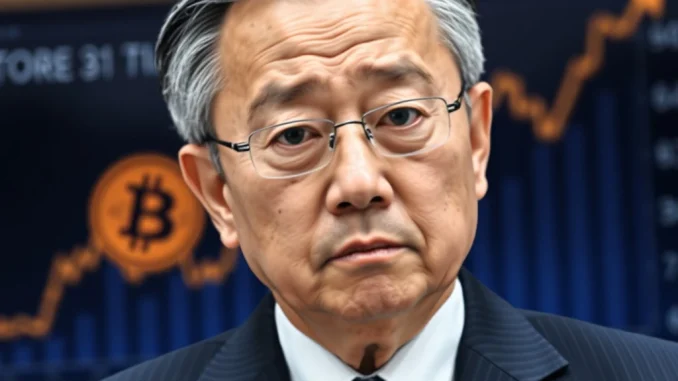
A significant controversy is unfolding in South Korea, capturing the attention of the global cryptocurrency community. Lee Eog-weon, the **FSC nominee** for chairman of South Korea’s Financial Services Commission (FSC), faces intense scrutiny. This stems from a revelation that he previously owned shares in MicroStrategy, a company renowned as the world’s largest corporate holder of Bitcoin. This news directly contradicts his publicly expressed **crypto skepticism**, creating a complex dilemma for the potential financial regulator.
FSC Nominee’s Conflicting Stance on Virtual Assets
The Chosun Ilbo first reported this surprising development. Lee Eog-weon, poised to lead the powerful FSC, reportedly held 10 shares of **MicroStrategy stock** as of August 14. This ownership came to light just before his confirmation hearing. Therefore, the timing adds another layer of complexity to the situation. Lee’s past statements on **virtual assets** stand in stark contrast to this financial holding. He previously asserted that digital currencies are too volatile. Furthermore, he argued they cannot perform essential functions of a currency. These functions include acting as a reliable store of value or an efficient medium of exchange.
His written response for the confirmation hearing clearly outlined his reservations. He stated, “Virtual assets lack intrinsic value.” This viewpoint aligns with a more cautious regulatory approach. However, owning shares in a company so deeply invested in Bitcoin presents a potential conflict. Critics now question the sincerity of his **crypto skepticism**. They also ponder its implications for future regulatory decisions under his leadership.
Understanding MicroStrategy’s Role in the Crypto Space
To fully grasp the gravity of this situation, understanding MicroStrategy’s position is crucial. MicroStrategy, a business intelligence firm, made headlines globally for its aggressive Bitcoin acquisition strategy. Under CEO Michael Saylor, the company adopted Bitcoin as its primary treasury reserve asset. Consequently, it accumulated vast amounts of the cryptocurrency. This strategic pivot transformed MicroStrategy into a de facto Bitcoin proxy stock. Investors often buy its shares to gain indirect exposure to Bitcoin. Therefore, owning **MicroStrategy stock** is widely seen as a bullish bet on Bitcoin’s future. This makes the **FSC nominee’s** ownership particularly noteworthy given his public stance.
- Largest Corporate Holder: MicroStrategy holds more Bitcoin than any other publicly traded company.
- Bitcoin Proxy: Its stock performance is often closely tied to Bitcoin’s price movements.
- Strategic Investment: The company views Bitcoin as a superior store of value compared to traditional fiat currencies.
South Korea Crypto: A Nation at a Crossroads
This controversy unfolds within the broader context of **South Korea crypto** regulation. South Korea has historically been a significant market for cryptocurrencies. It boasts high trading volumes and a tech-savvy population. However, its regulatory environment has often been stringent. Authorities have aimed to balance innovation with investor protection. The FSC plays a pivotal role in shaping these regulations. Its chairman’s views significantly influence policy direction. Thus, the perceived conflict of interest for the **FSC nominee** raises concerns among industry participants. They fear a potentially biased approach to digital asset policy.
The nation has seen both periods of intense crackdown and cautious exploration. Regulators have previously implemented strict Know Your Customer (KYC) and Anti-Money Laundering (AML) rules. They also imposed bans on certain trading practices. The current administration seeks a more balanced approach. Nevertheless, the personal financial dealings of key regulators remain under intense public scrutiny. This situation could further complicate the path forward for **virtual assets** in the country.
Implications for Future Virtual Asset Regulation
The revelation about Lee Eog-weon’s **MicroStrategy stock** ownership has ignited a debate. It questions the impartiality of future decisions regarding **virtual assets**. If confirmed, Lee will oversee an agency with immense power over the crypto market. His personal financial history, therefore, becomes highly relevant. How can an individual with a financial stake in Bitcoin’s success maintain genuine **crypto skepticism**? This is the central question posed by critics. The public expects transparency and an unbiased approach from top financial regulators.
This incident could prompt a reevaluation of ethics rules for high-ranking officials. It may also lead to stricter disclosure requirements for those involved in financial regulation. The outcome of Lee’s confirmation hearing will likely set a precedent. It will define how South Korea approaches potential conflicts of interest in its burgeoning digital asset landscape. Ultimately, maintaining public trust in the regulatory framework is paramount.
The Confirmation Hearing: A Test of Transparency
The upcoming confirmation hearing will be critical for Lee Eog-weon. Lawmakers will undoubtedly press him on his **MicroStrategy stock** holdings. They will also question his previously stated **crypto skepticism**. This hearing provides an opportunity for Lee to clarify his position. He must address the perceived conflict directly. His responses will shape public perception. They will also influence the confidence of both traditional financial institutions and the **South Korea crypto** community. Transparency and a clear explanation of his financial decisions are essential for gaining parliamentary approval. The integrity of the FSC leadership hinges on this.
FAQs about the FSC Nominee and Crypto Controversy
Q1: Who is Lee Eog-weon and what is his current role?
A1: Lee Eog-weon is the nominee for chairman of South Korea’s Financial Services Commission (FSC). He is currently undergoing a confirmation process to assume this influential position.
Q2: What is the controversy surrounding the FSC nominee?
A2: The controversy stems from revelations that Lee Eog-weon previously owned shares in MicroStrategy, a major corporate holder of Bitcoin. This ownership appears to contradict his public statements expressing skepticism about **virtual assets**.
Q3: Why is MicroStrategy stock significant in this context?
A3: MicroStrategy is globally recognized for its substantial Bitcoin holdings, making its stock a proxy for Bitcoin investment. Owning MicroStrategy shares is widely interpreted as a bullish stance on cryptocurrency, directly conflicting with Lee’s stated **crypto skepticism**.
Q4: What is the Financial Services Commission (FSC) in South Korea?
A4: The FSC is South Korea’s top financial regulator. It oversees the country’s financial markets, including banking, securities, and insurance. It also plays a crucial role in shaping policies related to **virtual assets**.
Q5: How might this controversy impact South Korea’s crypto regulation?
A5: The controversy could lead to increased scrutiny of financial regulators’ personal investments. It might also influence the direction of **South Korea crypto** policies, potentially pushing for more transparent and unbiased approaches to **virtual assets** regulation.
Q6: Has Lee Eog-weon commented on the MicroStrategy stock ownership?
A6: The initial report from Chosun Ilbo revealed his ownership. His confirmation hearing will be the primary forum where he is expected to address these holdings and clarify his stance on **virtual assets** and **crypto skepticism**.