In a move that has sent ripples across the international diplomatic landscape, France has officially announced its decision to recognize Palestinian statehood. This isn’t just another political statement; it marks a truly significant shift, positioning France as the first G7 nation to formally extend such recognition. While this news might not directly impact daily cryptocurrency market fluctuations, it underscores the complex geopolitical shifts that can influence global stability and, by extension, broader economic confidence. Understanding such pivotal international developments is key to grasping the wider context in which all markets, including crypto, operate.
France Palestinian Statehood: A Bold Diplomatic Step
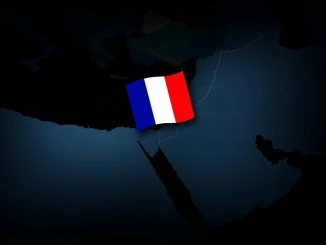
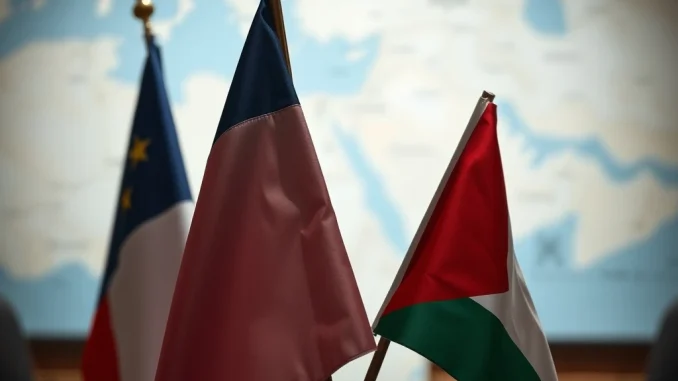
On July 24, 2025, under the leadership of President Emmanuel Macron, France reiterated its commitment to formally recognize Palestinian statehood, with official recognition slated for the September 2025 United Nations General Assembly. This decision is framed by Macron as an integral part of France’s “historic commitment to a just and lasting peace in the Middle East.” It comes at a critical time, emphasizing the severe humanitarian crises unfolding in Gaza and the urgent need to re-energize stalled peace negotiations.
The move by France is not without its immediate repercussions. Both Israel and the United States have voiced strong opposition:
- Israel’s Stance: Prime Minister Benjamin Netanyahu condemned the decision, labeling it a direct security threat.
- U.S. Concerns: U.S. officials cautioned that such unilateral recognition could establish a destabilizing precedent, potentially encouraging other nations to follow suit without a negotiated settlement.
Despite the backlash, Macron’s administration maintains that this policy aligns perfectly with France’s long-standing support for a two-state solution and its broader engagement in Middle Eastern affairs.
Why is France the First G7 Nation to Make This Move?
France’s decision to become the first G7 nation to recognize Palestinian statehood carries immense symbolic weight. As one of the largest Western powers, this step is seen as a calculated diplomatic maneuver, reflecting mounting international pressure on Israel amid ongoing humanitarian concerns in the region. Observers suggest that this bold move could encourage other countries to reassess their own positions on the Israeli-Palestinian conflict.
The timing of the announcement, coinciding with heightened tensions and global debates over humanitarian access in Gaza, highlights a strategic effort by France to leverage its influence at a critical juncture. It also underscores France’s intricate balancing act in the Middle East, where it maintains strong ties with Israel while increasingly advocating for multilateral approaches to conflict resolution.
Revitalizing the Middle East Peace Push
At its core, France’s recognition of Palestinian statehood is presented as a moral imperative aimed at revitalizing the long-stalled Middle East peace push. Macron’s government believes that formal recognition can contribute to creating the necessary conditions for a viable two-state solution, where both Israelis and Palestinians can live side-by-side in peace and security. This aligns with a growing sentiment among some European nations that a political solution, rather than ongoing conflict, is the only path forward.
However, the path to peace remains fraught with challenges. While supporters view this as a pivotal moment for global diplomacy, potentially galvanizing international support for Palestinian statehood, critics argue that unilateral recognitions risk entrenching divisions if key stakeholders, particularly the U.S., do not respond with comparable overtures or diplomatic shifts. The effectiveness of this move in genuinely accelerating peace negotiations will depend heavily on subsequent international reactions and the willingness of all parties to engage constructively.
Understanding the Two-State Solution Dynamics
The concept of a two-state solution—a sovereign Palestinian state existing alongside Israel—has been the cornerstone of international efforts to resolve the Israeli-Palestinian conflict for decades. France’s recognition aims to bolster this framework by affirming the legitimacy of Palestinian aspirations for statehood. This move is intended to put pressure on all parties to return to meaningful negotiations based on internationally recognized borders and security arrangements.
The dynamics of this solution are complex, involving:
- Borders: Defining the exact lines of a future Palestinian state.
- Security: Ensuring the security of both Israel and a future Palestine.
- Jerusalem: The status of Jerusalem, claimed by both sides as their capital.
- Refugees: The right of return for Palestinian refugees.
France’s action signals a decisive step toward redefining the international landscape of this conflict, but the ultimate success of the two-state solution still hinges on direct negotiations and mutual agreement between the Israeli and Palestinian leaderships, supported by a unified international community.
The Gaza Crisis: A Catalyst for Action?
The ongoing humanitarian crisis in Gaza has undoubtedly served as a significant catalyst for France’s decision. The devastating impact of the conflict on civilian lives, infrastructure, and access to essential services has drawn widespread international condemnation and heightened calls for a permanent ceasefire and long-term political solutions. France’s recognition can be seen as a direct response to these escalating concerns, an attempt to use diplomatic leverage to alleviate suffering and push for a more stable future.
The decision underscores the urgency felt by many nations to move beyond incremental steps and take more decisive action to address the root causes of the conflict. While the long-term impact of France’s recognition remains uncertain, it certainly highlights the growing international impatience with the status quo and a desire for a more robust diplomatic approach to the crisis in the region.
What Does This Mean for the Future?
France’s recognition of Palestinian statehood is a watershed moment that will likely resonate for years to come. It challenges the traditional Western diplomatic approach, which has often prioritized negotiated settlements over unilateral recognition. While it has strained transatlantic relations, particularly with the U.S., it also positions France as a leader in a potentially new era of Middle East diplomacy.
The decision’s ultimate impact on peace remains to be seen. It could either galvanize further international support for Palestinian statehood, leading to a more balanced approach to the conflict, or it could further entrench divisions if not followed by concerted efforts from all major global powers. Regardless, France has firmly placed itself at the forefront of this evolving narrative, signaling a clear shift in its foreign policy regarding one of the world’s most enduring conflicts.
Frequently Asked Questions (FAQs)
Q1: Why did France choose to recognize Palestinian statehood now?
France’s decision to recognize Palestinian statehood is largely driven by its long-standing commitment to a two-state solution, coupled with the escalating humanitarian crisis in Gaza. President Macron framed it as a necessary step to revive peace negotiations and address the urgent needs in the region, aiming to leverage France’s diplomatic influence at a critical juncture.
Q2: How does France’s recognition differ from other countries that have recognized Palestine?
While many countries have recognized Palestine, France is the first G7 nation and a major Western power to do so. This gives its recognition significant symbolic weight and could encourage other nations, particularly in Europe, to reconsider their positions, potentially altering the international diplomatic landscape.
Q3: What has been the reaction from Israel and the United States?
Both Israel and the United States have strongly condemned France’s decision. Israeli Prime Minister Benjamin Netanyahu called it a security threat, while U.S. officials warned it could set a destabilizing precedent, advocating instead for a negotiated settlement between the parties.
Q4: Will this recognition lead to a two-state solution?
France’s recognition is intended to bolster the two-state solution framework by affirming the legitimacy of Palestinian aspirations for statehood. However, the path to a two-state solution remains complex, requiring direct negotiations and mutual agreement between Israeli and Palestinian leaderships, supported by a unified international community. This move is a step, but not a guarantee.
Q5: What are the potential long-term impacts of France’s decision?
The long-term impacts are uncertain. It could either galvanize further international support for Palestinian statehood, leading to a more balanced approach to the conflict, or it could further entrench divisions if not followed by concerted efforts from all major global powers. It certainly signals a shift in Western diplomatic approaches to the Israeli-Palestinian conflict.