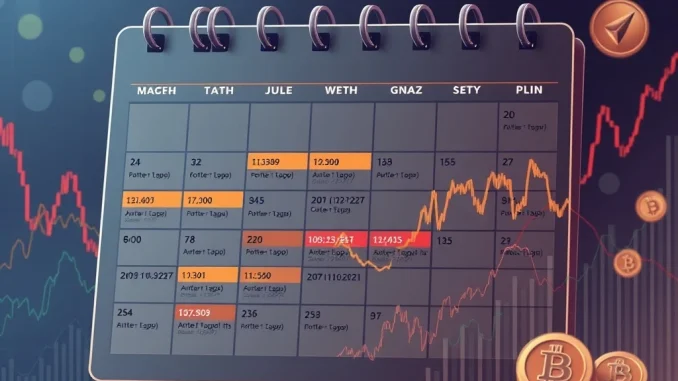
For cryptocurrency investors, understanding global financial events is paramount. Digital assets, once seen as uncorrelated, now frequently react to macroeconomic shifts. This week brings a series of crucial announcements and central bank speeches that could significantly influence market sentiment. Therefore, staying informed is key to navigating potential volatility and making timely decisions within the crypto landscape.
Central Bank Speeches Set the Tone Early in the Week
The week begins with significant insights from major central banks. These institutions guide monetary policy. Their statements often create ripples across global financial markets. Consequently, crypto assets can experience notable price movements.
On October 6, at 5:00 p.m. UTC, European Central Bank President Christine Lagarde will speak. Her comments often provide clarity on the Eurozone’s economic outlook. Furthermore, she may discuss future interest rate policies. Investors watch these remarks closely. They gauge the ECB’s stance on inflation and economic growth. Any unexpected hawkish or dovish tone could impact the euro. It also affects broader market risk sentiment.
Following Lagarde, Bank of England Governor Andrew Bailey speaks at 5:30 p.m. UTC. The Bank of England manages the UK economy. Bailey’s speeches frequently address inflation, employment, and the overall economic health of the United Kingdom. His insights are vital for sterling traders. Moreover, they offer clues about global liquidity conditions. Such conditions can indirectly affect cryptocurrency valuations.
Federal Reserve Officials Offer Crucial Insights
The Federal Reserve’s influence on global markets is undeniable. Its policy decisions directly affect the U.S. dollar. They also impact risk assets like cryptocurrencies. This week features multiple Fed officials speaking. Their words provide valuable context for investors.
On October 7, several Federal Reserve presidents will share their views. Atlanta Fed President Raphael Bostic speaks at 2:00 p.m. UTC. Then, FOMC member Michelle Bowman takes the stage at 2:05 p.m. UTC. Minneapolis Fed President Neel Kashkari follows at 3:30 p.m. UTC. Each speaker offers a unique perspective on the economy. They discuss inflation, labor markets, and the future path of monetary policy. Investors analyze these speeches carefully. They look for hints about potential interest rate changes. These changes directly influence borrowing costs. They also shape investor appetite for riskier assets, including digital currencies.
Furthermore, these speeches help shape market expectations. Discrepancies among Fed officials’ views can introduce uncertainty. Conversely, a unified message can reinforce market direction. Therefore, tracking these individual statements is crucial for understanding the Fed’s collective stance. This understanding is particularly important for those trading in volatile crypto markets.
Deciphering FOMC Minutes and Further Fed Insights
Mid-week brings more critical information from the U.S. Federal Reserve. These announcements offer deeper dives into the central bank’s decision-making process. Investors eagerly await these releases for comprehensive policy clues. This transparency helps markets anticipate future actions.
On October 8, at 1:30 p.m. UTC, U.S. Federal Reserve Vice Chair Michael Barr speaks. Barr’s role involves financial regulation and supervision. His comments can shed light on banking sector stability. He may also discuss broader economic conditions. Such insights are important for overall market confidence. A stable financial system generally supports investor confidence in all asset classes, including crypto.
Later that day, at 7:00 p.m. UTC, the U.S. Federal Open Market Committee (FOMC) releases its meeting minutes. These minutes are highly anticipated. They provide detailed insights into discussions from the most recent policy meeting. Investors can learn about:
- The rationale behind interest rate decisions.
- Views on inflation and economic growth.
- Discussions on quantitative tightening or easing.
- Any dissenting opinions among committee members.
The **FOMC minutes** are a treasure trove of information. They often reveal nuances not captured in the initial policy statement. Consequently, markets can react strongly to these details. They may adjust their expectations for future rate hikes or cuts. This adjustment directly impacts the attractiveness of risk assets like Bitcoin and Ethereum. A more hawkish tone might suggest tighter monetary policy. This often leads to a stronger dollar and weaker crypto prices. Conversely, a dovish tone could signal more liquidity, potentially boosting digital asset values.
Jerome Powell’s Address: A Market-Moving Event
The week’s lineup of financial events continues with a highly influential speaker. Federal Reserve Chair Jerome Powell holds immense sway over global markets. His words can trigger immediate and significant reactions across all asset classes. Therefore, his scheduled speech is a focal point for investors worldwide.
On October 9, at 12:30 p.m. UTC, U.S. Federal Reserve Chair Jerome Powell speaks. Powell’s speeches are always market-moving events. He often provides updates on the Fed’s economic outlook. He also reiterates the central bank’s policy goals. Investors will listen intently for any new signals regarding:
- The Fed’s fight against inflation.
- The strength of the U.S. labor market.
- The future trajectory of interest rates.
- Any hints about quantitative tightening.
Powell’s tone and specific phrasing are crucial. A hawkish stance could signal continued aggressive monetary policy. This might dampen enthusiasm for risk assets. Conversely, a more dovish outlook could suggest a potential pause or pivot. Such a scenario often fuels rallies in cryptocurrencies and other growth assets. His remarks can cause rapid shifts in market sentiment. They directly influence trading strategies for both traditional and digital assets. Preparing for increased volatility around his speech is always wise.
The Weight of Non-Farm Payrolls: A Key Economic Data Point
The week culminates with a release that profoundly impacts market direction. The Non-Farm Payrolls report is one of the most important pieces of economic data. It offers a comprehensive snapshot of the U.S. labor market. This report is a critical determinant for the Federal Reserve’s policy decisions.
On October 10, at 12:30 p.m. UTC, the U.S. releases its Non-Farm Payrolls data for September. This report measures the number of people employed in the U.S. during the previous month. It excludes farm workers and government employees. Key components of the report include:
- The headline number of jobs added.
- The unemployment rate.
- Average hourly earnings, indicating wage growth.
A strong NFP report, showing robust job growth and rising wages, can signal a healthy economy. However, it might also suggest persistent inflationary pressures. This could prompt the Fed to maintain a hawkish stance. Consequently, the U.S. dollar could strengthen. This often puts downward pressure on cryptocurrencies. Conversely, a weak NFP report could indicate an economic slowdown. This might lead the Fed to consider a more dovish approach. Such a scenario could weaken the dollar. It might also boost demand for risk assets, including crypto.
Therefore, the Non-Farm Payrolls data is a major market mover. Its release often triggers significant volatility across forex, equity, and commodity markets. Cryptocurrency markets are not immune to these reactions. Traders should anticipate sharp price swings. They should also prepare for potential shifts in market trends following this critical announcement.
Navigating Volatility: The Collective Impact of Key Financial Events
This week’s series of financial events collectively creates a dynamic market environment. Each announcement contributes to the overall narrative. Together, they paint a picture of global economic health and monetary policy direction. Understanding their combined effect is essential for investors.
The interplay between central bank speeches, FOMC minutes, and crucial economic data like Non-Farm Payrolls directly shapes investor sentiment. A generally hawkish tone from central bankers, coupled with strong economic data, can reinforce expectations for tighter monetary policy. This typically leads to a ‘risk-off’ environment. In such times, investors often move away from speculative assets. Cryptocurrencies, being higher-beta assets, tend to be particularly sensitive to these shifts. They may experience downward pressure.
Conversely, signs of economic weakness or a more dovish stance from central banks can foster a ‘risk-on’ mood. This scenario might encourage investors to seek higher returns in growth assets. Consequently, cryptocurrencies could see renewed buying interest. Therefore, monitoring the cumulative impact of these events is more important than focusing on any single release. Market participants should develop strategies that account for potential volatility. This includes setting stop-losses and taking profits at predetermined levels.
Staying informed about these macroeconomic developments is no longer optional for crypto investors. The lines between traditional finance and digital assets have blurred. Global economic forces now exert significant influence. Prudent investors integrate macro analysis into their trading decisions. This proactive approach helps them navigate the complexities of modern financial markets.
Conclusion
This week presents a packed schedule of impactful financial events. From influential central bank speeches to the detailed insights of FOMC minutes and the critical Non-Farm Payrolls report, each item carries significant weight. These announcements will undoubtedly shape market sentiment. They will also influence the trajectory of various asset classes, including cryptocurrencies. Staying vigilant and understanding the potential implications of each event is vital. Informed decisions are the cornerstone of successful trading in today’s interconnected global economy. Always prioritize thorough research and risk management.
Frequently Asked Questions (FAQs)
Q1: Why are central bank speeches important for cryptocurrency investors?
Central bank speeches, especially from the Federal Reserve, European Central Bank, and Bank of England, provide insights into monetary policy. Their comments on inflation, interest rates, and economic growth directly influence global liquidity and investor risk appetite. Changes in these factors often lead to volatility in cryptocurrency markets, as crypto assets are sensitive to liquidity and risk sentiment.
Q2: What are FOMC minutes, and how do they affect markets?
FOMC (Federal Open Market Committee) minutes are detailed records of the Federal Reserve’s most recent policy meeting. They reveal the discussions, debates, and rationale behind interest rate decisions and other monetary policy actions. Markets react to these minutes by adjusting expectations for future Fed policy, which can significantly impact the U.S. dollar, bond yields, and risk assets like cryptocurrencies.
Q3: How does the Non-Farm Payrolls (NFP) data influence cryptocurrency prices?
The Non-Farm Payrolls report is a key indicator of the U.S. labor market’s health. Strong NFP data often signals a robust economy, potentially leading the Fed to maintain a hawkish stance to control inflation. This can strengthen the U.S. dollar and reduce demand for risk assets, including crypto. Conversely, weak NFP data might suggest an economic slowdown, possibly prompting a more dovish Fed, which could boost crypto prices.
Q4: What is the significance of Federal Reserve Chair Jerome Powell’s speeches?
Jerome Powell, as the Federal Reserve Chair, is one of the most influential figures in global finance. His speeches provide direct insights into the Fed’s current economic outlook and future monetary policy direction. His comments on inflation, employment, and interest rates can cause immediate and substantial market reactions, including significant volatility in cryptocurrency markets.
Q5: How can crypto investors prepare for these key financial events?
Crypto investors should prepare by staying informed about the schedule of upcoming financial events. They should understand the potential implications of each release or speech. Employing risk management strategies, such as setting stop-losses, taking profits at predefined levels, and avoiding over-leveraging, is crucial. Furthermore, maintaining a diversified portfolio and integrating macroeconomic analysis into trading decisions can help mitigate risks.