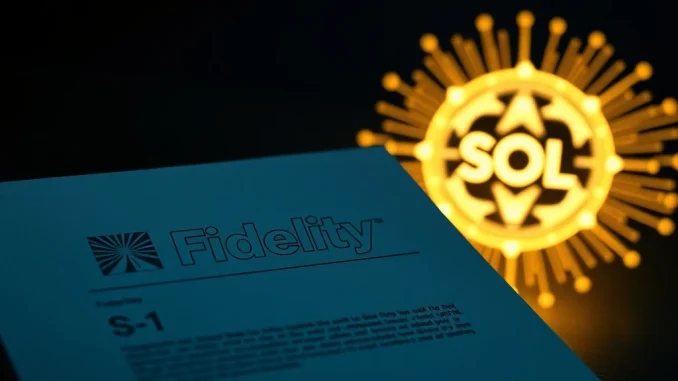
The cryptocurrency market is buzzing with significant news. Fidelity, a major player in traditional finance, has taken a decisive step forward. They recently updated their S-1 registration statement for a proposed Spot SOL ETF. This development marks a crucial moment for the Solana ecosystem and the broader digital asset space.
Understanding Fidelity’s Pivotal S-1 Update
Fidelity’s latest action signals continued institutional interest in cryptocurrencies beyond Bitcoin and Ethereum. Eleanor Terrett, a respected host on Crypto in America, first shared this update. An S-1 filing is a preliminary registration document. It is submitted to the U.S. Securities and Exchange Commission (SEC). This document outlines a company’s plans to offer new securities to the public. For a Fidelity Solana ETF, it details the structure, risks, and operational aspects of the proposed fund.
This updated filing shows Fidelity’s commitment. It indicates their readiness to navigate the regulatory landscape. Such updates often include responses to SEC feedback. They also reflect changes in market conditions or internal strategies. Ultimately, this move brings a potential Solana ETF closer to reality. Investors watch these developments closely.
The Significance of a Spot SOL ETF
A spot ETF holds the underlying asset directly. For a Spot SOL ETF, this means the fund would directly own Solana (SOL) tokens. This differs from futures ETFs, which track futures contracts. Direct ownership offers a purer form of exposure to the asset’s price movements. It also simplifies access for traditional investors. They can gain exposure without directly buying and storing cryptocurrencies.
Institutional adoption is a key driver for crypto market growth. A Fidelity-backed SOL ETF could unlock significant capital. Many traditional financial advisors and their clients prefer regulated investment vehicles. An ETF provides this structure. It also offers liquidity and ease of trading. This makes it an attractive option for diversifying portfolios.
Fidelity’s Strategic Move in the Crypto Landscape
Fidelity has a history of embracing digital assets. They launched Fidelity Digital Assets in 2018. This unit provides enterprise-grade custody and trading solutions. Fidelity also offers Bitcoin and Ethereum ETFs in other markets. Their push for a Fidelity Solana ETF aligns with this forward-thinking strategy. It demonstrates their belief in Solana’s long-term potential.
The firm aims to be a leader in the evolving digital asset economy. Their actions often set precedents for other financial institutions. By pursuing a Solana ETF, Fidelity signals confidence. They see Solana as a viable, investable asset. This move could encourage other major players to explore similar products. Therefore, it is a significant step for the entire crypto industry.
Solana’s Growing Prominence and Market Impact
Solana has emerged as a leading blockchain platform. It boasts high transaction speeds and low costs. Its ecosystem supports numerous decentralized applications (dApps) and NFTs. The SOL token powers this network. It is used for transaction fees and staking. Solana’s technological advantages make it a strong contender for institutional interest.
The potential approval of a Spot SOL ETF could significantly impact Solana’s market. Increased demand from institutional investors might drive up the price of SOL. Furthermore, it could enhance Solana’s legitimacy in mainstream finance. This could attract more developers and users to its ecosystem. Such an ETF would offer a regulated gateway to Solana’s growth story. It would provide a new avenue for investment.
Navigating Regulatory Hurdles: The Path to SOL ETF Approval
The U.S. SEC has historically been cautious with spot crypto ETFs. Bitcoin spot ETFs only received approval in early 2024. This followed years of rejections and legal battles. The SEC often cites concerns about market manipulation and investor protection. However, the approval of Bitcoin and Ethereum futures ETFs, and later spot Bitcoin ETFs, created a precedent.
The SEC’s decision-making process for a Fidelity Solana ETF will be rigorous. They will scrutinize market surveillance, custody arrangements, and liquidity. Fidelity’s updated S-1 filing likely addresses many of these concerns. The crypto industry hopes that the SEC’s evolving stance on digital assets will favor approval. This would open doors for more altcoin ETFs.
Comparing the Solana ETF with Bitcoin and Ethereum Precedents
The journey for a Solana ETF mirrors that of Bitcoin and Ethereum. Bitcoin ETFs faced initial skepticism. Yet, their eventual approval validated the asset class. Ethereum ETFs are also moving through the regulatory pipeline. These precedents provide a roadmap for Solana. The SEC’s comfort level with established cryptocurrencies could extend to Solana.
However, each asset has unique characteristics. Solana’s concentration of ownership and network stability will be examined. The SEC will assess if Solana’s market is mature enough for an ETF. Fidelity’s expertise in navigating these processes is invaluable. Their persistent efforts demonstrate a strong belief in the product. The outcome for the Fidelity S-1 filing will be closely watched.
Future Outlook for Spot SOL ETFs and Institutional Investment
The approval of a Spot SOL ETF would mark a new era. It would signal broader acceptance of diverse cryptocurrencies. This could pave the way for ETFs tracking other prominent altcoins. Institutional capital flows into Solana could accelerate innovation within its ecosystem. It would also solidify its position as a top-tier blockchain.
Investors and market participants eagerly await the SEC’s decision. The updated S-1 filing from Fidelity is a positive indicator. It shows progress in the application process. While challenges remain, the momentum is building. The future of institutional investment in Solana looks promising. This development could reshape how traditional finance interacts with digital assets.
Fidelity’s updated S-1 filing for a Spot SOL ETF represents a significant milestone. It highlights growing institutional confidence in Solana. This move could dramatically increase accessibility and legitimacy for the SOL token. As the regulatory landscape evolves, the potential for a Fidelity Solana ETF to open new avenues for investors remains a key focus for the crypto market.
Frequently Asked Questions (FAQs)
What is an S-1 registration statement?
An S-1 registration statement is a preliminary legal document. Companies file it with the U.S. SEC. It announces their intent to offer new securities to the public. For an ETF, it details the fund’s structure, investment strategy, risks, and operational aspects.
Why is Fidelity’s updated S-1 filing for a Spot SOL ETF important?
This update is crucial because it signals Fidelity’s continued commitment to launching a Spot SOL ETF. It often reflects responses to SEC feedback. It brings the potential ETF closer to regulatory approval. This could open Solana to a wider range of traditional investors.
What is the difference between a spot ETF and a futures ETF?
A spot ETF directly holds the underlying asset, like actual Solana tokens. A futures ETF, however, invests in futures contracts that track the asset’s price. Spot ETFs offer more direct exposure to the asset’s current market price.
How could a Solana ETF impact the SOL token price?
The approval of a Solana ETF could significantly increase demand for SOL. This is because the fund would need to acquire SOL tokens to back the ETF shares. Increased institutional buying pressure could potentially lead to a rise in SOL’s market price.
What regulatory challenges does a Spot SOL ETF face?
Spot crypto ETFs face scrutiny from the SEC. Concerns include market manipulation, investor protection, and custody risks. The SEC examines market surveillance, liquidity, and the overall maturity of the underlying asset’s market. Fidelity’s S-1 filing aims to address these concerns.
When might the Fidelity Solana ETF be approved?
The exact timeline for approval remains uncertain. The SEC’s review process can be lengthy. It depends on various factors, including market conditions and regulatory feedback. However, Fidelity’s updated S-1 filing suggests active progress in the application process.