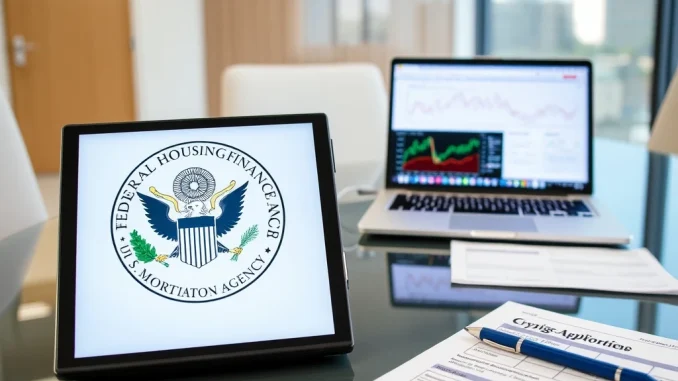
Could your cryptocurrency holdings affect your chances of securing a mortgage? The U.S. Federal Housing Finance Agency (FHFA) is set to explore this critical question, sparking discussions among crypto investors and homebuyers alike.
Why is the FHFA Studying Cryptocurrency Holdings?
William Pulte, Director of the FHFA, recently announced on X that the agency will examine how digital assets influence mortgage qualification. This move highlights the growing intersection between crypto and traditional finance. Key points to consider:
- The FHFA regulates Fannie Mae and Freddie Mac, which back most U.S. mortgages.
- Crypto’s volatility raises concerns about its role in financial assessments.
- The study could lead to new mortgage lending guidelines.
How Might Crypto Impact Mortgage Qualification?
Currently, lenders view cryptocurrency holdings differently than traditional assets. The FHFA study may address:
| Factor | Potential Impact |
|---|---|
| Asset Volatility | Could affect debt-to-income calculations |
| Verification Challenges | Difficulty proving crypto asset ownership |
| Tax Implications | Unrealized gains may complicate financial profiles |
What This Means for Crypto Investors Seeking Mortgages
The FHFA’s examination could significantly influence mortgage accessibility for crypto holders. While some lenders currently accept crypto as assets, others remain hesitant due to:
- Price fluctuations creating uncertainty
- Lack of standardized valuation methods
- Regulatory uncertainty surrounding digital assets
Preparing for Potential Changes in Mortgage Eligibility
While we await the FHFA’s findings, crypto investors can take proactive steps:
- Maintain detailed records of all crypto transactions
- Consider diversifying assets before applying for a mortgage
- Consult with lenders familiar with cryptocurrency holdings
The FHFA’s study marks a pivotal moment in the recognition of cryptocurrency within traditional financial systems. As digital assets continue gaining mainstream acceptance, this research could pave the way for clearer guidelines benefiting both lenders and borrowers.
Frequently Asked Questions
1. When will the FHFA complete its study on cryptocurrency and mortgages?
The FHFA hasn’t announced a timeline, but such studies typically take several months to complete.
2. Do current mortgage lenders accept cryptocurrency as collateral?
Some specialized lenders do, but most traditional institutions remain cautious due to volatility and verification challenges.
3. How might crypto holdings affect my debt-to-income ratio?
Lenders may apply conservative valuation methods or exclude volatile assets entirely when calculating your financial position.
4. Should I liquidate my crypto before applying for a mortgage?
This depends on your individual circumstances. Consult with a financial advisor to determine the best approach for your situation.
5. Will this study lead to new mortgage regulations?
While the study could inform future guidelines, any regulatory changes would require separate rulemaking processes.