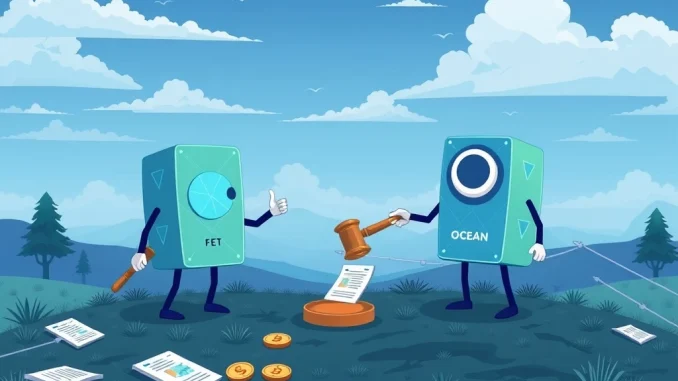
The cryptocurrency world often sees partnerships form, yet sometimes these alliances unravel, leading to dramatic consequences. A significant legal dispute has now erupted between two prominent AI-focused blockchain projects. This escalating **crypto legal battle** involves Fetch.ai (FET) and Ocean Protocol (OCEAN), stemming from Ocean Protocol’s recent withdrawal from the Artificial Superintelligence (ASI) Alliance. This development has sent ripples through the decentralized AI sector, highlighting the complexities of tokenomics and inter-project relationships.
Fetch.ai Lawsuit Ignites Over Alleged Token Dumping
A class-action lawsuit has been filed against Ocean Protocol and its co-founders. The plaintiffs, including Fetch.ai and several token holders, brought the case to the U.S. District Court for the Southern District of New York on November 4. They allege a breach of trust and a significant financial maneuver that negatively impacted the market. Specifically, the lawsuit centers on claims of **Ocean Protocol dumping** a substantial amount of tokens.
According to reports from CryptoSlate, the core accusation is severe. Ocean Protocol allegedly promised to allocate hundreds of millions of OCEAN tokens for Decentralized Autonomous Organization (DAO) rewards. However, after joining the ASI Alliance, these tokens were reportedly converted into FET tokens. The plaintiffs assert that Ocean Protocol then proceeded to sell, or ‘dump,’ these newly acquired FET tokens. This action, they claim, directly undermined the value of the **FET token** and damaged the DAO’s governance model. Such allegations raise serious questions about market manipulation and fiduciary duties within the crypto space.
The Unraveling of the ASI Alliance
The ASI Alliance was initially formed as a groundbreaking collaboration between Fetch.ai, Ocean Protocol, and SingularityNET (AGIX). Its ambitious goal was to create a decentralized AI infrastructure, fostering innovation and interoperability. The alliance aimed to combine the strengths of its members: Fetch.ai’s multi-agent systems, Ocean Protocol’s data sharing capabilities, and SingularityNET’s AI services. This union was seen as a significant step towards a unified decentralized AI ecosystem.
However, the alliance’s promising future took an unexpected turn when Ocean Protocol announced its departure. This withdrawal, initially attributed to differing strategic visions, has now escalated into a full-blown legal confrontation. The lawsuit suggests that the motivations behind Ocean Protocol’s exit might have been more complex and financially driven than initially stated. The departure itself created uncertainty, but the subsequent **Fetch.ai lawsuit** has introduced a new layer of scrutiny.
Allegations of OCEAN to FET Conversion and Subsequent Sales
The lawsuit details a specific sequence of events central to the alleged token dumping. Plaintiffs claim that Ocean Protocol, after becoming part of the ASI Alliance, converted a large volume of its native OCEAN tokens. These tokens were reportedly exchanged for Fetch.ai’s native currency, the FET token. The crux of the accusation is that these FET tokens, once acquired, were not held or used to support the alliance’s goals. Instead, they were allegedly sold off in significant quantities, constituting a ‘dumping’ event.
This alleged action had two primary negative impacts, according to the lawsuit:
- Value Depreciation: The sudden influx of FET tokens onto the market from a major entity like Ocean Protocol could exert downward pressure on the **FET token**’s price. This would harm existing FET holders and undermine market confidence.
- DAO Governance Impact: The funds initially promised for DAO rewards were allegedly diverted and sold. This action could severely compromise the DAO’s ability to fund projects, incentivize participation, and maintain its governance structure effectively.
These allegations paint a picture of a calculated move that prioritized short-term financial gains over the long-term health of the alliance and its constituent token ecosystems. Consequently, this situation has become a critical point of discussion within the broader **crypto legal battle** landscape.
Ocean Protocol’s Previous Denials and Market Reactions
Interestingly, this is not the first time such accusations have surfaced. As previously reported by Coin Pulse, Ocean Protocol’s CEO had denied similar dumping allegations when the company initially announced its departure from the ASI Alliance. At that time, the company maintained that its actions were in line with its strategic objectives and did not involve any illicit market manipulation.
However, the filing of a formal class-action lawsuit indicates that the plaintiffs believe they have substantial evidence to support their claims. The market reaction to these developments has been mixed, with both FET and OCEAN tokens experiencing volatility as investors weigh the potential outcomes of this high-stakes legal confrontation. The outcome of this **Fetch.ai lawsuit** could set precedents for how tokenomics and inter-project agreements are handled in the future, especially concerning token conversions and sales post-alliance formation.
The situation underscores the need for clear, legally binding agreements in multi-project collaborations. It also highlights the growing maturity of the crypto industry, where legal recourse is becoming a more common avenue for resolving disputes. The implications extend beyond just Fetch.ai and Ocean Protocol, potentially influencing future mergers, acquisitions, and alliance structures across the entire decentralized ecosystem. The unfolding events will be closely watched by investors, developers, and legal experts alike, as they navigate this complex and evolving **crypto legal battle**.
The Broader Implications for Decentralized AI and Crypto Ecosystems
This **Fetch.ai lawsuit** has far-reaching implications, particularly for the burgeoning decentralized AI sector. Alliances like ASI are crucial for pooling resources and expertise, driving innovation in a rapidly evolving field. When such partnerships fracture under contentious circumstances, it can erode trust and deter future collaborations. Moreover, the allegations of **Ocean Protocol dumping** highlight vulnerabilities in tokenomics models and the governance mechanisms designed to protect token holders.
For the wider crypto market, this case serves as a stark reminder of the legal risks involved in digital asset transactions and inter-protocol agreements. It emphasizes the increasing scrutiny from legal systems on decentralized entities. As the industry matures, the clarity and enforceability of smart contracts and traditional legal agreements will become paramount. The resolution of this dispute could influence how future token mergers, migrations, and cooperative ventures are structured to prevent similar conflicts.
Navigating the Legal Landscape: What Comes Next?
The class-action lawsuit will now proceed through the U.S. District Court. This process typically involves several stages, including discovery, where both sides exchange evidence, followed by motions and potentially a trial. The legal proceedings will undoubtedly be complex, involving expert testimonies on tokenomics, market analysis, and blockchain forensics. The plaintiffs will need to demonstrate that Ocean Protocol’s actions constituted a breach of agreement, fiduciary duty, or market manipulation, directly causing damages to Fetch.ai and its token holders.
Ocean Protocol, on its part, will likely reiterate its position that its actions were legitimate and within its operational rights. The defense will aim to discredit the claims of dumping and argue that market fluctuations are a natural part of the crypto landscape. The outcome could result in significant financial penalties, a settlement, or a complete exoneration. Regardless of the verdict, this case will undoubtedly leave a lasting mark on the relationship between these two projects and the broader decentralized AI community. The ongoing **crypto legal battle** underscores the increasing need for robust legal frameworks in the digital asset space.
The allegations against Ocean Protocol represent a serious challenge to the integrity of the decentralized AI ecosystem. The **Fetch.ai lawsuit** over alleged token dumping is more than just a dispute between two projects; it is a test case for accountability and trust in the rapidly evolving world of cryptocurrencies. As the legal proceedings unfold, the crypto community will be watching closely for precedents that could shape the future of inter-protocol collaborations and token management. The resolution of this **crypto legal battle** will undoubtedly have significant implications for all stakeholders involved.
Frequently Asked Questions (FAQs)
What is the core allegation in the Fetch.ai lawsuit against Ocean Protocol?
The core allegation is that Ocean Protocol, after joining the ASI Alliance, converted hundreds of millions of its OCEAN tokens into FET tokens and subsequently ‘dumped’ them on the market. This action allegedly undermined the value of the FET token and damaged Fetch.ai’s DAO governance model.
What is the ASI Alliance, and why is it relevant to this dispute?
The ASI Alliance was a collaboration between Fetch.ai, Ocean Protocol, and SingularityNET, aiming to build a decentralized AI infrastructure. Ocean Protocol’s withdrawal from this alliance, followed by the alleged token dumping, is central to the lawsuit.
Where was the Fetch.ai lawsuit filed?
The class-action lawsuit was filed in the U.S. District Court for the Southern District of New York on November 4.
Has Ocean Protocol responded to these allegations?
Yes, Ocean Protocol’s CEO had previously denied similar dumping allegations when the company announced its departure from the ASI Alliance. Their legal team will likely continue to defend against these claims in court.
What are the potential implications of this crypto legal battle?
This lawsuit could set important precedents for how token conversions, sales, and inter-project agreements are handled in the crypto space. It highlights the growing legal scrutiny on decentralized entities and the need for robust legal frameworks in the industry.
How could the alleged Ocean Protocol dumping impact the FET token?
If true, the alleged dumping of FET tokens by Ocean Protocol could lead to increased selling pressure, potentially causing a depreciation in the FET token’s market value and impacting investor confidence.