Cryptocurrency markets often react to broader economic signals. Therefore, investors closely watch statements from central banks. Recently, Federal Reserve Chair Jerome Powell delivered crucial remarks. His comments offered insights into the current economic outlook. Powell highlighted growing risks to employment. He also left the door open for potential monetary policy adjustments.
Federal Reserve Navigates Growing Job Risks
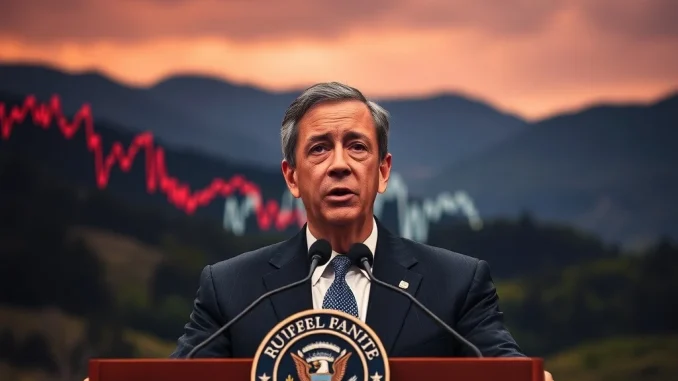
Federal Reserve Chair Jerome Powell recently addressed the evolving economic landscape. He specifically pointed out increasing risks to employment. This assessment comes as the labor market shows signs of cooling. Powell’s remarks suggest a cautious approach from the central bank. He acknowledged the potential for a slowdown in job creation. This could also mean a rise in unemployment rates. Understanding these job risks is vital for market participants. A weaker labor market often influences consumer spending. It also impacts overall economic stability. Powell’s statements indicate the Federal Reserve is closely monitoring these trends. They are evaluating their potential impact on the broader economy.
Furthermore, Powell noted that the impact of tariffs on inflation is expected to be temporary. This assessment is important for future policy decisions. Persistent inflation would demand different actions. Temporary inflationary pressures, however, allow more flexibility. The Federal Reserve aims for stable prices and maximum employment. Therefore, balancing these factors is a complex task. Powell’s comments were reported by Walter Bloomberg on X. They offer a direct window into the Fed’s current thinking.
Jerome Powell on Potential Monetary Policy Shifts
Jerome Powell’s recent comments have stirred significant discussion. He indicated that the overall balance of risks could justify policy adjustments. This statement is key for market participants. It suggests the Federal Reserve is prepared to act if conditions warrant. However, Powell stopped short of committing to immediate interest rate cuts. This cautious stance reflects ongoing economic uncertainty. The Fed considers various data points before making significant changes. These include inflation figures, employment reports, and global economic trends.
A policy adjustment could involve several actions. It might mean lowering the federal funds rate. This would make borrowing cheaper. Such a move typically stimulates economic activity. Conversely, the Fed could maintain current rates. They might also signal a readiness to cut rates in the future. Powell’s words suggest flexibility. The Federal Reserve remains data-dependent. Its decisions aim to support sustainable economic growth. This careful approach helps manage market expectations. It also provides room for maneuver as new data emerges.
The Economic Outlook and Future Interest Rates
The current economic outlook remains a central focus for the Federal Reserve. Powell’s remarks underscore a period of careful observation. He highlighted that the Fed’s decisions are not predetermined. Instead, they depend on incoming economic data. The path of interest rates is particularly sensitive to these developments. Traders and investors closely analyze every word from the Fed. They seek clues about future rate movements. A shift in the Fed’s stance on interest rates can significantly impact financial markets. This includes bond yields, equity prices, and even cryptocurrency valuations.
Many analysts anticipate potential rate cuts later in the year. Powell’s comments reinforce this possibility without confirming it. He emphasized the need for a balanced approach. The Fed must weigh the risks of both inflation and economic slowdown. High interest rates can cool an overheating economy. Yet, they can also stifle growth if maintained too long. Therefore, the Federal Reserve faces a delicate balancing act. Its goal is to achieve a ‘soft landing’ for the economy. This means bringing inflation down without triggering a recession.
Navigating the Broader Monetary Policy Landscape
The Federal Reserve’s monetary policy decisions have far-reaching implications. These decisions affect businesses, consumers, and global markets. Powell’s latest statements reflect a nuanced understanding of these complexities. The Fed uses various tools to manage the economy. Adjusting the federal funds rate is one of the most prominent. It influences borrowing costs across the economy. Changes in this rate impact everything from mortgages to business loans. Consequently, these policy choices shape investment decisions. They also influence consumer spending patterns.
Powell’s discussion about tariffs and inflation provides additional context. He views the inflationary impact of tariffs as temporary. This perspective is crucial. It suggests the Fed might not need to keep interest rates higher for longer due to tariffs alone. Instead, other, more persistent inflationary pressures would drive such decisions. The overall balance of risks guides the Federal Reserve. This holistic view helps the Fed formulate effective strategies. These strategies aim to achieve its dual mandate of price stability and maximum employment.
Conclusion: A Cautious Path Forward for the Federal Reserve
Federal Reserve Chair Jerome Powell’s recent remarks offer a clear picture. The central bank is acutely aware of growing employment risks. It is also prepared for potential monetary policy adjustments. However, it is not yet committed to specific actions like interest rate cuts. The Fed’s approach remains cautious and data-dependent. Its decisions will hinge on future economic indicators. Investors and businesses should therefore stay informed. Understanding the Federal Reserve’s evolving stance is crucial. It allows them to navigate the uncertain economic landscape effectively. The coming months will reveal more about the Fed’s path forward. All eyes will remain on the central bank for further guidance.
Frequently Asked Questions (FAQs)
Q1: What did Jerome Powell say about job risks?
Jerome Powell highlighted growing risks to employment. He noted a potential cooling in the labor market. This suggests a slowdown in job creation or a possible rise in unemployment.
Q2: Is the Federal Reserve committed to interest rate cuts?
No, Jerome Powell stopped short of committing to rate cuts. He stated that the overall balance of risks could justify policy adjustments. However, he emphasized that the Fed remains data-dependent.
Q3: How do tariffs affect inflation, according to Powell?
Powell stated that the impact of tariffs on inflation is expected to be temporary. This view suggests tariffs might not be a long-term driver of high inflation. This allows the Federal Reserve more flexibility in its monetary policy decisions.
Q4: What are ‘policy adjustments’ in this context?
‘Policy adjustments’ refer to potential changes in the Federal Reserve’s monetary policy. These could include lowering the federal funds rate, maintaining current rates, or signaling future rate changes. The goal is to respond to economic conditions.
Q5: How does the Federal Reserve’s economic outlook impact markets?
The Federal Reserve’s economic outlook significantly influences financial markets. Its statements on inflation, employment, and interest rates affect investor sentiment. They also impact bond yields, stock prices, and even cryptocurrency valuations. Market participants closely watch for any signals.