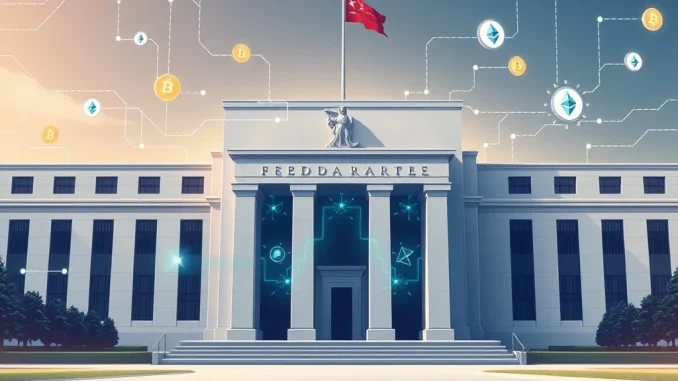
A significant development is underway in the U.S. financial landscape. The Federal Reserve is actively exploring the creation of new payment accounts. These accounts would grant cryptocurrency and fintech firms unprecedented access to its crucial payment network. This move represents a substantial step toward integrating digital assets into mainstream finance. For many in the digital asset space, this signals a pivotal shift. It could fundamentally change how the Federal Reserve crypto ecosystem interacts with traditional banking.
Federal Reserve Crypto Accounts: A Game Changer
Federal Reserve Governor Christopher Waller recently highlighted this potential shift. He believes cryptocurrency will no longer remain on the fringes of the financial system. During a Fed payment innovation conference, Waller unveiled a new prototype. This prototype aims to expand central bank services crypto for digital asset firms. He has specifically requested a thorough review of the idea. These new payment accounts, Waller explained, would function as a “skinny master account.” This concept promises to reshape how digital asset firms interact with traditional banking infrastructure. It offers a direct pathway previously unavailable.
Understanding the “Skinny Master Account”
A master account at the Federal Reserve offers direct access to its payment systems. Historically, only federally chartered banks could hold these accounts. They enable financial institutions to settle transactions directly. This bypasses the need for intermediary banks. The “skinny” designation suggests a more limited scope. It might offer specific payment functionalities without full banking privileges. For crypto firms, this represents a monumental change. It provides direct, efficient pathways for clearing and settlement. Furthermore, it could significantly reduce costs and operational complexities. This direct access enhances the legitimacy of crypto operations within the established financial framework. It marks a significant evolution for the fintech master account concept.
Unlocking Crypto Payment Access and Efficiency
Currently, cryptocurrency firms rely on commercial banks for access to the Federal Reserve’s payment network. This indirect approach introduces multiple layers of risk and inefficiency. It also adds costs. Direct crypto payment access would streamline operations considerably. Firms could move funds more quickly and securely. This would support a range of services, including stablecoin issuance and digital asset trading. Waller emphasized that the decentralized finance (DeFi) industry deserves serious consideration. He stated it should not be viewed with “suspicion or contempt.” This statement underscores a growing recognition of DeFi’s potential. It acknowledges the need for modern solutions.
DeFi Integration into the Financial System
Waller further noted the increasing integration of distributed ledger technology (DLT) and cryptocurrencies. These technologies are becoming deeply embedded in the structure of payment and financial systems. This perspective signals a maturing view within the Federal Reserve. They acknowledge the irreversible trend of digital innovation. Allowing direct access would foster greater stability and oversight. It would also reduce systemic risks associated with opaque intermediaries. The move facilitates safer and more efficient innovation. This proactive stance aims to bridge the gap between traditional finance and the rapidly evolving digital asset space. It acknowledges the DeFi financial system’s growing importance and influence.
Expanding Central Bank Services for a Digital Era
The Federal Reserve’s consideration extends beyond simple access. It reflects a broader effort to modernize central bank services crypto and adapt to technological advancements. This initiative aligns with ongoing discussions about central bank digital currencies (CBDCs). It also relates to the future of payments. By providing direct on-ramps, the Fed aims to enhance competition. It also seeks to improve resilience within the financial system. This proactive engagement is crucial. It ensures the U.S. remains a leader in financial innovation. It also helps manage risks associated with new technologies effectively. This potential expansion represents a forward-thinking approach. It embraces the future of finance.
Benefits and Challenges of Direct Access
The introduction of “skinny master accounts” carries both significant advantages and inherent challenges. Understanding these aspects is crucial for a comprehensive perspective on this proposed change.
Benefits:
- Reduced Counterparty Risk: Firms would deal directly with the Federal Reserve. This minimizes exposure to commercial bank failures or operational issues.
- Lower Transaction Costs: Eliminates fees from multiple intermediary banks. This makes operations more economical for crypto and fintech firms.
- Faster Settlement: Real-time gross settlement becomes possible. This enhances liquidity and operational efficiency significantly.
- Enhanced Legitimacy: Integrates crypto into the formal financial system. This can foster greater trust and broader institutional adoption.
- Increased Innovation: Provides a stable, regulated platform for new financial products and services. This encourages further development in the digital asset space.
Challenges:
- Regulatory Framework: Defining appropriate oversight for non-bank entities remains complex. New rules must balance innovation with consumer protection.
- Risk Management: Ensuring robust protocols for fraud, illicit finance, and cyber security is paramount. The Fed must safeguard the integrity of its network.
- Technical Integration: Developing secure and scalable interfaces will require substantial effort. Compatibility across diverse systems is essential.
- Political Will: Gaining consensus among various stakeholders, including Congress and existing financial institutions, presents a hurdle.
- Systemic Impact: Assessing the broader effects on financial stability and the banking sector requires careful consideration.
The journey toward direct access will involve navigating these complexities carefully. Stakeholders must collaborate to ensure a smooth transition.
The Future of Federal Reserve Crypto Engagement
The Federal Reserve’s exploration of direct payment accounts for crypto and fintech firms marks a truly significant moment. It signifies a profound shift in how policymakers view digital assets. This initiative, championed by Governor Waller, could pave the way for a more integrated and efficient financial ecosystem. While challenges remain, the potential benefits of this Federal Reserve crypto move are clear. It promises to foster innovation, enhance stability, and ultimately reshape the future of finance. The financial industry watches closely as these crucial discussions unfold. This could be the start of a new era for digital finance.
Frequently Asked Questions (FAQs)
Q1: What are “skinny master accounts” for crypto firms?
A1: “Skinny master accounts” would grant crypto and fintech firms direct access to the Federal Reserve’s payment network. They would likely offer specific payment functionalities without full banking privileges. This differs from traditional master accounts held by banks.
Q2: Why is the Federal Reserve considering this change?
A2: The Fed recognizes the growing integration of distributed ledger technology and cryptocurrencies into the financial system. This move aims to enhance efficiency, reduce risk, foster innovation, and provide greater oversight for the digital asset industry.
Q3: How would direct access benefit cryptocurrency firms?
A3: Direct access would streamline payment processing, reduce transaction costs, and minimize counterparty risk. It would also lend greater legitimacy to crypto operations within the established financial framework. This could accelerate crypto payment access significantly.
Q4: What are the main challenges associated with this proposal?
A4: Key challenges include developing appropriate regulatory frameworks, ensuring robust risk management protocols, addressing technical integration complexities, and securing political consensus among diverse stakeholders.
Q5: Will this proposal lead to a U.S. Central Bank Digital Currency (CBDC)?
A5: While related, this proposal for payment accounts is distinct from a CBDC. However, both initiatives reflect the Fed’s broader strategy to adapt central bank services crypto for a digital economy. This move could inform future CBDC discussions.
Q6: What is Governor Christopher Waller’s stance on DeFi?
A6: Governor Waller believes the DeFi industry should not be viewed with “suspicion or contempt.” He advocates for its integration, acknowledging that DLT and cryptocurrencies are increasingly becoming part of the financial system’s structure. This shows recognition of the DeFi financial system as a legitimate force.