The financial world keenly watches every pronouncement from the US Federal Reserve. Recent signals from Fed Chair Jerome Powell suggest a critical juncture for economic stability. These discussions, often filtered through influential reporters like Nick Timiraos of the Wall Street Journal, hint at potential future Fed rate cuts. Such movements directly impact global markets, including the volatile cryptocurrency sector. Therefore, understanding the nuances of the Fed’s stance is crucial for investors and market participants alike.
Jerome Powell’s Stance on Restrictive Interest Rates
Federal Reserve Chair Jerome Powell recently assessed current interest rates as still somewhat restrictive. This evaluation comes despite a rate cut implemented just last week. Nick Timiraos, widely considered an unofficial spokesperson for the Fed, relayed this significant insight. His reporting suggests the central bank remains vigilant about economic conditions. Powell’s comments indicate a careful approach to monetary policy, balancing various economic indicators. The Fed aims for optimal economic health, considering both inflation and employment data.
Powell’s perspective highlights the delicate balance the Fed must maintain. Keeping rates too high for too long can stifle economic growth. Conversely, cutting them too quickly might reignite inflationary pressures. This ongoing assessment underscores the complexity of guiding the world’s largest economy. Furthermore, the Fed monitors a broad range of data points. These include consumer spending, manufacturing output, and global economic trends. Each piece of information informs their decisions on future rate adjustments.
The Possibility of Further Fed Rate Cuts
Timiraos’s reporting opened the door to another potential Fed rate cut later this year. This scenario hinges on the labor market’s trajectory. If a slowing labor market becomes a greater concern than inflation, the Fed might act. This flexible approach allows the central bank to adapt to evolving economic realities. Consequently, market participants are now closely monitoring upcoming labor market reports. These reports will offer vital clues about the Fed’s next steps.
The prospect of additional rate adjustments carries significant implications. Lower interest rates typically stimulate borrowing and investment. Businesses may expand, and consumers might increase spending. However, the Fed must avoid creating excessive demand that could push prices higher. The central bank’s actions aim to achieve a ‘soft landing’ for the economy. This means cooling inflation without triggering a recession. It is a challenging objective requiring precise timing and communication.
Key factors influencing future decisions include:
- **Inflation Trends:** The path toward the Fed’s 2% target remains paramount.
- **Labor Market Data:** Unemployment rates and job growth figures provide critical insights.
- **Global Economic Conditions:** International developments can impact domestic policy.
- **Financial Stability Risks:** The Fed also considers potential risks to the financial system.
Balancing Price Stability and a Healthy Job Market: The Fed’s Dual Mandate
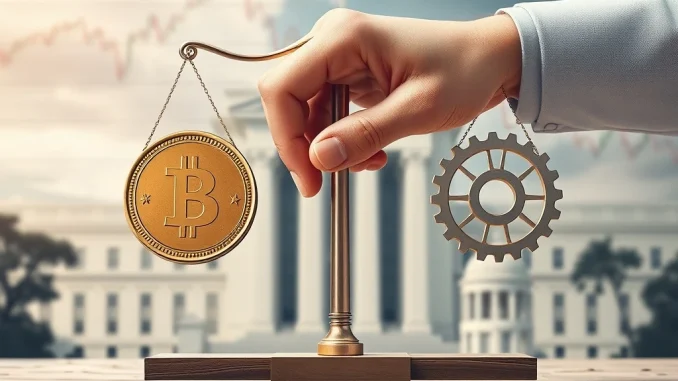
Powell consistently reiterates the Fed’s challenging dual mandate. The central bank must achieve both price stability, targeting 2% inflation, and maximum sustainable employment. This objective creates a two-way risk for monetary policy decisions. There is no simple or risk-free path forward. Each decision involves trade-offs that can have wide-ranging effects on the economy.
For instance, an overly aggressive tightening of policy might curb inflation effectively. Yet, it could also lead to job losses and an economic slowdown. Conversely, a too-lenient approach could support employment but allow inflation to persist. The Fed constantly analyzes these complex dynamics. They use various tools and models to forecast economic outcomes. Ultimately, their goal is to foster conditions that allow for long-term economic prosperity.
Understanding the Two-Way Risk of Monetary Policy
According to Timiraos, Powell highlighted the specific dangers associated with each policy direction. Cutting rates excessively or too quickly could keep inflation near 3%. This would undermine the Fed’s price stability goal. Such a scenario could erode purchasing power and create economic uncertainty. Therefore, the Fed must proceed with caution, ensuring its actions are data-dependent.
On the other hand, maintaining a restrictive policy for an extended period carries its own risks. It could unnecessarily shock the labor market, leading to job cuts and increased unemployment. This would contradict the Fed’s employment mandate. Thus, the US Federal Reserve faces immense pressure to calibrate its policies perfectly. Their decisions aim to avoid both overheating and overcooling the economy. This careful calibration reflects the nuanced challenges of modern economic management.
The Fed’s communication strategy is also vital. Clear and consistent messaging helps manage market expectations. It reduces volatility and allows businesses and consumers to plan more effectively. Powell’s remarks, as interpreted by Timiraos, serve this purpose. They offer a glimpse into the central bank’s thinking, guiding market sentiment.
Impact of Interest Rates on Financial Markets
Changes in interest rates profoundly affect financial markets globally. Lower rates can make riskier assets, like stocks and cryptocurrencies, more attractive. Investors may seek higher returns away from traditional fixed-income investments. Conversely, higher rates can draw capital towards safer assets. This often includes government bonds. Therefore, the prospect of Fed rate cuts can signal a potential tailwind for growth-oriented assets.
For the cryptocurrency market, macro-economic factors are increasingly influential. When the cost of borrowing is lower, capital flows more freely. This can support speculative investments, including digital assets. Conversely, an environment of high rates and economic uncertainty often leads to a ‘risk-off’ sentiment. This typically sees investors move away from volatile assets. Consequently, crypto investors closely monitor Fed announcements and economic data for cues on market direction.
The Fed’s current stance, as conveyed by Powell, suggests an ongoing evaluation. They are prepared to adjust monetary policy as needed. This adaptability is critical in a dynamic global economy. Markets will continue to parse every word from the Fed for indications of future moves. These decisions will shape investment strategies across all asset classes, including the burgeoning digital asset space.
Conclusion: Navigating Future Monetary Policy Adjustments
The signals from Jerome Powell, channeled through Nick Timiraos, paint a clear picture. The US Federal Reserve remains committed to its dual mandate. It is navigating a complex economic landscape. The potential for further Fed rate cuts exists, contingent on economic data, particularly the labor market. This cautious approach to interest rates reflects a deep understanding of the two-way risks involved in monetary policy. Investors and the public should stay informed. Future adjustments will significantly influence economic stability and market performance.
Frequently Asked Questions (FAQs)
Q1: Who is Nick Timiraos and why is his reporting significant?
A1: Nick Timiraos is a Wall Street Journal reporter. He is often called the unofficial spokesperson for the U.S. Federal Reserve. His articles are significant because they frequently provide accurate insights into the Fed’s thinking and future policy directions, making him a crucial source for market participants.
Q2: What does Jerome Powell mean by current interest rates being “somewhat restrictive”?
A2: When Powell states that interest rates are “somewhat restrictive,” it means the current level of rates is high enough to slow down economic activity and cool inflation. Despite recent adjustments, the Fed believes rates are still exerting a braking effect on the economy, aiming to bring inflation back to its 2% target.
Q3: What factors could lead to more Fed rate cuts this year?
A3: The primary factor that could lead to more Fed rate cuts is a significant slowing of the labor market. If job growth weakens considerably or unemployment rises, the Fed might cut rates to stimulate economic activity and support employment, provided inflation risks are deemed manageable.
Q4: What is the “dual mandate” of the US Federal Reserve?
A4: The US Federal Reserve’s dual mandate requires it to pursue two primary goals: achieving maximum sustainable employment and maintaining price stability. Price stability is generally defined as an inflation rate of 2% over the long run.
Q5: How do potential Fed rate cuts impact cryptocurrency markets?
A5: Potential Fed rate cuts can positively impact cryptocurrency markets. Lower interest rates typically reduce the attractiveness of traditional, lower-risk investments like bonds. This encourages investors to seek higher returns in riskier assets, including cryptocurrencies, leading to increased capital inflow and potentially higher prices.
Q6: What are the risks of cutting interest rates too much or too quickly?
A6: Cutting interest rates too much or too quickly carries the risk of reigniting inflation. This could cause prices to remain elevated, potentially near 3% or higher, and erode purchasing power. It might also lead to asset bubbles and financial instability if the economy overheats.