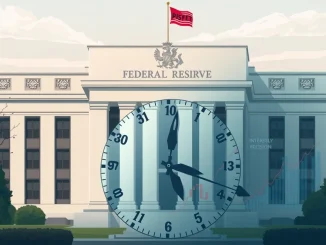
In the ever-evolving landscape of global finance, decisions made by powerful institutions like the Federal Reserve ripple through every market, including the dynamic world of cryptocurrencies. Understanding these shifts is crucial for any investor. Recently, a significant development has sent shockwaves through traditional finance and caught the attention of those keen on market transparency: a groundbreaking Fed lawsuit that seeks to pull back the curtain on the central bank’s most critical deliberations. This isn’t just about interest rates; it’s about the very principles of accountability and the future of economic governance.
The Core of the Unprecedented Fed Lawsuit
A U.S. investment firm, Azoria Capital, led by prominent figures connected to Donald Trump, has initiated a bold legal challenge against Federal Reserve Chairman Jerome Powell and other top central bank officials. The firm’s demand is clear and unprecedented: compel the Federal Open Market Committee (FOMC) to conduct its upcoming July 29–30 monetary policy meeting in public. This isn’t a mere request; it’s a lawsuit alleging that the Fed’s long-standing practice of closed-door discussions fundamentally violates federal transparency laws.
Azoria Capital, managed by James Fishback, asserts that the secrecy surrounding these crucial meetings undermines accountability and carries the significant risk of politicizing economic decisions. The firm’s legal filing specifically targets the Fed’s decision to maintain high interest rates, a policy stance that has drawn repeated criticism from former President Trump, who has consistently advocated for rate cuts. The lawsuit frames the Fed’s actions as potentially orchestrated to undermine Trump’s economic agenda, stating they “harm President Trump and his economic vision, to the detriment of the American people.” This assertion highlights a perceived alignment between the central bank and policies seen as adverse to Trump’s priorities, setting the stage for a dramatic legal showdown.
Why the July FOMC Meeting Matters: Secrecy vs. Transparency
The FOMC meeting is where the Federal Reserve makes its most impactful decisions regarding interest rates and other monetary policy tools. These decisions directly influence borrowing costs, inflation, employment, and ultimately, the health of the entire U.S. economy. Historically, these meetings have been conducted behind closed doors, with minutes released weeks later and transcripts much further down the line. The rationale has always been to allow for frank, uninhibited discussion among policymakers without immediate market reactions or political pressure.
However, Azoria Capital’s lawsuit fundamentally challenges this rationale, framing the secrecy as a breach of public trust. They argue that in an era demanding greater governmental transparency, the Fed, as a quasi-governmental body wielding immense power, should not be exempt from public scrutiny. The lawsuit could force the central bank to justify its closed-door practices, potentially under arguments of national security or functional necessity, which would be a significant shift from its current operational norms. For investors, particularly those in volatile markets like cryptocurrency, understanding the nuances of these meetings, even if delayed, is critical. Public access could provide real-time insights, but also introduce new layers of market volatility based on immediate reactions to discussions rather than carefully deliberated outcomes.
Trump Allies Spearhead the Push for Accountability
The involvement of Trump allies in this lawsuit adds a significant political dimension to what would otherwise be a legal and economic debate. Donald Trump has been a vocal critic of Jerome Powell and the Federal Reserve’s policies, particularly its interest rate hikes. He has publicly pressured Powell to lower rates, accusing the Fed of prioritizing its independence over the executive branch’s economic goals. This lawsuit can be seen as a legal extension of that ongoing campaign.
Key aspects of Trump’s long-standing critique include:
- Interest Rate Policy: Trump has consistently argued that the Fed’s 4.3% short-term interest rate policy is detrimental to economic growth, stifling investment and job creation.
- Pressure on Powell: The former President has not shied away from public criticism, even threatening to remove Powell from his position, though he later stated no immediate plans to do so before Powell’s term ends.
- Symbolic Gestures: Trump’s past visit to the Federal Reserve building was widely interpreted as a symbolic escalation of his pressure tactics against the institution.
The lawsuit by Azoria Capital aligns perfectly with these broader criticisms, framing the legal action as a necessary step to ensure the Fed’s accountability to the American people and to prevent what they perceive as politically motivated economic decisions.
The Debate Over Central Bank Independence: A Global Standard Challenged?
At the heart of this legal challenge lies the fundamental principle of central bank independence. Globally, central banks are typically granted a degree of autonomy from political interference. This independence is generally considered crucial for several reasons:
- Long-Term Focus: It allows central banks to make decisions based on long-term economic stability rather than short-term political cycles or electoral considerations.
- Credibility: An independent central bank is perceived as more credible in its commitment to price stability, which helps anchor inflation expectations.
- Expertise: Monetary policy is complex, requiring specialized economic expertise that might be diluted by political pressures.
However, critics argue that such independence can lead to a lack of accountability, creating an unelected body with immense power that operates outside direct democratic oversight. The Azoria Capital lawsuit explicitly targets this vulnerability, framing the Fed’s secrecy as a barrier to democratic accountability. While legal experts often point out that courts have historically upheld the Fed’s discretion in monetary policy matters, this case could potentially set a new precedent by forcing a judicial review of the very mechanisms that underpin the Fed’s operational autonomy. It forces a public re-examination of the delicate balance between expertise, independence, and democratic accountability.
Broader Implications for Monetary Policy and Market Stability
The outcome of this lawsuit could have profound implications for future monetary policy decisions and market stability. If the court were to rule in favor of Azoria Capital, compelling the Fed to open its FOMC meetings, it would fundamentally alter how monetary policy is formulated and communicated. Imagine real-time deliberations, potentially leading to immediate market reactions and increased volatility based on every nuanced statement or disagreement among policymakers.
Such a scenario could:
- Increase Market Volatility: Markets thrive on certainty. Real-time, public debates could introduce new levels of uncertainty and rapid price swings across all asset classes, from stocks and bonds to commodities and cryptocurrencies.
- Complicate Policy Formulation: Policymakers might become more guarded in their discussions, potentially hindering frank debate and consensus-building, as every word would be under immediate public and market scrutiny.
- Heighten Political Pressure: Public meetings could become a new arena for political grandstanding, further blurring the lines between independent economic decision-making and partisan interests.
Conversely, if the lawsuit fails, it would reinforce the existing framework of central bank independence and discretion, potentially solidifying the Fed’s current operational practices. Regardless of the outcome, the case has already sparked a vital public debate about transparency in economic governance, a conversation that is increasingly relevant in an interconnected global economy where financial decisions impact everyone.
Legal Hurdles and Precedents: What Does History Tell Us?
The path for Azoria Capital is fraught with legal hurdles. Courts have a long history of deferring to the Federal Reserve’s operational autonomy, recognizing its unique and critical role in stabilizing the economy. The judiciary typically avoids interfering with the specialized functions of independent agencies unless there is a clear violation of law or constitutional principle.
Key challenges for the plaintiffs include:
- Proving Transparency Law Violation: Azoria Capital must convincingly demonstrate that the Fed’s closed-door meetings specifically violate federal transparency statutes, which may not have been originally designed with central bank monetary policy deliberations in mind.
- Establishing Harm: The firm must clearly articulate how the secrecy causes direct, demonstrable harm that warrants judicial intervention.
- Overcoming Precedent: Overturning decades of established practice and judicial deference to the Fed’s discretion will require a novel and compelling legal argument.
However, if the case manages to advance beyond initial dismissal attempts, it could compel the central bank to publicly justify its secrecy, perhaps citing national security implications or the need for a confidential deliberative process to effectively manage the economy. The legal community will be watching closely, as a successful challenge could indeed set a groundbreaking precedent for how independent agencies are held accountable.
The Road Ahead: What’s at Stake for the Fed and the Economy?
The July 29–30 FOMC meeting remains a central point of contention in this unfolding legal drama. For now, the Federal Reserve maintains that its decisions are data-driven, apolitical, and made with the sole mandate of fostering maximum employment and price stability. Yet, the lawsuit positions the Fed’s secrecy as a potential vulnerability to political interference, even if unintended, and frames the case as a crucial test of transparency norms in modern governance.
The outcome of this lawsuit could redefine the delicate balance between institutional independence and public accountability. For the broader economy, and indeed for the global financial ecosystem that includes cryptocurrencies, this case highlights a crucial debate: how much transparency is too much, and where should the line be drawn between expert autonomy and democratic oversight? The resolution of this legal challenge will undoubtedly shape future interactions between political leaders, independent financial institutions, and the public they serve.
This unprecedented Fed lawsuit is more than just a legal battle; it’s a high-stakes debate over power, transparency, and the very nature of economic governance. Its resolution will undoubtedly leave a lasting impression on how central banks operate and how the public perceives their role in shaping our financial future.
Frequently Asked Questions (FAQs)
What is the main goal of the Fed lawsuit filed by Azoria Capital?
Azoria Capital’s main goal is to compel the Federal Reserve to hold its Federal Open Market Committee (FOMC) meetings, particularly the upcoming July 29–30 meeting, in public. They argue that the Fed’s current practice of closed-door discussions violates federal transparency laws and undermines accountability.
Who is James Fishback, and what is his connection to Donald Trump?
James Fishback is the manager of Azoria Capital, the investment firm that filed the lawsuit. He is identified as an ally of Donald Trump, and the lawsuit’s language suggests an alignment with Trump’s economic priorities and criticisms of the Federal Reserve.
Why does the Federal Reserve typically hold FOMC meetings in private?
The Federal Reserve traditionally holds FOMC meetings in private to allow for frank, uninhibited discussion among policymakers. The rationale is that this secrecy prevents immediate market reactions to ongoing deliberations and protects the integrity of the decision-making process from short-term political pressures.
What are the potential implications if the lawsuit forces the FOMC meeting to be public?
If the lawsuit succeeds, it could lead to increased market volatility due to real-time reactions to discussions, potentially complicate policy formulation as policymakers might become more guarded, and heighten political pressure on the Fed. It would fundamentally alter the Fed’s operational transparency.
What is central bank independence, and why is it considered important?
Central bank independence refers to the operational autonomy of a central bank from direct political interference. It is considered important because it allows central banks to make decisions based on long-term economic stability, enhances their credibility in maintaining price stability, and leverages specialized economic expertise without being swayed by short-term political cycles.
Have courts historically intervened in the Federal Reserve’s operational autonomy?
Historically, courts have shown a reluctance to intervene in the Federal Reserve’s operational autonomy, often deferring to the central bank’s discretion in monetary policy matters. This lawsuit faces significant legal hurdles due to this established precedent, requiring a compelling argument to sway judicial opinion.