The world of finance, including the dynamic cryptocurrency markets, is abuzz with anticipation as a pivotal announcement concerning the Fed Chair Nomination draws near. U.S. Treasury Secretary Scott Bessent has recently indicated a December or January timeline for the unveiling of the next Federal Reserve Chair nominee, a move that could significantly reshape the landscape of monetary policy and impact global markets. For crypto enthusiasts and investors, understanding these macroeconomic shifts is paramount, as the Federal Reserve’s decisions on interest rates and liquidity directly influence the broader economic environment in which digital assets operate.
U.S. Treasury Secretary Bessent’s Vision for the Federal Reserve
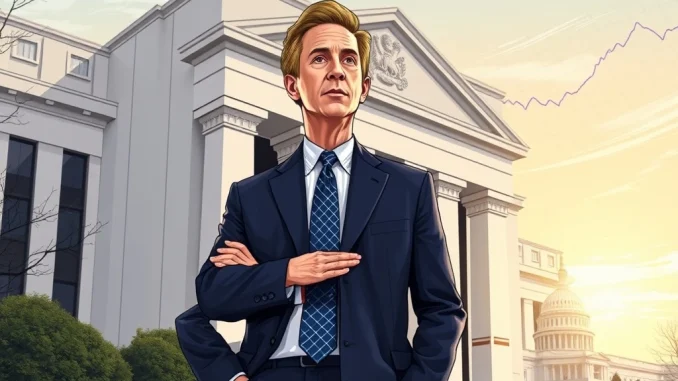
In a recent statement, U.S. Treasury Secretary Scott Bessent provided a crucial timeline for the highly anticipated Fed Chair Nomination. He revealed that the announcement of a new Federal Reserve Chair nominee is expected to occur in December or January of next year. This revelation, first reported by Bitget, signals an intensifying focus within the Trump administration on the future leadership of the nation’s central bank. Bessent, himself a figure often speculated as a potential candidate for the prestigious role, has not shied away from publicly critiquing the current direction of the Federal Reserve’s approach to monetary policy.
Bessent has notably accused the central bank of “fear-mongering over inflation,” a stance that underscores a potential divergence from the Fed’s current strategy of aggressive rate hikes aimed at taming rising prices. His comments suggest a desire for a less alarmist, perhaps more growth-oriented, approach to economic management. This perspective is particularly relevant for those in the crypto space, as a more accommodative monetary policy—often associated with lower interest rates and increased liquidity—can historically influence investment flows into risk assets like cryptocurrencies.
The Trump Administration’s Evolving Stance on Monetary Policy
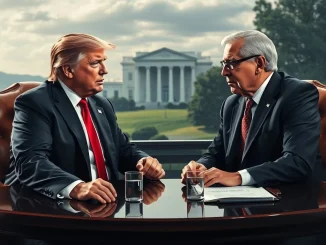
The discussion around the Fed Chair Nomination is inextricably linked to the broader objectives of the Trump Administration. President Donald Trump has historically been a vocal critic of the Federal Reserve, particularly targeting current Chair Jerome Powell for what he perceived as overly restrictive monetary policies. While Trump’s rhetoric towards Powell has softened recently, with suggestions that Powell will remain until his term expires in May 2026, the administration’s underlying desire to exert influence over the Fed remains evident. This push-and-pull between the executive branch and the independent central bank is a recurring theme in U.S. economic history, and its outcome has profound implications for financial stability and growth.
The administration’s frustration, as echoed by Bessent, centers on the Fed’s inflation-fighting measures, which have included a series of interest rate hikes over the past two years. These measures, while effective in cooling inflation, have also sparked concerns about potential economic slowdowns. The Trump administration’s emphasis on rapid interest rate cuts to stimulate growth stands in stark contrast to the cautious approach advocated by many within the Federal Reserve. This ideological divide highlights the delicate balance the next Fed Chair will need to strike between political expectations and the Fed’s mandate for price stability and maximum employment.
Navigating Inflation and Economic Stability: The Federal Reserve’s Dilemma
The Federal Reserve finds itself at a critical juncture, tasked with the dual challenge of controlling inflation while maintaining overall economic stability. New York Fed President John Williams recently emphasized that policymakers might require additional time to thoroughly assess the economic outlook before committing to significant policy shifts. This measured stance reflects the complexity of the current economic landscape, where persistent inflation coexists with signs of slowing growth.
Here’s a snapshot of the contrasting approaches:
| Aspect | Trump Administration/Bessent View | Federal Reserve (Current) View |
|---|---|---|
| Monetary Policy Stance | Advocates for rapid interest rate cuts to stimulate growth; critical of “fear-mongering over inflation.” | Cautious, data-dependent approach; “additional time to assess” economic outlook before major decisions. |
| Inflation Strategy | Views current Fed measures as overly alarmist; suggests less aggressive intervention. | Prioritizes taming inflation through rate hikes, aiming for price stability. |
| Interest Rate Outlook | Desires immediate and significant cuts to boost economic activity. | Signaled potential cuts in late 2025 or early 2026, but likely not matching the magnitude demanded by political figures. |
| Fed Independence | Perceived by some as a hurdle to the administration’s economic agenda. | A cornerstone of U.S. financial policy, emphasizing an apolitical role. |
This divergence between political desires and monetary policy realities underscores the immense pressure on the next Fed Chair. While the Fed has signaled potential rate cuts in late 2025 or early 2026, these reductions are unlikely to match the aggressive magnitude demanded by the Trump administration. The eventual nominee will inherit a complex economic landscape, balancing the need for stability with calls for growth.
What Does the Upcoming Fed Chair Nomination Mean for Markets?
The upcoming Fed Chair Nomination is more than just a political appointment; it’s a critical event for financial markets worldwide, including the burgeoning digital asset space. The individual chosen to lead the Federal Reserve will significantly influence the trajectory of interest rates, inflation expectations, and overall market liquidity. A nominee who aligns with Bessent’s less dovish stance could signal a shift towards policies that prioritize growth over aggressive inflation control, potentially leading to a more favorable environment for risk assets.
For crypto investors, this means closely monitoring the rhetoric and policy leanings of potential candidates. A Fed Chair who is perceived as more amenable to lower interest rates could potentially spur greater investment into assets like Bitcoin and Ethereum, as traditional fixed-income returns become less attractive. Conversely, a Chair committed to maintaining a tighter monetary policy to combat inflation could lead to continued headwinds for risk assets.
The nomination process itself will be a test of the administration’s ability to balance partisanship with institutional credibility. While the Trump administration has framed the Fed’s independence as a potential obstacle to its economic agenda, the central bank’s role as an apolitical institution remains a cornerstone of U.S. financial policy. The outcome will hinge on broader negotiations with Senate committees, where the nominee’s track record and alignment with congressional priorities will be scrutinized.
The Road Ahead: Challenges and Opportunities
The journey to the next Fed Chair Nomination is fraught with both challenges and opportunities. The challenges include navigating a highly polarized political environment, managing inflation without stifling economic growth, and maintaining the credibility and independence of the Federal Reserve. The opportunities lie in potentially recalibrating monetary policy to better serve the evolving needs of the U.S. economy, fostering innovation, and ensuring long-term financial stability.
As the December/January timeline approaches, market participants will be keenly watching for signals. The chosen leader will face the daunting task of steering the U.S. economy through a period of significant global uncertainty, balancing domestic imperatives with international economic realities. The decisions made by the next Fed Chair will not only shape the U.S. financial landscape but will also send ripples across global markets, affecting everything from traditional equities to the volatile world of cryptocurrencies.
Conclusion: A Pivotal Moment for U.S. Economic Leadership
The impending announcement of the next Federal Reserve Chair nominee, as hinted by U.S. Treasury Secretary Scott Bessent, marks a pivotal moment for U.S. economic leadership. The interplay between the Trump administration’s policy preferences and the Federal Reserve’s mandate for stability will define the coming years. Whether the new leadership steers towards a more growth-centric approach or maintains a firm grip on inflation, the impact on financial markets, including the dynamic crypto sector, will be undeniable. Staying informed about these developments is essential for anyone navigating the complexities of today’s global economy.
Frequently Asked Questions (FAQs)
Q1: Who is Scott Bessent and what is his role in this announcement?
A1: Scott Bessent is the U.S. Treasury Secretary. He indicated that the announcement of a new Federal Reserve Chair nominee is expected in December or January next year. He has also been critical of the Fed’s current monetary policy, suggesting they are “fear-mongering over inflation.”
Q2: Why is the Fed Chair nomination important for the economy?
A2: The Federal Reserve Chair is the most powerful economic official in the U.S., responsible for setting monetary policy, including interest rates. Their decisions directly influence inflation, employment, and the overall health of the economy, impacting everything from borrowing costs for businesses and consumers to investment in financial markets, including cryptocurrencies.
Q3: How does the Trump Administration’s view on the Fed differ from the current Fed’s stance?
A3: The Trump Administration, and figures like Bessent, have advocated for more rapid interest rate cuts to stimulate growth and have criticized the Fed’s aggressive inflation-fighting measures. The current Federal Reserve, led by Jerome Powell, has maintained a more cautious, data-dependent approach, prioritizing the reduction of inflation through rate hikes, even if it means a slower economic pace.
Q4: What are the potential implications for cryptocurrency markets?
A4: A Fed Chair who adopts a more dovish, growth-oriented monetary policy (e.g., lower interest rates, increased liquidity) could create a more favorable environment for risk assets like cryptocurrencies, potentially increasing investment flows. Conversely, a hawkish stance focused on aggressive inflation control could lead to continued headwinds for digital assets.
Q5: What is the timeline for the Fed Chair nomination?
A5: U.S. Treasury Secretary Scott Bessent has indicated that the announcement of a new Federal Reserve Chair nominee is expected to occur in December or January next year.
Q6: Will Jerome Powell remain as Fed Chair?
A6: President Trump has softened his stance, suggesting Jerome Powell will remain in office until his term expires in May 2026. However, discussions for a potential successor are already underway, with an announcement expected in December or January next year for the next term.