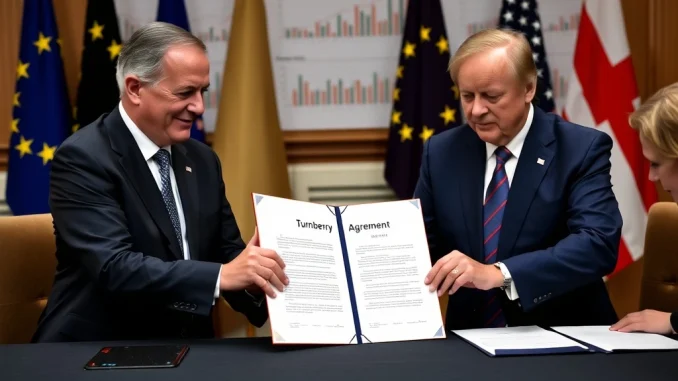
The EU and US have finalized the Turnberry Agreement, a landmark trade deal that imposes a 15% tariff on key European exports. This controversial move is set to reshape transatlantic trade dynamics, with significant implications for industries like automotive, luxury goods, and pharmaceuticals. Here’s what you need to know.
What Is the Turnberry Agreement?
The Turnberry Agreement is a new trade pact between the EU and the US, introducing a 15% tariff on select EU exports. Key sectors affected include:
- Automotive
- Luxury goods
- Pharmaceuticals
- Cosmetics
The deal also requires the EU to purchase $750 billion in US energy products, raising concerns about economic sovereignty and climate goals.
How Does the 15% Tariff Impact EU Industries?
The new tariff has forced European businesses to adapt quickly. Here’s how major industries are responding:
| Industry | Response |
|---|---|
| Automotive | German automakers shifting production to the US |
| Luxury Goods | LVMH and Kering reassessing supply chains |
| Pharmaceuticals | EU removes all customs exemptions on medicines |
Why Is the Turnberry Agreement Controversial?
Critics argue the deal favors US interests at the expense of EU economic sovereignty. Key concerns include:
- Potential conflict with EU climate goals due to energy purchases
- Legal challenges from US importers over the 15% tariff
- Lack of clarity on tariffs for wine and spirits
What’s Next for EU-US Trade Relations?
French President Emmanuel Macron has warned that the agreement is “not the end of it,” signaling potential future disputes. Meanwhile, the European Commission defends the deal as a step toward stability in transatlantic trade.
Conclusion: A New Era in Transatlantic Trade
The Turnberry Agreement marks a pivotal shift in EU-US trade relations. While it offers short-term benefits for US exports, the long-term impact on European industries remains uncertain. Businesses must adapt swiftly to navigate this new landscape.
Frequently Asked Questions (FAQs)
1. What is the Turnberry Agreement?
The Turnberry Agreement is a trade deal between the EU and US, introducing a 15% tariff on key EU exports.
2. Which industries are most affected by the 15% tariff?
Automotive, luxury goods, pharmaceuticals, and cosmetics face the highest impact.
3. How is the EU responding to the deal?
Some industries, like automotive, are shifting production to the US, while others are reassessing supply chains.
4. Why is France critical of the agreement?
France argues the deal weakens EU economic sovereignty and may conflict with climate goals.
5. Are there legal challenges to the agreement?
Yes, US importers have filed lawsuits against the 15% tariff, calling it a threat to businesses.