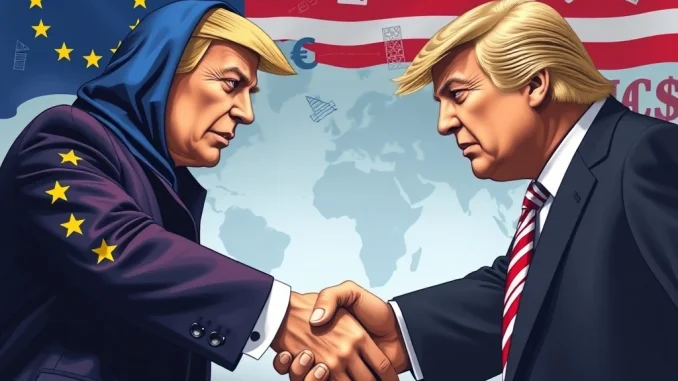
The global economic landscape is on edge as a pivotal EU-US trade agreement hangs in the balance. Businesses and consumers worldwide are closely watching negotiations that promise to redefine transatlantic commerce, with the ultimate outcome resting on key approvals. This potential deal, aimed at fostering greater stability and predictability, faces significant hurdles, particularly from the unpredictable stance on tariffs.
Unpacking the EU-US Trade Agreement: A New Baseline?
European Commission President Ursula von der Leyen has consistently emphasized the critical need for a transatlantic trade agreement to provide a foundation of “stability and predictability” for businesses and consumers alike. As of July 2025, reports indicate a framework agreement has been reached, establishing a 15% baseline tariff on most EU goods destined for the U.S. This rate, while higher than the UK’s negotiated deal, represents a significant step down from the 30% tariff threat previously floated.
Key Aspects of the Proposed Framework:
- Baseline Tariff: A 15% baseline on most EU goods sold to the U.S.
- Exemptions: Notable exclusions include aviation, certain medical devices, spirits, and manufacturing equipment.
- High-Risk Sectors: Steel and aluminum could still face substantial 50% tariffs beyond quotas, indicating ongoing sensitivities.
EU officials are now meticulously evaluating the scope for a “balanced outcome,” viewing this framework as a crucial stabilizer for ongoing trade tensions. The aim is to mitigate uncertainty and foster a more reliable environment for international trade.
The Pivotal Role of Transatlantic Trade Stability
The pursuit of transatlantic trade stability is not merely an economic aspiration; it’s a strategic imperative. For the European Union, securing a predictable trade framework with the United States is vital for bolstering its industrial resilience and countering the growing influence of other global powers. Von der Leyen’s focus on stability underscores the fragile equilibrium that characterizes current U.S.-EU trade relations.
A finalized agreement would extend beyond simple tariffs. It seeks to address non-tariff barriers, enhance economic security cooperation, and secure critical EU investments in emerging technologies like energy and artificial intelligence chips. The EU has also committed to removing tariffs on industrial goods and non-sensitive agricultural imports, signaling a commitment to reciprocity and mutual benefit. This comprehensive approach is designed to create a robust and enduring partnership, offering long-term benefits for businesses on both sides of the Atlantic.
Trump Tariffs: The Ultimate Deal Breaker?
Despite the framework agreement, the deal’s success remains profoundly contingent on former President Trump’s approval. Trump has publicly stated a 50-50 chance of finalizing the deal, maintaining a firm and often unpredictable stance on tariffs. His demands include:
| Product Category | Trump’s Stated Tariff Demand | EU’s Position/Concern |
|---|---|---|
| Cars and Auto Parts | 25% | Significant concern for European auto industry. |
| Copper | 50% | High impact on manufacturing and industry. |
| Pharmaceuticals | Additional duties threatened | EU seeks to cap future tariffs at 15%; pivotal for viability. |
| Semiconductors | Additional duties threatened | Critical for tech sector and economic security. |
Trump’s past negotiations, particularly with Japan, have been marked by sudden shifts and unexpected linkages. During some discussions, he even connected trade talks to migration concerns, stating, “You got to stop this horrible invasion that’s happening to Europe,” though no formal linkage was established. This unpredictability presents a significant challenge for EU negotiators striving for a definitive outcome.
Navigating Global Economic Cooperation Amidst Uncertainty
To prepare for a potential no-deal scenario, the EU has developed robust contingency measures. These include the readiness to impose 30% tariffs on €100 billion ($117 billion) of U.S. exports, targeting key American goods such as Boeing aircraft and bourbon whiskey. Furthermore, the bloc plans to leverage its anti-coercion instrument, which would restrict U.S. market access and public contracts, provided member states approve. These steps underscore the EU’s determination to counterbalance potential Trump tariffs and safeguard its economic security.
The broader implications of this deal could set a vital precedent for global economic cooperation in an increasingly fragmented world. For the EU, a stable framework aligns with strategic goals to counter Chinese economic influence and strengthen its own industrial base. The readiness of the EU to act unilaterally, however, highlights the high stakes involved for both sides. The delicate balance required for a successful outcome demands that Trump reconcile his hardline trade image with pragmatic concessions, a task complicated by his public emphasis on “dealmaking” credentials.
Securing Future Trade Stability Beyond Tariffs
The proposed EU-US trade agreement is designed to be comprehensive, moving beyond mere tariff reductions to address a range of complex trade issues. It aims to:
- Address Non-Tariff Barriers: Streamline regulations and reduce bureaucratic hurdles that impede trade.
- Enhance Economic Security Cooperation: Collaborate on supply chain resilience and protect critical technologies.
- Secure EU Investments: Promote and protect investments in key sectors like energy and artificial intelligence chips.
Ursula von der Leyen’s recent meeting with Trump in Scotland marked a crucial step in bridging differences, though technical complexities persist. Analysts suggest that the path forward requires a careful balancing act, demonstrating the immense pressure on negotiators to secure a deal that satisfies both sides’ economic and political imperatives. The success of these negotiations will not only define future transatlantic relations but also serve as a barometer for the possibility of stable global economic cooperation in an era of heightened geopolitical competition.
Conclusion: A Defining Moment for Transatlantic Ties
The ongoing negotiations for the EU-US trade agreement represent a defining moment for transatlantic relations and the future of global commerce. While a framework is in place, the path to finalization is fraught with challenges, primarily stemming from the unpredictable nature of tariff demands. The emphasis on achieving stability and predictability for businesses underscores the urgency and importance of reaching a comprehensive deal. As the world watches, the outcome of these crucial discussions will undoubtedly shape economic policies and international partnerships for years to come, influencing everything from supply chains to geopolitical alliances.
Frequently Asked Questions (FAQs)
Q1: What is the primary goal of the EU-US framework agreement?
The primary goal is to provide stability and predictability for businesses and consumers by establishing a clear framework for transatlantic trade, reducing trade tensions, and fostering economic cooperation.
Q2: What is the proposed baseline tariff in the EU-US framework agreement?
The framework agreement establishes a 15% baseline tariff on most EU goods sold to the U.S. This is higher than the UK’s negotiated deal but significantly lower than the 30% tariff threat previously discussed.
Q3: Why is President Trump’s approval crucial for the deal’s finalization?
President Trump’s approval is crucial because he maintains a firm stance on tariffs and has the authority to either approve or reject the deal. His unpredictable negotiation style and specific demands on certain product categories like cars and pharmaceuticals make his decision pivotal.
Q4: What are the EU’s contingency measures if the deal falls through?
The EU has prepared contingency measures including imposing 30% tariffs on €100 billion of U.S. exports (e.g., Boeing aircraft, bourbon whiskey) and plans to use its anti-coercion instrument to restrict U.S. market access and public contracts if member states approve.
Q5: How does this agreement aim to address non-tariff barriers?
Beyond tariffs, the proposed deal aims to address non-tariff barriers by streamlining regulations, enhancing economic security cooperation, and securing EU investments in key sectors like energy and artificial intelligence chips, promoting a more holistic trade relationship.