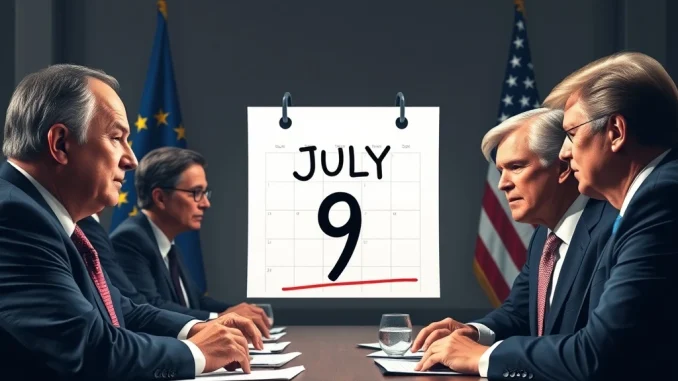
As the EU and U.S. push for a tariff agreement before July 9, the crypto world watches closely. Why? Because trade policies can ripple through global markets, affecting everything from Bitcoin to blockchain investments.
Why the July 9 Deadline Matters for the EU and U.S.
Negotiations between the EU and U.S. have made significant progress, but time is running out. A German government spokesperson emphasized the urgency, stating, “Time is money.” Here’s what’s at stake:
- Trade Stability: A deal could prevent further trade tensions.
- Market Confidence: Clarity boosts investor sentiment, including in crypto.
- Global Impact: Tariffs influence supply chains and tech sectors, including blockchain.
How Could This Tariff Agreement Affect Crypto Markets?
While the focus is on traditional trade, crypto markets often react to macroeconomic shifts. Here’s how:
| Scenario | Impact on Crypto |
|---|---|
| Deal Reached | Potential market optimism, Bitcoin could rise. |
| No Deal | Uncertainty might drive investors to stablecoins. |
What’s Next in the EU-U.S. Trade Talks?
Both sides aim for an agreement in principle by July 9. Key steps include:
- Finalizing tariff reductions.
- Addressing digital trade policies, which could indirectly affect blockchain.
- Ensuring compliance with WTO rules.
Final Thought: The clock is ticking, and the outcome could shape not just trade but also the crypto landscape. Stay tuned for updates as July 9 approaches.
Frequently Asked Questions (FAQs)
Why is July 9 the deadline for the EU-U.S. tariff agreement?
The date marks a critical point in negotiations to avoid escalating trade tensions and provide market stability.
How do tariffs impact cryptocurrency markets?
Tariffs can influence investor sentiment and global trade flows, indirectly affecting crypto volatility.
What happens if no agreement is reached by July 9?
Trade tensions could rise, leading to market uncertainty and potential crypto price fluctuations.
Could blockchain technology be part of the trade talks?
While not a focus, digital trade policies discussed may have implications for blockchain adoption.