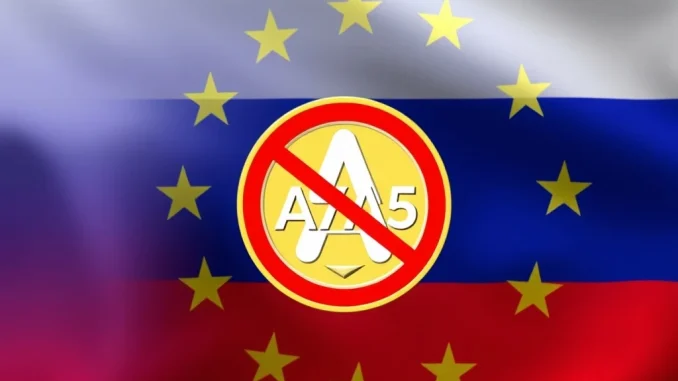
The European Union is implementing a significant financial measure. This crucial move targets the A7A5 stablecoin, a digital asset tied to the Russian ruble. Starting November 25, trading of this specific stablecoin will be completely prohibited within the EU. This development marks a pivotal moment for the crypto market, especially concerning EU Stablecoin Ban policies and their reach. It underscores the evolving landscape of digital finance and geopolitical influence.
Understanding the A7A5 Stablecoin and its Origins
The A7A5 stablecoin functions as a digital currency pegged to the value of the Russian ruble. Essentially, it aims to maintain a stable value relative to the ruble. Stablecoins like A7A5 bridge the gap between traditional fiat currencies and the volatile cryptocurrency market. They offer a stable medium for transactions and value storage. Historically, such stablecoins emerged to provide predictability in the fast-paced crypto ecosystem. However, their use can also extend to areas of less transparency. This particular stablecoin has gained attention due to its Russian ruble peg.
Typically, stablecoins maintain their peg through various mechanisms. These include holding equivalent reserves in fiat currency or other assets. For the A7A5 stablecoin, its connection to the Russian ruble makes it a subject of international scrutiny. Many stablecoins are designed for cross-border payments or as a safe haven during crypto market downturns. The specific nature of A7A5, however, places it squarely in the context of geopolitical tensions.
The Rationale Behind the Russian Ruble Stablecoin Ban
The European Union’s decision to implement a complete ban on the Russian Ruble Stablecoin A7A5 stems from broader geopolitical considerations. Specifically, it aligns with the ongoing Digital Asset Sanctions imposed against Russia. These sanctions aim to restrict Russia’s access to international financial systems. The EU seeks to prevent the circumvention of these measures through digital assets. Interfax, a prominent Russian news agency, reported this impending ban. Their report highlights the seriousness of the EU’s commitment to its sanctions regime.
Furthermore, the EU views stablecoins like A7A5 as potential tools for illicit financial flows. They could facilitate transactions outside traditional, regulated channels. Consequently, this ban reinforces the EU’s efforts to maintain the integrity of its financial system. It also signals a clear message to entities attempting to bypass sanctions. The move is a proactive step. It aims to close potential loopholes in existing financial restrictions. Therefore, the ban is not just about one stablecoin. It represents a broader strategy to enforce economic pressure.
Broader Implications for Crypto Regulations Europe
This specific ban on the A7A5 stablecoin fits into a much larger regulatory framework. It underscores the EU’s proactive approach to Crypto Regulations Europe. The European Union has been at the forefront of establishing comprehensive rules for digital assets. For instance, the Markets in Crypto-Assets (MiCA) regulation is a landmark initiative. MiCA aims to create a harmonized regulatory framework across all EU member states. This framework covers various aspects of crypto-assets, including stablecoins. The A7A5 ban can be seen as an immediate enforcement action. It precedes or complements the full implementation of MiCA.
Moreover, the EU is keen on protecting consumers and financial stability. They also want to combat money laundering and terrorist financing. Therefore, strict oversight of stablecoins is paramount. This ban illustrates the EU’s willingness to act decisively when national security or financial integrity is at stake. It sets a precedent. Other stablecoins or digital assets linked to sanctioned entities could face similar restrictions. This demonstrates the EU’s growing power in shaping the global crypto regulatory landscape.
Navigating the Impact of the EU Stablecoin Ban
The impending EU Stablecoin Ban on A7A5 will have immediate consequences. Individuals and businesses within the EU currently holding or trading the A7A5 stablecoin must take action. They need to cease all related activities by November 25. Failure to comply could result in severe penalties. This ban also sends a strong message to the wider cryptocurrency market. It emphasizes the increasing importance of regulatory compliance. Furthermore, it highlights the risks associated with stablecoins tied to politically sensitive currencies. Market participants should carefully assess their portfolios.
The move also affects exchanges and platforms operating within the EU. They must delist the A7A5 stablecoin. They also need to implement mechanisms to prevent its trading. This regulatory pressure will likely lead to enhanced due diligence. Exchanges will scrutinize the origin and nature of stablecoins more closely. Ultimately, this ban reinforces the idea that digital assets are not immune to traditional financial regulations. It forces a re-evaluation of how stablecoins are perceived and used globally. This is a significant development for digital asset security.
The Future of Digital Asset Sanctions and Global Crypto Policies
The prohibition of A7A5 is a clear indicator. It shows the growing scope of Digital Asset Sanctions. Governments and international bodies are increasingly recognizing digital assets. They see them as potential avenues for sanctions evasion. Consequently, we can expect more targeted regulations in this space. This trend suggests a future where digital assets are integrated into traditional financial compliance frameworks. The EU’s action may encourage other jurisdictions to adopt similar measures. This would create a more unified global approach to crypto regulation.
Furthermore, this ban could influence the development of new stablecoins. Developers might prioritize transparency and regulatory compliance. They may also avoid pegs to currencies from sanctioned nations. The incident serves as a stark reminder. Geopolitical events directly impact the crypto market. It underscores the need for robust regulatory frameworks. These frameworks must balance innovation with security and compliance. The future of digital assets will undoubtedly be shaped by such crucial policy decisions.
In conclusion, the European Union’s ban on the Russian ruble-based A7A5 stablecoin is a landmark decision. It reflects a determined effort to enforce sanctions and regulate the digital asset space. This action will undoubtedly reshape how stablecoins are viewed and managed within Europe. It also sets a significant precedent for global crypto policies. Market participants must remain vigilant and adapt to these evolving regulatory demands. The landscape of digital finance continues to change rapidly.
Frequently Asked Questions (FAQs)
Q1: What is the A7A5 stablecoin?
The A7A5 stablecoin is a digital cryptocurrency. It is designed to maintain a stable value. This value is pegged directly to the Russian ruble. It functions similarly to other stablecoins but specifically links to Russia’s national currency.
Q2: When does the EU ban on A7A5 stablecoin trading take effect?
The European Union’s complete ban on trading the A7A5 stablecoin will take effect starting November 25. After this date, all related trading activities within the EU will be prohibited.
Q3: Why is the EU banning the Russian ruble-based A7A5 stablecoin?
The EU is banning the A7A5 stablecoin as part of its broader Digital Asset Sanctions against Russia. The measure aims to prevent the circumvention of existing financial restrictions. It ensures the integrity of the EU’s financial system.
Q4: How does this ban relate to broader Crypto Regulations Europe?
This ban is a direct application of the EU’s commitment to regulating digital assets. It aligns with initiatives like MiCA. The EU seeks to establish comprehensive frameworks for crypto-assets. This ensures financial stability and combats illicit activities.
Q5: What should holders of A7A5 stablecoin in the EU do?
Holders of A7A5 stablecoin within the EU should cease all trading activities before November 25. They should also seek guidance from their respective exchanges or financial advisors. This ensures compliance with the new regulations.
Q6: Could this ban affect other stablecoins?
While this ban specifically targets A7A5, it sets a precedent. It suggests that other stablecoins or digital assets linked to sanctioned entities could face similar restrictions. This is especially true if they are perceived as tools for sanctions evasion.