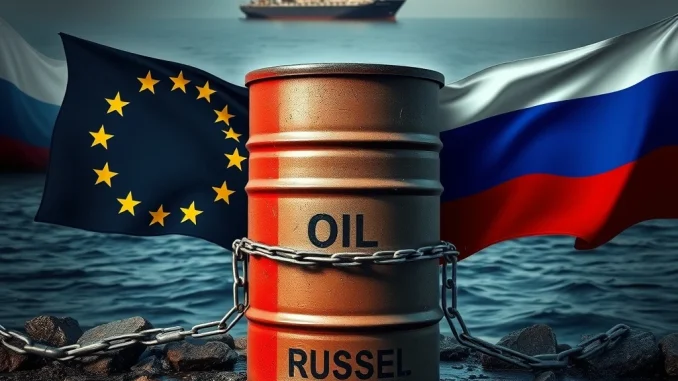
In the interconnected world of finance and commodities, a ripple in one market can create waves across many others. For those tracking the broader economic currents that often influence cryptocurrency markets, understanding shifts in the global energy landscape is crucial. The European Union is poised to implement a sweeping new package of EU Sanctions targeting products derived from Russian Oil, a move set to reshape the global Energy Market and potentially cause significant disruption to Diesel Imports.
Understanding the New EU Sanctions on Russian Oil
Effective January 2026, the European Union’s latest sanctions aim to close a loophole in existing restrictions on Russian crude oil. While direct imports of Russian crude are already banned, the new measures will target refined fuels—like diesel—that are produced in third countries using Russian crude, even if these fuels then bypass direct imports from Russia. This strategic move is designed to disrupt indirect supply chains that have emerged as critical conduits for Russian oil products reaching Europe.
Refiners in nations like India and Turkey have become major players in this indirect trade, purchasing discounted Russian crude, refining it into diesel, and then exporting it to Europe. This pathway currently accounts for approximately 15% of the EU’s total Diesel Imports. The upcoming sanctions will directly impact these countries, forcing them to find alternative crude sources or risk losing a significant portion of their European market share.
Key Aspects of the Upcoming Sanctions
- Target: Refined fuels (e.g., diesel) produced from Russian crude in third countries.
- Effective Date: January 2026.
- Primary Impact: India and Turkey, key refiners and exporters to the EU.
- Scale of Disruption: Approximately 15% of the EU’s diesel imports affected.
How Will This Impact the Global Energy Market?
The new EU Sanctions are expected to exacerbate existing supply tightness in the European Energy Market. European diesel stocks at the Amsterdam-Rotterdam-Antwerp hub are already at their lowest seasonal levels in three years. This situation is compounded by declining domestic refinery output due to ongoing maintenance shutdowns. The EU’s move could further strain markets, leading to increased volatility and price surges as traders scramble to offset gaps left by the initial import bans.
The transition away from Russian crude also poses significant operational challenges for European refineries. Many have already shifted to lighter U.S. grades, which are less efficient for diesel production compared to Russia’s Urals blend. Simultaneously, an influx of natural gas liquids into refining systems further complicates processing. These factors underscore the difficulty of maintaining stable Global Oil Supply and diesel supplies amid the phased exit from Russian oil.
Market Indicators and Challenges
| Indicator | Current Status / Impact | Challenge |
|---|---|---|
| Diesel Futures | Surged to $110 per barrel | Heightened uncertainty, price volatility |
| European Diesel Stocks | Lowest seasonal levels in 3 years | Increased supply tightness |
| Refinery Output | Declining due to maintenance | Reduced domestic supply |
| Crude Grades | Shift to lighter U.S. grades | Less efficient for diesel production |
The Rouble’s Resilience: A Double-Edged Sword for Russian Oil Exports?
The impact of the EU’s measures extends beyond Europe, touching Russia’s own economic stability. Interestingly, Russia’s rouble has appreciated a significant 45% against the U.S. dollar since January 2024. This strength is largely driven by the central bank’s high deposit rates (currently above 20%) and reduced foreign currency demand from slowing imports. While a strong rouble helps to ease domestic inflation by lowering import costs, it paradoxically undermines Russian export competitiveness, especially as EU Sanctions increasingly target Russian Oil-derived products.
Businesses in Russia have openly voiced concerns that the currency’s strength makes their goods less competitive globally. The Bank of Russia has even intervened indirectly by selling Chinese yuan to support the rouble, leveraging exchange rate arbitrage as the U.S. dollar weakens. A 6.6% decline in the dollar index since April 2024 has further bolstered the rouble’s position. However, these short-term gains may not offset the long-term economic strain of reduced oil exports to the EU and the challenges in maintaining a stable Global Oil Supply strategy.
Navigating Enforcement and Future Global Oil Supply Dynamics
A key unresolved issue surrounding these EU Sanctions is the precise enforcement mechanism for tracking fuels made from Russian Oil. Options under consideration include a strict ban on all refined products from refineries using Russian crude, or a more proportional approach that blocks only the share of output directly tied to Russian input. For example, a refinery using 40% Russian crude might see 40% of its Diesel Imports restricted from entering the EU.
However, enforcement complexities—such as intricate logistics and the potential for fraud—pose significant challenges. Ensuring compliance across a global supply chain will require robust monitoring and verification systems. This dynamic creates an uncertain landscape for the Energy Market as participants try to anticipate the full implications of these new rules.
Despite these challenges, the EU’s strategy faces additional headwinds from rising global oil production. Countries like Guyana, Brazil, and Canada are increasing their output, while OPEC+ nations are adding approximately 410,000 barrels per day monthly. These developments could create alternative supply channels for Europe as the 2026 deadline approaches, potentially softening the blow of reduced Russian-derived diesel.
What Does This Mean for the Broader Economy and Investors?
The ripple effects of these energy shifts extend far beyond the immediate oil and gas sectors. Volatility in the Energy Market can influence inflation, supply chain costs, and overall economic stability, which in turn can impact investor sentiment across various asset classes, including digital currencies. Understanding these macro-economic shifts is vital for making informed decisions, even in seemingly unrelated markets like crypto.
The ongoing geopolitical realignments, epitomized by these sanctions, highlight a fundamental shift towards diversifying energy sources and supply chains. While challenging in the short term, this could lead to a more resilient and distributed Global Oil Supply system in the long run. Investors should remain attentive to how these changes in energy policy and supply dynamics unfold, as they can signal broader economic trends.
Conclusion: A New Era for European Energy Security
The upcoming EU Sanctions on Russian crude-derived fuels mark a pivotal moment in Europe’s quest for energy independence and security. While set to disrupt a significant portion of Diesel Imports and pose operational challenges, these measures are a clear signal of the EU’s commitment to reducing reliance on Russian Oil. The impact will be felt across the Energy Market, influencing prices, supply chains, and even the macroeconomic stability of nations involved.
As the 2026 deadline approaches, the interplay of enforcement mechanisms, global production increases, and currency dynamics will determine the full extent of this policy’s success. For observers of global markets, this development underscores the constant evolution of geopolitical and economic forces that shape our world, reinforcing the need for adaptability and informed decision-making.
Frequently Asked Questions (FAQs)
Q1: What are the new EU sanctions targeting?
The new EU sanctions, effective January 2026, are targeting refined fuels (such as diesel) that are produced in third countries using Russian crude oil, even if these fuels are not directly imported from Russia.
Q2: Which countries will be most affected by these sanctions?
Refiners in India and Turkey, which have been significant conduits for diesel entering the EU after earlier import bans, will be directly affected as they heavily rely on discounted Russian crude for their refining operations.
Q3: How much of the EU’s diesel imports will be disrupted?
The new sanctions are expected to disrupt approximately 15% of the EU’s total diesel imports, as this is the estimated share currently supplied through third countries using Russian crude.
Q4: What are the main challenges for European refineries due to these sanctions?
European refineries face operational challenges, including the need to shift from Russia’s Urals blend to less efficient lighter U.S. grades for diesel production, and managing an influx of natural gas liquids into their systems.
Q5: How has the Russian rouble reacted to these geopolitical developments?
The Russian rouble has appreciated significantly (45% against the U.S. dollar since January 2024) due to high central bank deposit rates and reduced foreign currency demand from slowing imports. However, this strength also undermines Russian export competitiveness.
Q6: Will there be alternative sources for diesel supply for Europe?
Yes, rising global oil production from countries like Guyana, Brazil, and Canada, along with increased output from OPEC+ nations, could create alternative supply channels for Europe as the 2026 deadline approaches, potentially easing supply tightness.