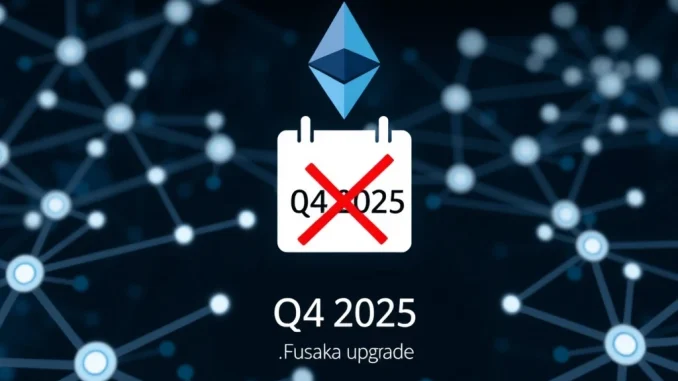
Cryptocurrency enthusiasts and developers are closely monitoring a significant announcement from the Ethereum Foundation. A potential delay for a key upcoming Ethereum upgrade could impact the blockchain’s ambitious development schedule. This news highlights the complex challenges inherent in large-scale decentralized projects. The Ethereum ecosystem continually evolves, and these upgrades are vital for its future.
Critical Concerns Emerge: The Fusaka Delay
Tomasz K. Stańczak, Co-Executive Director of the Ethereum Foundation, recently shared a pressing concern on X. He highlighted that while the Glamsterdam upgrade, set for the first half of 2026, garners considerable attention, a more immediate worry exists. The Fusaka delay for the upgrade, originally slated for the fourth quarter of 2025, looms large. This potential postponement signals significant challenges for the network’s progression. Furthermore, Stańczak emphasized that Ethereum’s grand roadmap and vision become meaningless without the necessary coordination. Meeting crucial deadlines is paramount for the network’s continued success.
Indeed, skilled teams are diligently working to resolve the issues behind these proposed changes. Stańczak’s message urged broad agreement that adhering to timelines remains crucial. Therefore, the community must unite in supporting these efforts. This collective understanding is essential for maintaining development momentum. Stakeholders are now evaluating the potential ramifications of such a delay.
Understanding the Ethereum Roadmap and its Vision
The Ethereum roadmap outlines a series of planned upgrades designed to enhance the network’s scalability, security, and sustainability. These phases are critical for Ethereum’s long-term viability as a leading blockchain platform. Each upgrade builds upon the last, contributing to a more robust and efficient system. The journey began with ‘The Merge,’ transitioning to Proof-of-Stake, and continued with ‘Shanghai’ and ‘Dencun’ upgrades. These past successes demonstrate the community’s capability to execute complex transitions. However, future upgrades like Fusaka and Glamsterdam represent equally ambitious undertakings.
The ‘Glamsterdam’ upgrade, for instance, is projected for early 2026. Its focus areas are still being finalized, but it will undoubtedly introduce significant protocol changes. Conversely, ‘Fusaka’ is closer on the horizon. It targets specific improvements essential for the network’s foundational layers. Any disruption to this carefully planned sequence can create ripple effects across the entire ecosystem. Therefore, maintaining the integrity of the roadmap is a top priority for developers.
The Intricacies of Blockchain Development
Blockchain development, particularly for a network as vast and complex as Ethereum, presents unique challenges. Unlike centralized software projects, Ethereum’s development involves a global, decentralized community of core developers, researchers, and client teams. This collaborative yet distributed nature requires immense coordination. Technical complexities are immense. Developers must ensure new features integrate seamlessly with existing infrastructure. Moreover, security is paramount; every change undergoes rigorous auditing and testing. This meticulous process can often lead to unforeseen delays. Unexpected bugs or consensus issues can arise, requiring significant time to resolve. Consequently, timelines can shift, even with the best planning. It is a testament to the dedication of these teams that progress continues steadily.
Key factors contributing to potential delays include:
- Technical Hurdles: Discovering complex bugs or unexpected interactions between new and old code.
- Consensus Building: Reaching agreement among diverse stakeholders on specific implementation details.
- Security Audits: Extensive testing and external audits to ensure the integrity and safety of the network.
- Resource Allocation: Ensuring sufficient skilled personnel are available for each phase of development.
These elements collectively underscore why predicting exact timelines for such ambitious projects remains challenging. The community understands these inherent difficulties. Yet, the emphasis on meeting deadlines reflects a commitment to progress.
What This Means for the Crypto News Landscape
The potential Fusaka delay will undoubtedly become a significant topic in crypto news. Market sentiment often reacts to development milestones. Positive news about upgrades can boost confidence. Conversely, delays might lead to speculation or concern. However, experienced observers understand that delays are a normal part of cutting-edge software development. Especially for a critical infrastructure project like Ethereum. The transparency of the Ethereum Foundation in communicating these challenges is crucial. It helps manage expectations within the community. Furthermore, it allows developers building on Ethereum to adjust their own project timelines. Therefore, accurate reporting on these developments is vital for the entire ecosystem.
This situation also highlights the importance of robust communication channels. Developers and users rely on timely updates from the Ethereum Foundation. They need to understand the progress and any potential shifts in the roadmap. Maintaining this open dialogue fosters trust and stability. It ensures that the community remains informed and engaged in the ongoing evolution of the network.
Addressing Future Ethereum Upgrades
Despite the potential Fusaka delay, the long-term vision for the Ethereum upgrade path remains strong. The Foundation continues to prioritize critical advancements. These include improvements to sharding, statelessness, and further enhancing the EVM. Each of these components plays a vital role in Ethereum’s future. The commitment to a more scalable and decentralized network is unwavering. However, the recent announcement serves as a reminder. It shows that flexibility and adaptability are essential in this dynamic field. The development process is iterative. It often requires adjustments based on new discoveries or technical complexities. Therefore, the community must remain patient and supportive. The ultimate goal is a secure and efficient network for everyone.
The Foundation is actively working to mitigate any impact from the potential delay. They are deploying skilled teams to tackle the underlying issues. The emphasis is on finding robust solutions, not just quick fixes. This diligent approach ensures the stability and security of the network in the long run. The Ethereum community remains optimistic about achieving its ambitious goals.
Conclusion
The potential Fusaka delay underscores the inherent complexities of pioneering blockchain development. The Ethereum Foundation, through Tomasz K. Stańczak, has transparently communicated these challenges. While the news might cause some ripples in the crypto news cycle, it also reinforces the rigorous standards applied to Ethereum’s evolution. The commitment to a robust and secure network remains paramount. The ongoing efforts to address these issues demonstrate the resilience and dedication of the global Ethereum community. Ultimately, meeting the ambitious goals of the Ethereum roadmap requires not just technical prowess but also unparalleled coordination and collective resolve. The future of the Ethereum upgrade path depends on these concerted efforts.
Frequently Asked Questions (FAQs)
Q1: What is the Fusaka upgrade?
The Fusaka upgrade is a planned set of improvements for the Ethereum blockchain, initially scheduled for the fourth quarter of 2025. It targets specific enhancements to the network’s core infrastructure, contributing to its overall efficiency and performance.
Q2: Why might the Fusaka upgrade be delayed?
Ethereum Foundation Co-Executive Director Tomasz K. Stańczak indicated that technical issues and the need for greater coordination among development teams are the primary reasons for the potential delay. Resolving these complex issues and ensuring broad agreement on timelines is crucial before proceeding.
Q3: How does the Fusaka delay impact the overall Ethereum roadmap?
While the Fusaka upgrade is a critical step, its potential delay means other future upgrades, like Glamsterdam (planned for H1 2026), might also see their timelines adjusted. The Ethereum roadmap is a carefully planned sequence, and delays in one phase can affect subsequent ones, requiring flexibility in planning.
Q4: What is the Ethereum Foundation doing to address the potential delay?
The Ethereum Foundation has skilled teams actively working to fix the underlying issues that could lead to the delay. They are emphasizing the importance of coordination and urging the community to agree on the crucial nature of meeting development deadlines.
Q5: Is this delay common in blockchain development?
Yes, delays are not uncommon in large-scale, decentralized blockchain development projects like Ethereum. The complexity of coordinating global teams, ensuring security, and achieving consensus on technical implementations often leads to adjustments in projected timelines. Transparency about these challenges is standard practice.
Q6: Where can I find the latest updates on Ethereum upgrades?
Official announcements from the Ethereum Foundation, statements from core developers on platforms like X (formerly Twitter), and reputable crypto news outlets are the best sources for the latest updates on Ethereum upgrades and development progress.