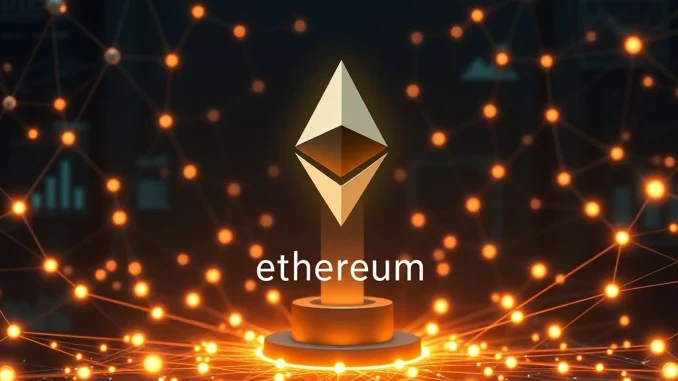
In the fast-paced world of cryptocurrency, stability is a rare and highly valued commodity. Yet, Ethereum, the pioneering smart contract platform, has achieved a truly remarkable feat: a decade of perfect uptime since its inception. This isn’t just a technical milestone; it’s a powerful testament to the network’s resilience and its foundational role in the evolving digital economy. For anyone interested in the future of finance and technology, Ethereum’s consistent performance, coupled with its increasing institutional appeal, paints a compelling picture of its enduring influence.
The Unwavering Strength of Ethereum Uptime
Imagine a global computer that has never crashed, never gone offline, and seamlessly processed trillions of dollars in transactions and countless decentralized applications. That’s the reality of Ethereum Uptime. For ten years, the network has maintained flawless operation, a critical achievement that underpins its reliability as a platform for decentralized applications (dApps) worldwide.
This perfect track record isn’t by chance. It’s the result of meticulous planning, robust engineering, and a dedicated global community. Ethereum’s co-founder, Vitalik Buterin, always envisioned a censorship-resistant, permissionless infrastructure. The network’s continuous availability directly fulfills this vision, allowing developers to build and deploy general-purpose applications without fear of disruption.
Maintaining this uptime has involved significant effort. Ethereum has undergone 18 major protocol upgrades, each designed to enhance the network without compromising its stability. Key among these was the historic transition to a Proof-of-Stake (PoS) consensus model via ‘The Merge,’ which dramatically improved energy efficiency and security. More recently, upgrades like ‘Pectra’ continue to refine the protocol. The ability to execute such complex, transformative changes without a single moment of downtime has solidified institutional and developer confidence in Ethereum’s long-term viability.
Fueling Progress Through Protocol Innovation
Beyond its impressive uptime, Protocol Innovation is at the core of Ethereum’s continued relevance and growth. The network is not static; it’s a living, evolving ecosystem constantly adapting to new demands and possibilities. Vitalik Buterin himself noted the emergence of innovations like non-fungible tokens (NFTs) – concepts not even conceived in the original whitepaper – highlighting Ethereum’s adaptability and its capacity to foster unforeseen technological breakthroughs.
Key innovations driving Ethereum’s evolution include:
- The Merge: This pivotal upgrade moved Ethereum from energy-intensive Proof-of-Work to Proof-of-Stake, reducing its carbon footprint by over 99% and enhancing network security.
- Sharding (Future): Planned upgrades like sharding aim to vastly improve scalability by dividing the network into smaller, more manageable segments, allowing for parallel processing of transactions.
- Data Availability Sampling & Verkle Trees: These advanced cryptographic techniques are being developed to make nodes lighter and more efficient, further decentralizing the network and improving its performance.
These enhancements are not just technical exercises; they are strategic moves to ensure Ethereum remains the leading platform for the next generation of decentralized technologies, addressing challenges like transaction speed and cost, and laying the groundwork for mass adoption.
The Rising Tide of Treasury Adoption
One of the most compelling indicators of Ethereum’s maturation is its increasing recognition as a valuable Treasury Adoption asset. Beyond its technological utility, companies are now actively incorporating Ethereum (ETH) into their corporate treasury strategies, viewing it as a legitimate store of value and a strategic investment.
Recent examples underscore this trend:
- SharpLink Gaming: Linked to Consensys founder Joseph Lubin, SharpLink has emerged as one of the largest individual Ethereum holders, demonstrating a strong belief in ETH’s long-term appreciation and utility.
- BitMine: Under the leadership of Tom Lee, BitMine is committing significant treasury investments to ETH. This move reflects a broader institutional comfort with digital assets as a component of diversified corporate portfolios.
Why are companies adding ETH to their balance sheets? Reasons often include:
- Diversification: A hedge against traditional market volatility and inflation.
- Growth Potential: Belief in Ethereum’s continued ecosystem growth and potential for capital appreciation.
- DeFi Integration: The ability to participate in decentralized finance protocols, earning yield or accessing liquidity.
- Future-Proofing: Aligning with the burgeoning Web3 economy and digital asset landscape.
This growing institutional confidence signifies a crucial shift, validating Ethereum not just as a technology, but as a robust financial asset.
Ethereum’s Role in Decentralized Applications
At its core, Ethereum’s purpose is to be the backbone for Decentralized Applications (dApps). Its flawless uptime and continuous innovation have made it the preferred platform for a vast array of digital services that operate without central intermediaries.
The Ethereum ecosystem is a vibrant hub for:
- Decentralized Finance (DeFi): Lending protocols, decentralized exchanges (DEXs), stablecoins, and yield farming platforms that offer financial services accessible to anyone, anywhere.
- Non-Fungible Tokens (NFTs): The digital ownership of art, collectibles, gaming assets, and more, which exploded in popularity and found their primary home on Ethereum.
- Gaming & Metaverse: Blockchain-based games and virtual worlds leveraging NFTs for in-game assets and true digital ownership.
- Decentralized Autonomous Organizations (DAOs): New forms of governance where communities collectively manage projects and treasuries.
This diverse landscape of dApps showcases Ethereum’s versatility and its critical role in building the decentralized internet of the future. The network’s stability ensures that these applications can operate reliably, fostering trust and encouraging user adoption.
Navigating the Market: ETH Price and Fundamentals
While the long-term outlook for Ethereum remains strong, it’s important to acknowledge market fluctuations. As of June 15, 2024, Ethereum was trading at approximately $3,602, reflecting a 6.8% decline in the past 24 hours. Such short-term price movements are common in the volatile crypto market and can be influenced by various factors, including broader market sentiment, macroeconomic trends, and regulatory news.
However, it’s the long-term fundamentals that truly define Ethereum’s potential:
- Secure Infrastructure: A decade of perfect uptime speaks volumes about its reliability.
- Continuous Protocol Upgrades: A commitment to scalability, efficiency, and security ensures its competitive edge.
- Rising Adoption as a Reserve Asset: Increasing corporate and institutional interest validates its financial utility.
- Vibrant Developer Ecosystem: The largest and most active developer community in the blockchain space.
- Network Effect: The sheer volume of dApps, users, and value locked on Ethereum creates a powerful virtuous cycle.
These underlying strengths suggest that despite temporary price dips, Ethereum is well-positioned for sustained growth and influence in the evolving digital economy.
A Foundation for the Future
Ethereum’s decade-long perfect uptime and its evolving role in both the blockchain and financial ecosystems underscore its foundational importance in the decentralized technology landscape. From its origins as a platform for general-purpose applications to its current status as a leading digital asset and the engine for a sprawling dApp universe, Ethereum has consistently demonstrated its resilience and adaptability. With ongoing innovation, increasing institutional support, and a robust community, Ethereum is poised to continue shaping the future of digital assets and decentralized infrastructure for many years to come.
Frequently Asked Questions (FAQs)
Q1: What does ‘perfect uptime’ mean for Ethereum?
A1: Perfect uptime for Ethereum means that since its launch, the network has experienced no downtime or service disruptions. It has continuously processed transactions and supported decentralized applications without interruption for ten years, demonstrating exceptional reliability and stability.
Q2: How has Ethereum maintained its uptime despite major upgrades like The Merge?
A2: Ethereum’s perfect uptime has been maintained through meticulous planning, rigorous testing, and a highly coordinated global effort by developers and validators. Major upgrades like The Merge were executed as ‘zero-downtime’ transitions, meaning the old chain seamlessly transitioned to the new Proof-of-Stake chain without any halt in network operations.
Q3: Why are companies like SharpLink Gaming and BitMine holding Ethereum as a treasury asset?
A3: Companies are increasingly holding Ethereum (ETH) as a treasury asset for several strategic reasons. These include diversifying their balance sheets, hedging against inflation, seeking potential capital appreciation, gaining exposure to the rapidly growing decentralized finance (DeFi) ecosystem, and aligning with the future of digital assets.
Q4: What are some key examples of Protocol Innovation on Ethereum?
A4: Key examples of protocol innovation include The Merge (transition to Proof-of-Stake for energy efficiency and security), and ongoing developments like sharding (for scalability), Danksharding (for data availability), and Verkle trees (for lighter nodes). These innovations aim to make Ethereum faster, cheaper, and more decentralized.
Q5: How does Ethereum’s perfect uptime benefit Decentralized Applications (dApps)?
A5: Ethereum’s perfect uptime is crucial for dApps because it ensures continuous availability and reliability. Developers and users can trust that their applications, whether for finance, gaming, or art, will always be accessible and functional, fostering greater adoption and innovation within the ecosystem.