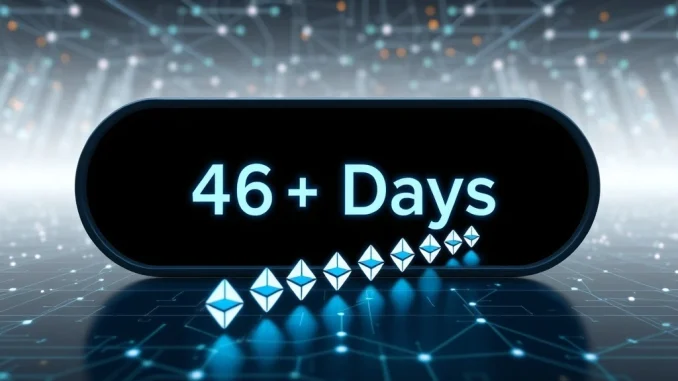
The world of cryptocurrency staking just witnessed an unprecedented event. The **Ethereum unstaking** wait time has skyrocketed. It now exceeds 46 days, marking an all-time high for the network. This significant surge presents new challenges for investors and the broader **Ethereum network** alike.
Understanding the Ethereum Unstaking Phenomenon
Staking Ethereum involves locking up ETH to support the network. In return, stakers earn rewards. Since the Merge, the ability to withdraw staked ETH has been a key feature. However, the current **ETH unstaking wait time** is causing concern. CoinDesk reported this record backlog on Monday. This figure represents a dramatic increase from the previous peak. In August, the wait time stood at around 18 days. Consequently, the situation has escalated quickly.
Currently, approximately 2.5 million ETH are caught in the exit queue. This substantial amount is valued at an astonishing $11.25 billion. Such a large sum highlights the scale of the issue. Furthermore, it underscores the liquidity challenges faced by many stakers. This extended wait impacts individual investors. It also affects institutional players in the **crypto staking** ecosystem. Therefore, understanding the root causes becomes crucial.
The Kiln Staking Platform Incident: A Major Catalyst
A significant incident on September 9 largely attributes to this extended wait. It involved Kiln, a major **Kiln staking** platform. An exploit affected the crypto trading and analysis app SwissBorg. Following this, Kiln made a critical decision. It sequentially halted all its validator activities on the **Ethereum network**. This action was taken as a precautionary measure. It aimed to protect user assets. However, it had unforeseen consequences for the entire ecosystem.
This decision by Kiln immediately added about 1.6 million ETH to the withdrawal queue. This sudden influx created immense pressure. It overwhelmed the existing unstaking mechanisms. The network’s capacity to process withdrawals faced an unprecedented demand. As a result, the **Ethereum unstaking** queue swelled rapidly. This single event drastically altered the landscape for those wishing to withdraw their staked assets. Thus, the impact was immediate and profound.
Implications for the Ethereum Network and Stakers
The prolonged **ETH unstaking wait time** has several key implications. First, it affects liquidity for stakers. Investors may need to access their funds sooner. However, they now face significant delays. This can impact their financial planning. Secondly, it raises questions about the efficiency of the **Ethereum network’s** withdrawal process. While designed to prevent sudden network shocks, the current backlog is substantial. This situation could deter new participants from **crypto staking**. They might perceive it as too risky or illiquid. Consequently, the long wait times could influence market sentiment negatively.
For platforms like Kiln, such incidents underscore the importance of robust security. They also highlight the need for clear communication during crises. The sequential halting of validators, while a safety measure, had widespread effects. It revealed potential bottlenecks in the unstaking architecture. Moving forward, the community will likely examine these mechanisms closely. This aims to prevent similar backlogs in the future. Therefore, the incident serves as a critical learning experience for the entire ecosystem.
Navigating the Current Ethereum Unstaking Landscape
Stakers currently in the queue face a difficult waiting period. They must monitor the situation closely. The **ETH unstaking wait time** is dynamic. It can fluctuate based on network activity and further withdrawals. For those considering new **crypto staking** ventures, due diligence is more important than ever. Understanding the terms and conditions of staking platforms is crucial. Furthermore, assessing the risks associated with potential delays is paramount. Investors should consider the potential for illiquidity. This is especially true when committing significant capital. The current situation with **Ethereum unstaking** provides a stark reminder of these considerations.
The **Ethereum network** is robust and constantly evolving. However, large-scale events can test its limits. The community and developers will undoubtedly work to optimize withdrawal processes. They aim to enhance network resilience. This incident serves as a valuable stress test. It provides insights into areas for improvement. Therefore, continuous development and adaptation remain key to the long-term health of the ecosystem.
Looking Ahead: The Future of ETH Unstaking
The current record-high **ETH unstaking wait time** is a significant event. However, it also presents an opportunity for growth and improvement. The **Ethereum network** has a track record of adapting. Developers are continually refining its protocols. It is plausible that measures will be explored to manage future queues more efficiently. This might involve adjustments to withdrawal rates or prioritization mechanisms. Such changes would aim to balance network security with staker liquidity needs. Consequently, the community remains optimistic about long-term solutions.
Investors should remain informed about official updates. They should also follow discussions within the **crypto staking** community. Understanding the evolving landscape is vital for making informed decisions. The incident involving **Kiln staking** platforms underscores the dynamic nature of the crypto world. It highlights the importance of staying agile. Ultimately, the resilience of the Ethereum ecosystem will be tested. However, its capacity for innovation suggests a positive path forward.
Frequently Asked Questions (FAQs)
Q1: What is the current record-high Ethereum unstaking wait time?
A1: The wait time to unstake Ethereum has surged to over 46 days, marking an all-time high for the network.
Q2: How much ETH is currently in the exit queue?
A2: Approximately 2.5 million ETH, valued at $11.25 billion, are currently in the exit queue.
Q3: What caused this significant increase in the ETH unstaking wait time?
A3: A major contributing factor was an incident on September 9 involving the Kiln staking platform. Following an exploit affecting SwissBorg, Kiln halted its validator activities, adding about 1.6 million ETH to the withdrawal queue.
Q4: How does this affect Ethereum stakers?
A4: Stakers face prolonged delays in accessing their funds, impacting liquidity and potentially influencing their investment strategies and confidence in crypto staking.
Q5: Is this an isolated incident for the Ethereum network?
A5: While the scale is unprecedented, network backlogs can occur. The Ethereum network is robust, but large-scale events can test its limits, leading to a focus on future improvements for unstaking mechanisms.