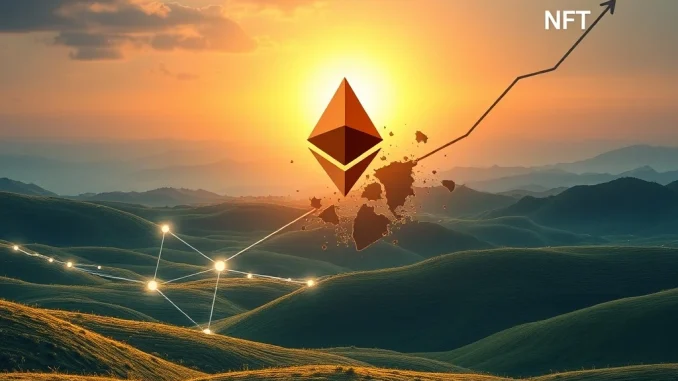
The cryptocurrency world is a dynamic space, constantly shifting and revealing new trends. Recently, we’ve seen a fascinating divergence: while Ethereum, the backbone of decentralized finance, demonstrates remarkable strength, the once-booming NFT sector faces significant headwinds. This contrast paints a clear picture of an evolving market, where foundational blockchain networks are gaining traction even as speculative digital assets struggle for demand.
Ethereum’s Gas Usage Soars: A Sign of Core Strength?
On July 8, Ethereum’s network experienced an unprecedented surge in activity, with gas usage reaching an all-time high. This isn’t just a number; it’s a powerful indicator of sustained on-chain engagement, even as the broader market grapples with a significant crypto downturn. What’s driving this?
- High Transaction Volumes: Users are actively transacting on the network, facilitating trades, payments, and various interactions.
- Smart Contract Interactions: Decentralized applications (dApps) and DeFi protocols built on Ethereum are seeing robust engagement, leading to increased smart contract executions.
- Infrastructure Reliance: The surge reinforces Ethereum’s critical position as foundational infrastructure for a vast ecosystem of decentralized technologies.
This record gas usage signals confidence in Ethereum’s underlying utility and its role as a primary platform for innovation within the digital economy. It suggests that despite market volatility, core network activity remains robust, underpinning the long-term viability of the ecosystem.
Why the NFT Sector Faces a Sharp Crypto Downturn?
In stark contrast to Ethereum’s resilience, the NFT sector has experienced a notable correction. By July 23, prices and trading volumes for non-fungible tokens plunged over 7%. This slump reflects a renewed skepticism among investors towards these often-speculative digital assets. Several factors contribute to this downturn:
- Macroeconomic Pressures: Broader economic uncertainties, including inflation and interest rate hikes, often lead investors to pull back from riskier, less utility-driven assets.
- Shifting Investor Focus: There’s a discernible shift in investor preference towards utility-driven blockchain use cases rather than purely collectible digital goods.
- Speculative Bubble Deflation: Many believe the NFT market experienced a speculative bubble, and the current decline is a natural correction as the market matures.
While the overall trend is negative, isolated instances of success still occur. For example, CryptoBatz NFTs saw a remarkable 400% price spike following celebrity interest, demonstrating that niche projects can still defy broader market trends. However, such isolated gains have not been enough to counterbalance the sector’s overall decline.
Beyond Ethereum: The Broader Blockchain Landscape
The current market dynamics also highlight intensifying competition within the broader blockchain space. While Ethereum remains a dominant force, other networks are making significant strides, particularly in areas where cost-effectiveness is key.
Tron, for instance, has seen its fee revenue in certain metrics surpass Ethereum’s. This growth is largely attributed to its attractiveness for stablecoin transactions and gaming applications, where lower transaction costs are a significant draw. This competition underscores a maturing market where users and developers are increasingly evaluating networks based on efficiency, scalability, and specific use-case suitability.
Institutional Interest in Ethereum: A Beacon of Confidence?
Despite the broader market volatility and the crypto downturn affecting various sectors, institutional interest in Ethereum has remained remarkably robust. Recent reports indicate a significant uptick in major investment firms’ exposure to Ethereum-related assets:
- A notable social media post cited a staggering 2,000% increase in Goldman Sachs’ Ethereum ETF holdings, reaching an impressive $476 million.
- Concurrently, Bitcoin ETF investments from the same institution doubled to $1.5 billion, signaling a broader institutional embrace of leading cryptocurrencies.
These strategic moves align with Ethereum’s ongoing transition to a proof-of-stake (PoS) consensus mechanism. This upgrade has not only drastically reduced energy consumption but also enhanced network security and scalability. Such institutional confidence, coupled with technical advancements, strongly suggests a growing belief in Ethereum’s long-term viability and its foundational role in the future of finance and decentralized technology.
Navigating the Evolving Crypto Market: Actionable Insights
The current divergence between infrastructure-focused blockchains like Ethereum and speculative assets like NFTs highlights a maturing market landscape. For investors and enthusiasts, this period offers critical insights:
- Focus on Utility: Projects with clear, practical applications and strong underlying technology are likely to endure and thrive.
- Diversify Wisely: Consider a balanced portfolio that includes established, utility-driven assets alongside carefully researched speculative plays.
- Stay Informed: The market is constantly evolving. Understanding macroeconomic pressures and technological advancements is crucial for informed decision-making.
While Ethereum’s technical upgrades and growing institutional adoption provide a crucial counterbalance to market volatility, the NFT sector’s struggles reflect the inherent challenges in monetizing non-essential digital goods. As competition intensifies across the blockchain space, the ability to balance groundbreaking innovation with practical, real-world applications will undoubtedly determine which projects achieve lasting success.
Summary: A Maturing Ecosystem
The latest market movements offer a compelling narrative of a maturing cryptocurrency ecosystem. Ethereum’s record gas usage and robust institutional interest underscore its foundational strength and enduring relevance as a critical infrastructure. Conversely, the significant slump in the NFT sector, while not entirely unexpected, serves as a reminder of the speculative nature of certain digital assets and the market’s evolving priorities. This period of divergence signals a shift towards utility-driven value, where technological innovation and practical application will increasingly define success in the dynamic world of blockchain and decentralized finance. As the crypto downturn continues to shape the landscape, understanding these contrasting performances is key to navigating the future of digital assets.
Frequently Asked Questions (FAQs)
Q1: What does Ethereum’s record gas usage signify?
Ethereum’s record gas usage signifies a high level of on-chain activity, including numerous transactions and smart contract interactions. This indicates sustained demand for the network’s services and reinforces its position as a critical infrastructure for decentralized applications (dApps) and DeFi protocols, even amidst a broader crypto downturn.
Q2: Why is the NFT sector experiencing a slump?
The NFT sector’s slump is primarily attributed to macroeconomic pressures, shifting investor focus from speculative assets to utility-driven blockchain use cases, and a general market correction following a period of rapid growth. Investors are becoming more cautious about non-essential digital collectibles.
Q3: How does institutional interest impact Ethereum’s long-term viability?
Robust institutional interest, evidenced by increased ETF holdings from major firms like Goldman Sachs, signals growing confidence in Ethereum’s long-term viability. This interest is often tied to Ethereum’s ongoing proof-of-stake transition, which enhances its sustainability and security, making it more appealing to traditional finance.
Q4: Is the current market dynamic unique to Ethereum and NFTs?
While the contrast between Ethereum’s resilience and the NFT slump is prominent, similar dynamics can be observed across the broader crypto market. There’s a general trend where foundational blockchain networks with clear utility and strong development are gaining traction, while highly speculative assets face greater volatility and correction during market downturns.
Q5: What is the significance of Tron’s growing fee revenue compared to Ethereum?
Tron’s growing fee revenue, in certain metrics, surpassing Ethereum’s highlights the increasing competition among blockchain networks. It signifies that cost-effective networks are attracting significant activity, particularly in stablecoin and gaming sectors, as users and developers seek more affordable transaction alternatives. This pushes all networks, including Ethereum, to continually innovate on efficiency and scalability.