Are you ready to dive deep into the latest advancements shaping the world of decentralized finance? Today, we’re talking about a monumental shift in how the Ethereum network operates. The Ethereum L2 scaling strategy is not just an upgrade; it’s a revolution that’s fundamentally changing the game for users and developers alike. Imagine a network that’s 17 times faster and significantly cheaper to use. That’s precisely what Ethereum is achieving through its innovative Layer-2 solutions, attracting billions in value and paving the way for mass adoption. This isn’t just news; it’s a glimpse into the future of Web3.
How is Ethereum L2 Scaling Changing the Game?
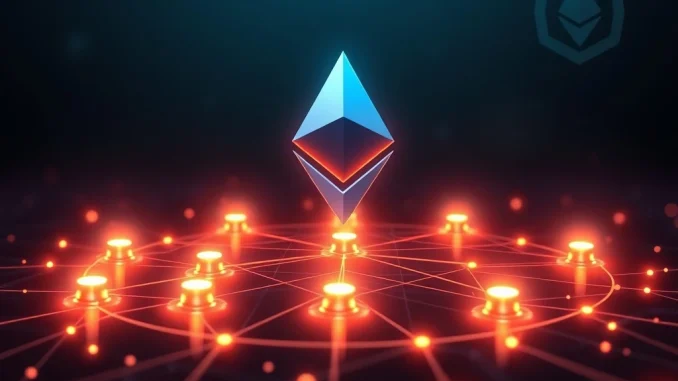
For years, the Ethereum mainnet, while robust and secure, faced challenges with congestion and high transaction fees, especially during periods of high demand. This often made smaller transactions impractical and hindered widespread adoption for everyday use cases. Recognizing this, the Ethereum Foundation strategically shifted its focus towards Layer-2 (L2) scaling solutions. These decentralized off-chain networks are designed to handle the bulk of transaction execution, leaving the mainnet to focus on its core strength: secure settlement and finality. This modular approach is proving incredibly effective, transforming Ethereum into a more agile and efficient ecosystem.
- Decentralized Execution: L2s process transactions off the mainnet.
- Mainnet Focus: Ethereum’s mainnet prioritizes security and settlement.
- Enhanced Throughput: Significant increase in the number of transactions processed.
- Cost Reduction: Drastically lower fees for users.
This strategic pivot, driven by the need for enhanced Ethereum L2 scaling, is a testament to Ethereum’s adaptability and commitment to long-term sustainability. It’s like building express lanes for a busy highway, ensuring smooth traffic flow without compromising the integrity of the main road.
How Has Ethereum’s Capacity Skyrocketed by 17x?
The numbers speak for themselves. According to Vitalik Buterin’s January 2025 blog post [1], Ethereum’s transaction capacity has seen an astounding 17x increase thanks to the widespread adoption of L2 solutions. This isn’t just a theoretical improvement; it’s a tangible boost that directly impacts how users interact with decentralized applications (dApps). With more capacity, the network can handle a significantly higher volume of transactions, making it more responsive and less prone to bottlenecks. This leap in Ethereum capacity is crucial for supporting the growing demands of DeFi, NFTs, and other emerging Web3 applications.
Think of it this way: before L2s, Ethereum was a single-lane road struggling with rush hour traffic. Now, with L2s, it has expanded into a multi-lane superhighway, capable of handling far more vehicles simultaneously. Projects like Intmax, leveraging technologies such as zero-knowledge proofs and plasma architecture, are at the forefront of this transformation, demonstrating how high throughput can be achieved without compromising the core principles of decentralization [1]. The ecosystem has already secured over $42 billion in value on L2 networks as of early 2025, a clear indicator of growing confidence from both institutional and retail users [1].
Are Reduced Ethereum Fees Making DeFi More Accessible?
One of the most significant pain points for Ethereum users has historically been the unpredictable and often high transaction fees (gas fees). The L2 scaling strategy directly addresses this by offloading computation from the mainnet. The result? A comparable reduction in costs, making decentralized applications and financial services far more accessible to a broader audience. These reduced Ethereum fees are a game-changer for micro-transactions, gaming, and everyday utility, opening up new possibilities for DeFi and Web3 experiences that were previously cost-prohibitive.
This financial benefit has spurred massive adoption across various sectors:
- DeFi: More affordable swaps, lending, and borrowing.
- Gaming: Cheaper in-game transactions and NFT minting.
- Enterprise Applications: Viable solutions for blockchain-based business processes.
The success of platforms like Optimism and Arbitrum, which have become dominant players in the scaling arena, underscores the user demand for cost-effective alternatives to on-chain processing [5]. Lower fees mean more users can participate, fostering a more inclusive and vibrant ecosystem.
What’s the Broader Impact of Blockchain Scalability on Web3 Adoption?
Ethereum’s L2-centric approach is not an isolated phenomenon; it aligns perfectly with the broader industry trend towards modular blockchain design. This architectural philosophy emphasizes specialized layers handling distinct functions to optimize overall performance. This pursuit of blockchain scalability is vital for the entire crypto space, moving beyond theoretical concepts to practical, real-world applications. As different L2 solutions mature, ensuring interoperability between them becomes paramount, building a seamless user experience across the entire ecosystem [4].
Moreover, sustainability is increasingly shaping these scaling strategies. Projects like IBVM’s carbon-neutral Bitcoin-based L2 demonstrate a growing awareness of environmental impact, a factor that will undoubtedly influence Ethereum’s ecosystem as competition intensifies [7]. The integration of AI-driven tools, such as AIDEN’s collaboration with Intmax, further illustrates how innovation can enhance both scalability and user experience [3]. This holistic approach to scalability, encompassing efficiency, cost, interoperability, and sustainability, is critical for the long-term success of the decentralized web.
What’s Next for Ethereum’s L2s and Web3 Adoption?
Ethereum’s L2 strategy represents more than just a technical upgrade; it’s a philosophical evolution. By strategically delegating scalability to complementary systems, the network reinforces its foundational principles of security and decentralization while effectively tackling real-world usability challenges. This delicate balance positions Ethereum to maintain its leadership in DeFi and Web3 applications, provided continuous innovation in L2 infrastructure keeps pace with user expectations.
The growing maturity of L2 solutions, bolstered by strategic partnerships and an expanding array of real-world applications, signals an ecosystem poised for global Web3 adoption. While challenges remain, such as ensuring widespread adoption, robust developer tooling, and consistent performance under peak demand, the progress made in 2025 is undeniably transformative. Ethereum is not just scaling; it’s evolving into a more accessible, efficient, and powerful platform for the decentralized future.
Sources:
- [1] Vitalik Buterin’s Blog, January 2025
- [2] 10 Years of Ethereum: From “World Computer” to DeFi & Web3
- [3] AIDEN And INTMAX Join Forces To Power Smarter L2s
- [4] Exploring the Exciting Future of Blockchain Technology
- [5] The 5 Layer 2 Giants Dominating the Scalability Arena
- [7] IBVM’s Eco-Friendly Bitcoin L2 Hits 1M Users
Frequently Asked Questions (FAQs)
What is Ethereum’s Layer-2 (L2) scaling strategy?
Ethereum’s L2 scaling strategy involves using separate, decentralized networks built on top of the main Ethereum blockchain. These L2s handle the majority of transaction processing and execution off-chain, then periodically submit bundled proofs of these transactions back to the mainnet for final settlement and security. This significantly increases transaction throughput and reduces costs on the main chain.
How much has Ethereum’s capacity increased due to L2s?
According to Vitalik Buterin’s observations in early 2025, Ethereum’s transaction capacity has seen an impressive 17x increase. This boost is a direct result of the efficiency gained by offloading transactions to Layer-2 networks, allowing the mainnet to operate more efficiently as a settlement layer.
Are Ethereum transaction fees really lower with L2s?
Yes, one of the primary benefits of L2 scaling is a substantial reduction in transaction fees. By processing transactions off the mainnet, L2s alleviate congestion, which in turn lowers the “gas” prices users pay. This makes DeFi, gaming, and other dApp interactions much more affordable and accessible.
What is the total value secured on Ethereum’s L2 networks?
As of early 2025, over $42 billion in value has been secured on Ethereum’s Layer-2 networks. This significant figure reflects growing user and institutional confidence in the security and efficiency of these scaling solutions, highlighting their crucial role in the broader Ethereum ecosystem.
What are some examples of popular Ethereum L2 solutions?
Prominent examples of Ethereum L2 solutions that have gained significant traction include Optimism and Arbitrum. These platforms have successfully attracted a large user base by offering faster and cheaper transaction alternatives compared to directly interacting with the Ethereum mainnet.
How do L2s contribute to Web3 adoption?
L2s are crucial for Web3 adoption by solving the scalability and cost issues that have historically hindered mainstream use. By making decentralized applications faster, cheaper, and more user-friendly, L2s enable a wider range of use cases, from complex DeFi protocols to casual blockchain games, thereby accelerating the transition to a decentralized internet.