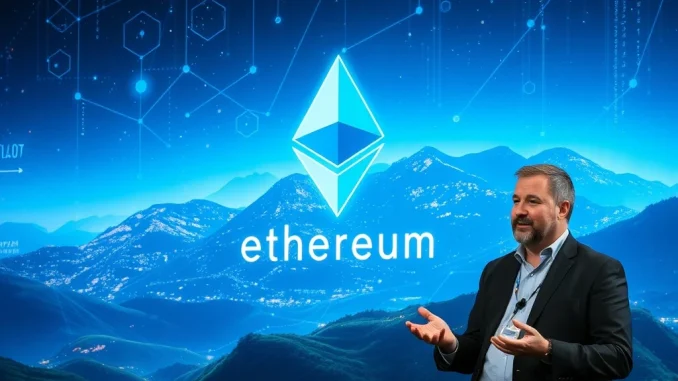
As Ethereum celebrates its 10th anniversary, co-founder Joe Lubin shares groundbreaking insights on Ethereum Treasurys and the future of cryptocurrency. Discover how this milestone could reshape the blockchain landscape.
Ethereum’s Decade of Innovation: A Look Back
Since its launch in 2015, Ethereum has revolutionized the cryptocurrency space. Here are key milestones:
- Introduction of smart contracts
- Explosive growth of decentralized applications (dApps)
- The transition to Ethereum 2.0 with Proof-of-Stake
- Emergence of DeFi and NFT ecosystems
Joe Lubin’s Vision for Ethereum Treasurys
The Ethereum co-founder discusses how Ethereum Treasurys could transform institutional crypto adoption:
| Feature | Potential Impact |
|---|---|
| Institutional-grade security | Increased trust from traditional investors |
| Regulatory compliance | Mainstream financial integration |
| Yield generation | New revenue streams for holders |
Challenges Facing Ethereum at 10 Years
While celebrating achievements, Lubin acknowledges hurdles:
- Scalability concerns with growing adoption
- Regulatory uncertainty in key markets
- Competition from newer blockchain platforms
- Environmental concerns around energy usage
The Future of Cryptocurrency: Ethereum’s Role
Lubin predicts Ethereum will remain central to blockchain innovation through:
- Continued development of layer 2 solutions
- Expansion of real-world asset tokenization
- Greater enterprise adoption
- Enhanced privacy features
FAQs About Ethereum and Joe Lubin’s Vision
Q: What are Ethereum Treasurys?
A: Institutional-grade financial instruments built on Ethereum blockchain, offering security and compliance features for large investors.
Q: How has Ethereum changed since its launch?
A: It evolved from simple smart contracts to a robust platform supporting DeFi, NFTs, and enterprise solutions.
Q: What makes Joe Lubin’s perspective valuable?
A: As co-founder, he has unique insights into Ethereum’s technical and strategic direction.
Q: Will Ethereum Treasurys replace traditional bonds?
A: Not immediately, but they offer complementary features that could appeal to crypto-native investors.