Recent **Ethereum Foundation** transactions have captured significant attention across the **crypto market**. This activity highlights the transparent nature of blockchain technology and the ongoing operational needs of major ecosystem players. Investors and enthusiasts are closely watching these movements, seeking to understand their broader implications for the market.
Ethereum Foundation’s Recent ETH Sales Unveiled
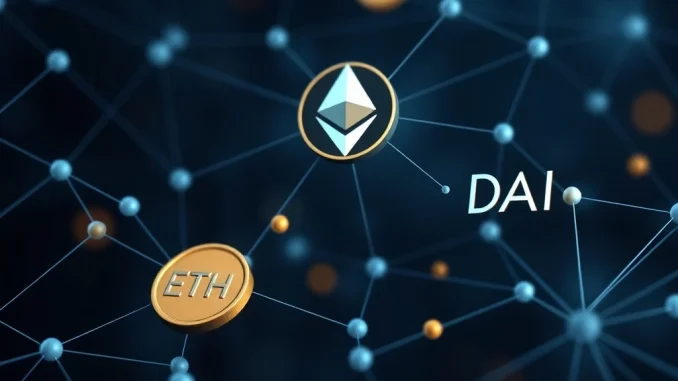
The **Ethereum Foundation** has completed another significant sale of Ether (ETH). Specifically, it sold an additional 1,100 ETH for approximately $4.89 million in DAI. This latest transaction brings the Foundation’s total ETH sales over the past three days to a substantial 7,294 ETH. These cumulative sales equate to roughly $33.25 million in DAI, according to detailed **on-chain data** provided by analytics platform Onchain Lens on X. This consistent activity underscores the Foundation’s ongoing financial management.
Furthermore, the Foundation executed a notable transfer of assets. It moved 16,000 ETH, valued at approximately $71.45 million, to a newly established wallet. In addition, $6 million in DAI was also transferred to this same new address. Such transfers often indicate internal restructuring or preparation for future operational expenditures. Therefore, these movements are carefully monitored by market observers.
Analyzing DAI Stablecoin Movements and Market Impact
The decision by the **Ethereum Foundation** to convert ETH into **DAI stablecoin** is a strategic choice. DAI is a decentralized stablecoin pegged to the US dollar. By converting volatile ETH into DAI, the Foundation effectively hedges against potential price fluctuations in the cryptocurrency market. This approach ensures greater stability for its operational funds.
Utilizing DAI allows the Foundation to manage its expenses and fund various projects without being directly exposed to ETH’s inherent volatility. For instance, the Foundation supports research, development, and community initiatives within the Ethereum ecosystem. Therefore, having a stable treasury is crucial for long-term planning and sustainability. This strategy also minimizes any direct selling pressure on the ETH price, as the conversion happens into a stable asset rather than immediate fiat.
Understanding On-Chain Data and Transparency
The insights into these transactions are made possible through **on-chain data** analytics. Platforms like Onchain Lens continuously monitor public blockchain ledgers. They provide real-time information on asset movements, sales, and transfers. This level of transparency is a cornerstone of the blockchain ecosystem.
On-chain data allows anyone to verify transactions. It also provides an unprecedented level of accountability for major entities like the **Ethereum Foundation**. Consequently, this transparency builds trust within the community. It also helps analysts understand market dynamics more deeply. Without this publicly accessible data, such detailed reporting would be impossible.
Broader Implications for the Crypto Market
While these **ETH sales** are significant in volume, they are generally considered part of the **Ethereum Foundation**’s routine operational funding. The Foundation relies on its ETH holdings to finance its various endeavors, including protocol development, ecosystem grants, and educational initiatives. Therefore, these sales are not typically interpreted as a bearish signal for ETH itself.
Instead, they represent the ongoing maturation of the cryptocurrency space. Major organizations effectively manage their digital assets for real-world operational needs. The continuous development funded by these sales ultimately benefits the entire **crypto market**. It strengthens the underlying infrastructure and expands the utility of the Ethereum network.
In conclusion, the recent **Ethereum Foundation** transactions demonstrate prudent financial management. They also highlight the power of **on-chain data** for transparency. These activities are a normal part of sustaining a large, decentralized ecosystem. They ensure the continued growth and innovation within the Ethereum network and the broader **crypto market**.
Frequently Asked Questions (FAQs)
1. What is the Ethereum Foundation?
The Ethereum Foundation is a non-profit organization. It supports the development and growth of the Ethereum blockchain ecosystem. It funds research, development, and community initiatives globally.
2. Why does the Ethereum Foundation sell ETH?
The Ethereum Foundation sells ETH primarily to fund its operational costs. These costs include salaries, grants for developers, research projects, and other initiatives aimed at advancing the Ethereum network.
3. What is DAI stablecoin?
DAI is a decentralized stablecoin. It aims to maintain a stable value, typically pegged to the US dollar. It achieves this stability through collateralization with other cryptocurrencies on the MakerDAO protocol.
4. How does on-chain data provide transparency?
On-chain data refers to information recorded on a public blockchain ledger. It is transparent and immutable. This data allows anyone to track and verify transactions, asset movements, and wallet balances in real-time, enhancing accountability.
5. Do these ETH sales impact the price of Ether?
While large sales can theoretically impact price, the Ethereum Foundation’s sales are generally considered routine operational funding. They are typically managed to minimize market disruption, and the conversion to stablecoins like DAI further mitigates direct selling pressure on ETH.