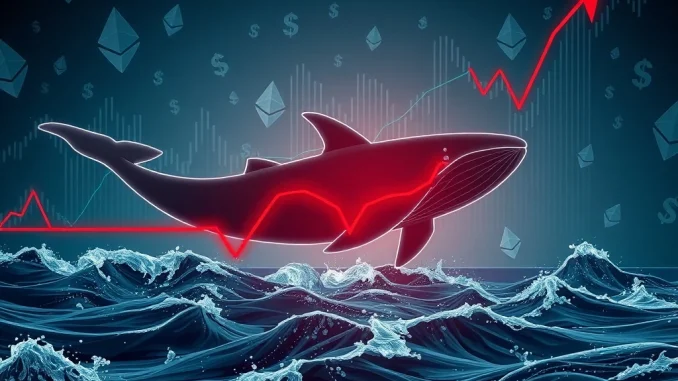
Imagine a high-stakes poker game where one player has bet nearly everything on a single hand, and the cards are turning against them. That’s precisely the nail-biting scenario unfolding in the crypto world, where an anonymous whale’s colossal ETH short position is teetering on the brink of disaster. This isn’t just about one trader’s misfortune; it highlights the extreme volatility and inherent risks within the digital asset landscape. Are we about to witness a spectacular liquidation event?
Understanding the Perilous ETH Short Position
For those unfamiliar, taking a ‘short position’ in crypto means betting that the price of an asset, in this case, Ethereum (ETH), will go down. If the price falls, the short seller profits. If it rises, they incur losses. Our anonymous whale took a massive 20x leverage short position on ETH, meaning for every dollar they put in, they borrowed 19 more to amplify their bet. While this can lead to amplified gains, it also dramatically increases the risk of liquidation.
The details of this audacious bet, brought to light by the keen eyes of on-chain analytics LookOnChain, are staggering:
- Total Short Position: 12,500 ETH
- Approximate Value: $40.7 million
- Leverage: 20x
- Current Unrealized Loss: Over $2 million
- Liquidation Price: $3,279.57
The whale has reportedly already closed a portion of their position, likely in an attempt to de-risk or realize some losses before the full hammer falls. However, the remaining position is still substantial, making the outcome a matter of intense speculation and concern across the market.
The Looming Threat of Crypto Whale Liquidation
What exactly happens when a position faces crypto whale liquidation? When a trader’s losses on a leveraged position reach a certain threshold, the exchange automatically closes their position to prevent further losses for both the trader and the platform. This is known as forced liquidation. For a whale with such a significant ETH short, a forced liquidation could potentially involve the automatic buying back of 12,500 ETH on the market to close their short. While 12,500 ETH might not crash the entire market, a sudden, large market buy could cause a rapid, albeit temporary, upward price movement, especially if liquidity is thin at that moment.
The very existence of this liquidation price at $3,279.57 acts as a magnetic pull for the market. Traders often watch these levels, as a breach can trigger a cascade of events. It’s a high-stakes game of chicken, with millions on the line.
Navigating Ethereum Price Volatility: Lessons from a Whale
This incident serves as a stark reminder of the inherent Ethereum price volatility. ETH, like Bitcoin and other major cryptocurrencies, is known for its dramatic price swings. Factors such as broader market sentiment, regulatory news, network upgrades (like the upcoming Dencun upgrade), and even the actions of large holders (whales) can significantly influence its value. Betting against a major asset like ETH, especially with high leverage, requires not just conviction but also an acute awareness of these market dynamics and robust risk management.
For everyday traders, this situation underscores why diversification and avoiding excessive leverage are crucial. While the allure of amplified gains is strong, the potential for amplified losses is equally, if not more, potent.
The Dangers of High-Leverage Crypto Trading
The core of this whale’s predicament lies in the use of high-leverage crypto trading. Leverage allows traders to control a large position with a relatively small amount of capital. It’s a double-edged sword: it can multiply profits exponentially, but it can also wipe out an entire portfolio just as quickly. A 20x leverage means that a mere 5% adverse price movement against the position is enough to trigger liquidation.
This situation is a cautionary tale, emphasizing the importance of:
- Risk Management: Never bet more than you can afford to lose.
- Understanding Leverage: Know its mechanics and its dangers.
- Stop-Loss Orders: While not always perfect in volatile markets, they can help mitigate losses.
- Market Monitoring: Staying informed about market sentiment and key price levels.
Unveiling Secrets with On-Chain Analytics (LookOnChain)
The fact that we even know about this anonymous whale’s predicament is thanks to sophisticated on-chain analytics LookOnChain provides. Platforms like LookOnChain analyze public blockchain data, tracking large transactions, wallet movements, and smart contract interactions. This transparency, unique to blockchain technology, allows observers to gain insights into the actions of major market participants, often before their moves significantly impact prices. It’s a powerful tool for market surveillance and understanding underlying trends, offering a glimpse into the often-opaque world of institutional and whale-sized trades.
Conclusion: A High-Stakes Game Continues
The saga of the anonymous whale’s ETH short position is a gripping reminder of the intense drama and inherent risks within the cryptocurrency markets. As the liquidation price of $3,279.57 looms ever closer, the crypto community watches with bated breath to see if this high-stakes gamble will end in a dramatic forced liquidation or a last-minute escape. This event, regardless of its final outcome, serves as a powerful lesson for all participants: in the volatile world of crypto, managing risk, understanding leverage, and staying informed are not just good practices—they are essential for survival.
Frequently Asked Questions (FAQs)
1. What is a short position in cryptocurrency trading?
A short position is a trading strategy where an investor borrows an asset (like ETH) and sells it, hoping to buy it back later at a lower price. The profit comes from the difference between the selling price and the lower repurchase price. If the price rises instead, the investor incurs losses.
2. How does leverage work in crypto trading?
Leverage allows traders to open positions larger than their initial capital. For example, 20x leverage means you can control a $20,000 position with just $1,000 of your own money. While it amplifies potential profits, it also magnifies potential losses and increases the risk of liquidation.
3. What triggers a crypto whale liquidation?
A liquidation is triggered when a trader’s margin (the collateral held by the exchange) falls below a certain maintenance level due to adverse price movements. The exchange automatically closes the position to prevent the trader’s balance from going negative and to recover the borrowed funds, usually resulting in the loss of the initial margin.
4. Why are on-chain analytics important for crypto traders?
On-chain analytics provide transparency into blockchain transactions. They allow traders and analysts to track large wallet movements, identify potential whale activity, monitor exchange inflows/outflows, and gain insights into market sentiment and liquidity, which can inform trading decisions.
5. What are the main risks of high-leverage crypto trading?
The primary risk is rapid capital loss. Even small price movements against your position can lead to significant losses or even full liquidation of your collateral. High leverage also increases exposure to market volatility and technical issues like slippage during liquidation.