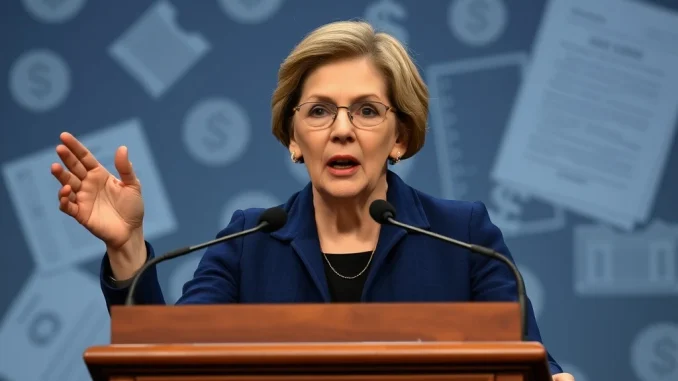
U.S. Senator Elizabeth Warren has voiced strong concerns regarding the proposed GENIUS Act. This legislation aims to regulate stablecoins. However, Warren, a known critic of cryptocurrencies, believes the bill is deeply flawed. She warns it could jeopardize financial stability, consumer protection, and national security. Her statements underscore a growing debate within Washington regarding digital asset oversight. This article explores her specific criticisms and the broader implications for the crypto industry.
Elizabeth Warren’s Concerns on the GENIUS Act
Senator Elizabeth Warren recently articulated her reservations about the GENIUS Act. She states the bill presents significant dangers. For instance, she highlighted potential conflicts of interest. These involve the Trump family, suggesting an ethical lapse within the proposed framework. Furthermore, Warren believes the current draft provides only a ‘light regulatory framework.’ This, she argues, is insufficient to manage the complexities of the digital asset market.
She specifically pointed to the Paxos incident. In this event, Paxos erroneously issued $3 trillion worth of PYUSD. Warren used this example to illustrate the bill’s inadequacies. She emphasized that such an oversight could have catastrophic effects without robust oversight. Consequently, her criticisms demand a closer look at the bill’s provisions. The senator’s stance reflects a broader call for stricter controls on digital currencies.
The GENIUS Act: A Flawed Approach to Stablecoin Regulation?
The GENIUS Act intends to establish a framework for stablecoin regulation. However, Senator Warren asserts that its current form is problematic. Stablecoins are digital assets pegged to a stable reserve asset, like the U.S. dollar. They are crucial for facilitating transactions within the crypto ecosystem. Therefore, their regulation is paramount. Warren argues that the GENIUS Act fails to provide the necessary safeguards. It lacks comprehensive mechanisms to prevent market manipulation or systemic risks.
Critics like Warren suggest that without stringent rules, stablecoins could become conduits for illicit finance. They might also destabilize traditional financial markets. This perspective highlights the need for careful legislative drafting. A flawed approach could undermine trust in digital assets. Moreover, it could expose consumers to undue risks. Thus, the debate over the GENIUS Act centers on its ability to truly protect the public interest.
Demanding Comprehensive Crypto Legislation
Senator Warren is not merely criticizing the GENIUS Act. She is also advocating for broader crypto legislation. She urges the Republican-led Congress to address the bill’s loopholes. Her call for supplemental legislation underscores the perceived urgency of the matter. The current legislative landscape for digital assets remains fragmented. This lack of clear rules creates uncertainty for businesses and investors alike.
Warren believes that comprehensive legislation is vital. It must cover various aspects of the crypto market. These include licensing, consumer protection, and anti-money laundering measures. Without such a framework, she argues, the industry remains vulnerable. This vulnerability could lead to further incidents impacting market integrity. Therefore, her demands aim to establish a more secure and accountable digital finance environment.
Ensuring Financial Stability in the Digital Age
A core concern for Senator Warren is maintaining financial stability. She believes that unregulated stablecoins pose a direct threat to this stability. The interconnectedness of global financial markets means that disruptions in one area can quickly spread. For example, a major stablecoin collapse could trigger broader market panic. This could impact traditional banking systems.
Warren’s argument aligns with global regulatory bodies. Many of these bodies are also examining the risks posed by digital assets. They emphasize the need for robust oversight to prevent systemic shocks. Therefore, her push for stronger regulation is rooted in preventing potential economic fallout. This approach seeks to integrate digital assets safely into the broader financial system. It ensures they do not become a source of instability.
In conclusion, Senator Elizabeth Warren’s critique of the GENIUS Act is significant. She identifies potential dangers to financial stability, consumer protection, and national security. Her call for comprehensive crypto legislation highlights the ongoing challenge for lawmakers. They must balance innovation with robust regulatory oversight. The debate surrounding the GENIUS Act and future stablecoin regulation will undoubtedly continue to shape the future of digital finance.
Frequently Asked Questions (FAQs)
What is Senator Elizabeth Warren’s primary concern with the GENIUS Act?
Senator Elizabeth Warren’s main concern is that the GENIUS Act provides only a ‘light regulatory framework.’ She believes this framework is insufficient to protect financial stability, consumers, and national security from the inherent risks of stablecoins.
What specific incident did Warren cite to highlight the GENIUS Act’s flaws?
Warren referenced the Paxos incident, where $3 trillion worth of PYUSD was erroneously issued. She used this example to demonstrate how inadequate regulation could lead to significant financial risks.
Why does Senator Warren believe supplemental crypto legislation is necessary?
She argues that the GENIUS Act contains significant loopholes. Supplemental crypto legislation is needed to address these gaps. It would provide more comprehensive oversight for stablecoins and the broader digital asset market.
How does stablecoin regulation relate to financial stability, according to Warren?
According to Warren, unregulated stablecoins pose serious risks to financial stability. A major stablecoin failure could trigger broader market disruptions, potentially impacting traditional financial systems and consumer confidence.
What are stablecoins, and why are they important for regulation?
Stablecoins are cryptocurrencies designed to maintain a stable value, often pegged to fiat currencies like the U.S. dollar. They are important for regulation because they facilitate transactions in the crypto market and their stability is crucial for preventing market volatility and protecting users.
What role does the Trump family play in Warren’s criticisms of the GENIUS Act?
Senator Warren highlighted potential conflicts of interest involving the Trump family. She believes these conflicts must be addressed within the bill to ensure fair and impartial regulation.