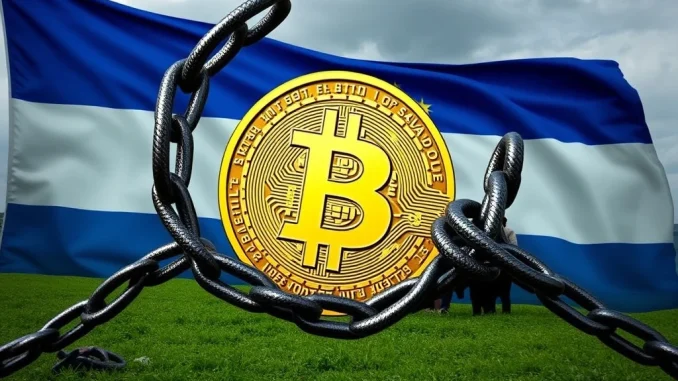
When El Salvador declared Bitcoin legal tender in 2021, it sent shockwaves across the globe. Heralded as a bold, pioneering move, the nation’s dive into the world of cryptocurrency was seen by many as a blueprint for future economic innovation. Yet, the path has been anything but smooth. Today, the ambitious vision for El Salvador Bitcoin adoption appears to be encountering significant headwinds, primarily due to external pressures and internal challenges.
The Stalling of El Salvador’s Bitcoin Strategy: What’s Happening?
El Salvador’s grand experiment with Bitcoin is facing a reality check. While the initial announcement sparked immense interest, a recent report from the non-profit organization My First Bitcoin highlights a concerning slowdown. Quentin Ehrenmann, the group’s general manager, points to a stark shift: government-backed initiatives to educate citizens on Bitcoin have largely stagnated. This leaves a significant portion of the Salvadoran population without meaningful access or understanding of the digital asset, creating a disconnect between policy and practical implementation.
“Since the government entered into this contract with the IMF, Bitcoin is no longer legal tender, and we haven’t seen any other effort to educate people,” Ehrenmann told Reuters, underscoring the perceived policy vacuum. This statement alone raises critical questions about the long-term viability and true impact of the country’s crypto agenda on its citizens.
IMF Bitcoin Constraints: A Roadblock to Further Accumulation?
Perhaps the most significant hurdle comes from the International Monetary Fund (IMF). The IMF, a key financial partner for many developing nations, reportedly included a crucial clause in its loan agreement with El Salvador: a prohibition on acquiring additional Bitcoin. This alleged restriction directly contradicts earlier assertions from El Salvador’s own Bitcoin Office, which had claimed daily purchases were ongoing. Such discrepancies fuel skepticism and raise concerns about the government’s transparency regarding its crypto strategy.
While President Nayib Bukele continues to proudly showcase the nation’s existing Bitcoin holdings—estimated at 6,244 BTC, valued at approximately $742 million—the inability to make new acquisitions casts a shadow over the strategy’s long-term sustainability. For a nation that aimed to be a leader in crypto integration, a freeze on new purchases fundamentally alters its trajectory.
Challenges in Bitcoin Adoption: Is Public Engagement Lagging?
Beyond the institutional limitations, the core challenge lies in widespread Bitcoin adoption among the general populace. Despite the government’s initial fanfare, grassroots engagement remains subdued. The My First Bitcoin NGO’s observations suggest a significant gap between the government’s rhetoric and the lived experience of ordinary Salvadorans. Without consistent and accessible education, many citizens lack the knowledge, tools, or even the motivation to integrate Bitcoin into their daily lives.
Consider these points regarding public engagement:
- Lack of Education: State-backed educational efforts have reportedly dwindled since the IMF agreement, leaving many uninformed.
- Access Barriers: Without proper guidance, accessing and utilizing digital assets remains a challenge for those unfamiliar with the technology.
- Perceived Relevance: If the benefits aren’t clearly communicated or easily realized, the incentive for public adoption diminishes.
This situation underscores a critical lesson: making a cryptocurrency legal tender is one thing; ensuring its practical and beneficial use by the population is an entirely different, and far more complex, endeavor.
The Chivo Wallet Shift: What Does Privatization Mean for Public Use?
A cornerstone of El Salvador’s initial Bitcoin plan was the Chivo wallet, designed as the primary tool to drive widespread adoption. However, the wallet is now undergoing a significant transformation: it will soon be privatized. This move effectively removes direct state support and diminishes its role as a public service. The IMF has clarified that while the Chivo wallet will remain operational, it must now function independently of government funding. This shift fundamentally sidelines its original purpose as a catalyst for widespread crypto usage and moves it towards a more traditional, market-driven financial application.
For citizens, this could mean:
- Less direct government support or troubleshooting for wallet issues.
- A potential shift in services offered, focusing more on profit-driven models rather than public utility.
- A perception that the government is stepping back from its commitment to direct Bitcoin integration into daily life.
The privatization of Chivo signals a quiet realignment of priorities, moving away from a centrally-managed push for Bitcoin and towards a more hands-off approach.
President Nayib Bukele’s Stance: Holding Strong or Shifting Gears?
Despite the challenges, President Nayib Bukele has maintained a public stance of unwavering commitment to Bitcoin. His continued showcasing of the nation’s existing BTC holdings serves as a testament to his personal belief in the asset. However, the operational realities, as highlighted by the NGO, suggest a more nuanced picture. While blockchain data reportedly indicates consistent 1 BTC-per-day transfers to addresses linked to El Salvador, the nature of these transactions—whether official government purchases or private activity—remains ambiguous. This uncertainty complicates any definitive assessment of the government’s ongoing commitment to its initial, ambitious vision.
The situation in El Salvador offers a crucial case study for other nations contemplating similar moves. It highlights the intricate balance between national sovereignty, international financial obligations, and the practicalities of integrating a volatile, nascent technology into a national economy. The government’s ability to navigate these hurdles will determine the ultimate fate of its pioneering Bitcoin strategy.
The Global Context: El Salvador’s Experiment in Perspective
While El Salvador grapples with these complexities, other governments and institutions are quietly expanding their Bitcoin holdings. Japan’s Metaplanet and France’s Blockchain Group are examples of entities increasing their exposure to digital assets, suggesting a growing institutional acceptance of Bitcoin. However, El Salvador’s experience serves as a cautionary tale, emphasizing that integrating digital assets into public policy is fraught with complexities, especially when institutional barriers, like IMF conditions, limit flexibility and when public education is not sustained.
Critics argue that El Salvador’s approach risks prioritizing symbolic gestures over tangible benefits for its citizens. The initial excitement of being a ‘Bitcoin nation’ needs to translate into real economic improvements and widespread utility for its people. Without sustained public education, robust infrastructure, and clear policy, even the most ambitious crypto initiatives may struggle to gain meaningful traction.
Conclusion: A Crossroads for El Salvador’s Bitcoin Journey
El Salvador’s journey with Bitcoin is at a critical juncture. The initial bold stride into making Bitcoin legal tender has been met with significant real-world challenges, from external financial constraints imposed by the IMF to internal struggles with public education and adoption. The reported halt in new Bitcoin purchases and the privatization of the Chivo wallet signal a potential recalibration of the nation’s crypto strategy, moving away from direct government-led integration towards a more market-driven approach.
While President Bukele maintains a strong public front, the insights from organizations like My First Bitcoin underscore the need for greater transparency and renewed efforts in public education if Bitcoin is truly to benefit the average Salvadoran. The world watches keenly as El Salvador navigates these complexities, offering invaluable lessons on the promises and pitfalls of integrating digital currencies into national economies. The ultimate success of this pioneering experiment will hinge on its ability to bridge the gap between ambitious policy and practical, widespread utility for its citizens.
Frequently Asked Questions (FAQs)
Q1: Why is El Salvador’s Bitcoin strategy reportedly stalling?
El Salvador’s Bitcoin strategy is reportedly stalling primarily due to constraints imposed by the International Monetary Fund (IMF) loan agreement, which includes a clause prohibiting the government from acquiring additional Bitcoin. Additionally, public adoption efforts and education initiatives have lagged, as noted by the non-profit My First Bitcoin.
Q2: How does the IMF influence El Salvador’s Bitcoin purchases?
According to reports, the IMF loan agreement with El Salvador includes a specific condition that prevents the Salvadoran government from purchasing more Bitcoin. This restriction directly impacts the country’s ability to expand its national Bitcoin holdings, contradicting earlier claims of daily acquisitions.
Q3: What is the significance of the Chivo wallet’s privatization?
The privatization of the Chivo wallet means it will no longer receive direct state support and must operate independently of government funding. This shift diminishes its original role as a government-backed tool for widespread Bitcoin adoption and moves it towards a more market-driven financial service, potentially impacting its accessibility and public utility.
Q4: Is Bitcoin still legal tender in El Salvador?
Yes, Bitcoin technically remains legal tender in El Salvador. However, reports from NGOs suggest that practical efforts to educate the public and integrate Bitcoin into daily life have diminished since the government’s agreement with the IMF, leading to a gap between its legal status and widespread practical use.
Q5: How many Bitcoins does El Salvador currently hold?
President Nayib Bukele has publicly stated that El Salvador holds approximately 6,244 Bitcoins. This figure is valued at around $742 million, though new acquisitions are reportedly halted due to IMF restrictions.