The world of cryptocurrency is always buzzing, and today, Bitcoin News from El Salvador is once again making headlines. The Central American nation, under the leadership of President Nayib Bukele, has just announced another significant Bitcoin purchase, valued at nearly $948,000. This move comes despite ongoing scrutiny and claims from the International Monetary Fund (IMF) regarding the transparency of El Salvador’s digital asset holdings. So, what’s truly happening on the ground, and why is this small nation continuously challenging global financial norms?
El Salvador Bitcoin: A Bold New Purchase Amidst Scrutiny
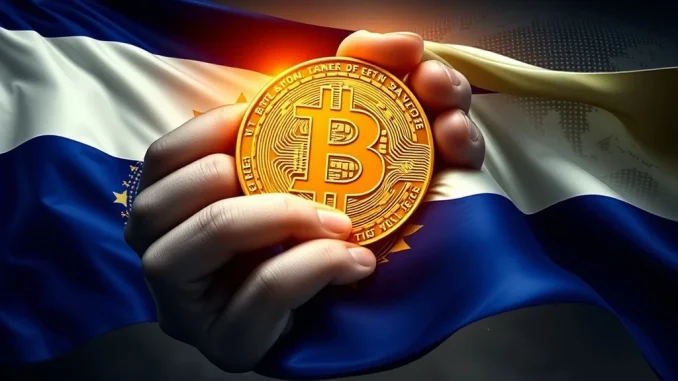
El Salvador has confirmed its latest Bitcoin acquisition, adding 8 BTC to its reserves at an average price of $118,549 per coin. This brings the country’s total reported holdings to an impressive 6,248 BTC, now valued at approximately $740 million. The Bitcoin Office detailed this purchase on July 24, reinforcing El Salvador’s unwavering commitment to its digital asset strategy. However, this acquisition has intensified the ongoing debate about transparency, particularly as the International Monetary Fund (IMF) continues to raise concerns.
The government’s consistent purchases highlight its unique economic experiment, positioning Bitcoin as a strategic national asset. This approach stands in stark contrast to the traditional financial advice often given to developing nations. The decision to invest nearly a million dollars in Bitcoin, despite external pressure, underscores a determined vision for the nation’s financial future.
IMF Bitcoin Concerns: Unpacking the Transparency Debate
The IMF’s criticism primarily centers on El Salvador’s reporting mechanisms. Officials argue that the country’s method of shifting Bitcoin between government-controlled wallets is being mischaracterized as fresh acquisitions. This practice, according to the IMF, creates an illusion of growth without actually increasing the nation’s total reserves.
John Dennehy, founder of the Bitcoin education project My First Bitcoin, echoed these sentiments, calling recent transactions “misleading.” He emphasized that internal transfers do not reflect new accumulation, raising questions about the true state of El Salvador’s reserves. This dispute highlights broader tensions between El Salvador’s innovative digital asset strategy and international financial oversight, putting the spotlight on the need for clearer, more standardized reporting in the realm of national cryptocurrency holdings.
Driving Crypto Adoption: El Salvador’s Vision for a Digital Future
Despite the international scrutiny, the Salvadoran government remains focused on its broader Bitcoin agenda. A cornerstone of this strategy is the expansion of educational programs designed to train citizens in cryptocurrency use. These initiatives aim to foster widespread crypto adoption and ensure the populace is equipped to navigate a digital financial landscape.
Key educational initiatives include:
- Node Nation: A program tailored for high school students, introducing them to blockchain technology and Bitcoin nodes.
- Bitcoin Diploma: A comprehensive program designed to provide in-depth knowledge of Bitcoin and its applications.
- CUBO+: A platform engaging young tech talent, encouraging innovation and development within the crypto space.
- ESIAP Program: Training over 80,000 civil servants in cryptocurrency fundamentals, ensuring government readiness for a digital economy.
These efforts reinforce the government’s vision of positioning El Salvador as a crypto innovation hub, fostering a skilled workforce and a populace ready for the future of finance.
Navigating Digital Assets: Balancing Innovation with Stability
While El Salvador’s proactive stance on digital assets is lauded by many in the crypto community, critics warn that rapid adoption without robust safeguards could heighten financial instability. This concern is particularly acute for a nation with limited fiscal flexibility, where volatility in asset prices could have significant economic repercussions.
The IMF’s stance reflects a delicate balance: acknowledging El Salvador’s compliance with fiscal program limits while cautioning against overreliance on volatile assets. The Fund has not explicitly condemned the Bitcoin strategy but has consistently stressed the critical need for transparent reserve reporting and sound risk management. This conditional support highlights the global skepticism surrounding cryptocurrency as a reserve asset, especially in developing economies where financial stability is paramount.
What’s Next for Bitcoin News and El Salvador?
As the Salvadoran government presses ahead with its Bitcoin purchases and ambitious education efforts, the interplay between domestic execution and international regulatory scrutiny will undoubtedly shape its digital financial ecosystem. The nation’s journey serves as a real-world case study, offering valuable insights into the feasibility and challenges of integrating decentralized assets into a national economy.
The outcome of El Salvador’s bold experiment may influence broader debates on cryptocurrency’s role in national economies and the viability of decentralized assets as strategic reserves. For enthusiasts and skeptics alike, keeping an eye on the latest Bitcoin News from El Salvador will be crucial to understanding the future of global finance.
Frequently Asked Questions (FAQs)
How much Bitcoin did El Salvador recently buy?
El Salvador recently purchased 8 BTC, valued at approximately $948,392 at an average price of $118,549 per coin.
Why is the IMF concerned about El Salvador’s Bitcoin holdings?
The IMF’s primary concern is transparency, arguing that El Salvador is mischaracterizing internal wallet transfers as fresh acquisitions, creating an illusion of growth without increasing total reserves.
What initiatives is El Salvador taking to promote Bitcoin adoption?
El Salvador has launched several initiatives, including Node Nation for high school students, the Bitcoin Diploma program, CUBO+ for young tech talent, and the ESIAP program, which trains over 80,000 civil servants in cryptocurrency use.
What is the total value of El Salvador’s reported Bitcoin holdings?
El Salvador’s total reported Bitcoin holdings now stand at 6,248 BTC, valued at approximately $740 million.
What is the IMF’s overall stance on El Salvador’s Bitcoin strategy?
The IMF has a mixed stance. While it acknowledges El Salvador’s compliance with fiscal program limits, it cautions against overreliance on volatile assets and stresses the need for transparent reserve reporting and robust risk management.
Who is John Dennehy and what was his comment?
John Dennehy is the founder of the Bitcoin education project My First Bitcoin. He commented that El Salvador’s recent Bitcoin transactions were “misleading,” emphasizing that transfers do not reflect new accumulation of reserves.