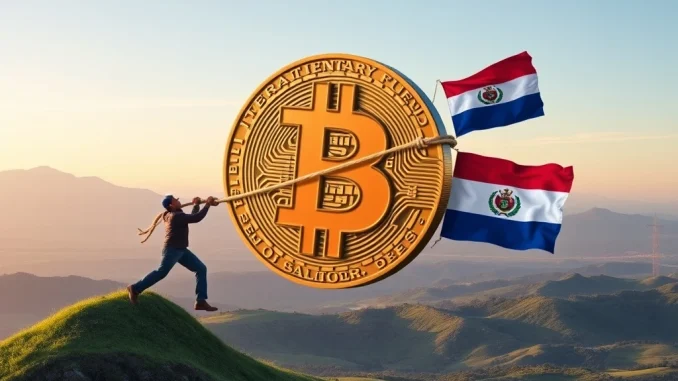
El Salvador’s bold move to embrace Bitcoin as legal tender once captivated the world, signaling a new era for national crypto adoption. However, recent developments paint a more complex picture. The International Monetary Fund (IMF) has stepped in, casting a shadow of doubt over El Salvador’s reported Bitcoin acquisitions, stirring a crucial debate about transparency and the true state of the nation’s digital asset reserves. For anyone tracking the volatile yet fascinating world of cryptocurrencies, this story offers a deep dive into the challenges and realities of integrating a decentralized asset into a national economy.
El Salvador Bitcoin Strategy Under Scrutiny
El Salvador’s government has consistently championed its Bitcoin strategy, asserting daily purchases and a steadfast commitment to the digital asset. They recently announced the acquisition of an additional 8 BTC, pushing their total reported reserves to over $738 million. This narrative suggests continued growth and confidence in their pioneering approach. Yet, this official stance is now facing significant pushback, particularly from the IMF, which raises critical questions about the nature of these reported transactions.
The government’s long-term ambitions for Bitcoin extend beyond just holding reserves. They envision partnerships with private entities to build out the necessary infrastructure, aiming to solidify Bitcoin’s role within the nation’s economic framework. Despite these ambitious plans, the core of their strategy—the actual accumulation of Bitcoin—is now under intense international scrutiny.
IMF Bitcoin Challenge: What’s Really Happening?
The International Monetary Fund (IMF) presents a starkly different account of El Salvador’s recent Bitcoin activity. According to the IMF, what the government claims as new acquisitions are, in fact, merely internal transfers between existing wallets. This distinction is vital: internal transfers do not inject new capital into the market or genuinely increase the nation’s overall Bitcoin holdings. Instead, they can create a misleading impression of growth without actual market engagement.
An IMF statement explicitly noted, “The data does not reflect new acquisitions.” The fund has also highlighted issues with the national Bitcoin wallet system, suggesting it often lacks real-time accuracy, which further complicates transparency efforts. This lack of clear oversight and verifiable data fuels skepticism and makes it challenging for external bodies and the public to ascertain the true state of the nation’s Bitcoin reserves.
The IMF’s concerns are not new. They are deeply intertwined with a conditional loan agreement that mandates reforms to El Salvador’s Bitcoin-related policies. Under these terms, El Salvador agreed to:
- Curtail large-scale Bitcoin purchases.
- Revise adoption strategies to align with broader economic stability goals.
A newly passed bill, stemming from this agreement, emphasizes balancing innovation with fiscal discipline, a direct response to the IMF’s push for caution.
The Truth About Bitcoin Acquisition Claims
The discrepancy between El Salvador’s public statements and the IMF’s findings centers squarely on the definition of a Bitcoin acquisition. When the government announces it has ‘purchased’ additional BTC, the expectation is that new funds have been used to buy Bitcoin from the open market, thereby increasing the nation’s net holdings. However, the IMF’s assertion that these are merely ‘redistributions of existing holdings between wallets’ implies no new capital inflow or actual expansion of the reserve.
Financial analysts like John Dennehy describe this activity as “misleading.” He emphasizes that mere wallet movements do not equate to genuine investment or an increase in national assets. Without clear oversight and public engagement, such a strategy risks becoming a symbolic exercise rather than a truly transformative economic one. This situation underscores a fundamental challenge in national crypto adoption: the need for rigorous, transparent accounting that can withstand international scrutiny.
El Salvador’s Crypto National Strategy: A Public Divide
Beyond the international financial community, public sentiment within El Salvador regarding the crypto national strategy remains sharply divided. While the government asserts progress and benefits, a 2024 survey revealed that a significant 80% of Salvadorans feel Bitcoin has not improved their personal financial conditions. This disconnect is a critical indicator of the policy’s real-world impact on citizens.
Critics argue that the Bitcoin policy primarily benefits the state, rather than empowering individuals as originally envisioned. Public education and adoption initiatives, crucial for widespread integration, appear to have stalled. Quentin Ehrenmann of NGO My First Bitcoin highlighted this issue, noting that post-IMF deal adjustments have made Bitcoin optional for many and restricted its use to limited government functions. This shift from a vision of individual empowerment to state-centric reserve growth raises questions about the long-term viability and public acceptance of the strategy.
Despite these broader challenges, pockets of local Bitcoin integration persist. In towns like Berlin, residents continue to use the cryptocurrency for daily transactions, such as trading coffee. Some entrepreneurs have also adopted it as a hedge against inflation. However, broader adoption remains limited, with many businesses opting out of the mandatory Bitcoin acceptance requirements introduced in 2021, illustrating the ongoing struggle to achieve widespread practical use.
Navigating the Future of Digital Asset Reserves
As El Salvador navigates this complex crossroads, the future of its digital asset reserves and overall crypto strategy remains uncertain. The IMF’s push for fiscal caution stands in direct contrast to the government’s unwavering optimism and long-term Bitcoin ambitions. This delicate balance between innovation and stability will likely shape the global perception of cryptocurrency’s role in national economies.
The diminishing returns of new Bitcoin purchases, especially as global crypto markets remain volatile, may further weaken the strategy’s effectiveness. The government’s Bitcoin Office maintains that its daily purchases—averaging one BTC—signal continued confidence. However, the lack of tangible economic benefits for citizens and the IMF’s scrutiny of internal transfers raise serious questions about the sustainability and genuine impact of this policy.
With public support waning and international pressures intensifying, the path forward for El Salvador’s Bitcoin experiment is fraught with challenges. Its outcome will serve as a significant case study for other nations considering similar ventures, highlighting the critical importance of transparency, public engagement, and sound financial practices when integrating groundbreaking digital assets into traditional economic frameworks.
Frequently Asked Questions (FAQs)
Q1: What is the core dispute between El Salvador and the IMF regarding Bitcoin?
The core dispute is whether El Salvador’s recent reported Bitcoin acquisitions are genuine new purchases or simply internal transfers of existing Bitcoin between government-controlled wallets. The IMF claims they are internal transfers, which do not increase the nation’s total Bitcoin holdings.
Q2: How has the IMF influenced El Salvador’s Bitcoin strategy?
The IMF has influenced El Salvador through a conditional loan agreement. Under this agreement, El Salvador committed to curtailing large-scale Bitcoin purchases and revising its adoption strategies to align with economic stability goals, emphasizing fiscal discipline.
Q3: What is the public sentiment towards Bitcoin in El Salvador?
Public sentiment is divided. A 2024 survey indicated that 80% of Salvadorans feel Bitcoin has not improved their financial conditions. Critics argue the policy primarily benefits the state rather than individual citizens, and widespread adoption remains limited despite some local use.
Q4: Why is transparency crucial for El Salvador’s Bitcoin strategy?
Transparency is crucial because it allows both international bodies like the IMF and the public to verify the true state of the nation’s digital asset reserves. Without clear oversight and accurate reporting, the strategy risks being perceived as misleading or merely symbolic, undermining confidence and hindering genuine economic transformation.
Q5: Are other countries likely to follow El Salvador’s Bitcoin adoption model?
El Salvador’s experience serves as a significant case study. The current challenges, including IMF scrutiny and mixed public sentiment, highlight the complexities and risks involved. While some nations might explore digital asset integration, El Salvador’s ongoing struggles suggest a cautious approach, emphasizing the need for robust regulatory frameworks and clear economic benefits before full-scale adoption.