The world of cryptocurrency investments is on the brink of a significant transformation. Exciting news has emerged regarding the imminent launch of new exchange-traded funds (ETFs) for two prominent digital assets: Dogecoin (DOGE) and Ripple’s XRP. This development marks a pivotal moment for investors and the broader crypto market. Bloomberg ETF analyst Eric Balchunas recently confirmed these anticipated launches.
Groundbreaking DOGE ETF and XRP ETF Set for Debut
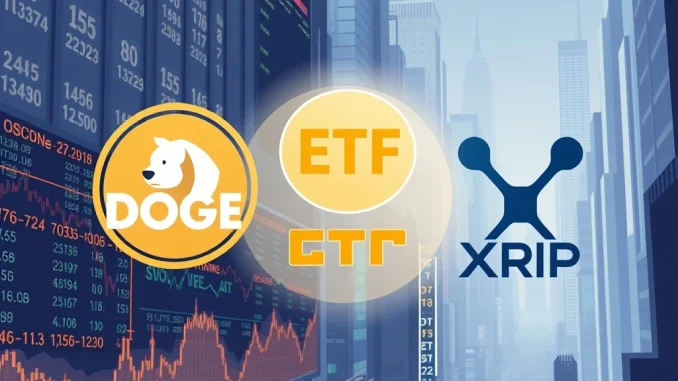
According to Eric Balchunas, a respected Bloomberg ETF analyst, a DOGE ETF, trading under the ticker **DOJE**, is scheduled to debut this Thursday. Simultaneously, a **spot XRP ETF**, identified as **XRPR**, will also launch on the same day. This dual launch represents a significant milestone for both Dogecoin and XRP, offering new avenues for mainstream investment.
Balchunas’s insights are often closely watched within the financial community. He highlighted that the prospectus detailing these launches also mentioned future possibilities. Specifically, **TRUMP** and **BONK ETFs** were noted. However, their specific launch dates remain unset at this time. This news underscores a growing institutional interest in a wider range of digital assets beyond just Bitcoin and Ethereum.
The introduction of these products could democratize access to these cryptocurrencies. Traditional investors, previously hesitant to directly hold volatile digital assets, might find ETFs more appealing. This structure offers regulated exposure through conventional brokerage accounts.
Understanding Spot ETFs in the Cryptocurrency Landscape
A **spot ETF** directly holds the underlying asset. For instance, a **spot XRP ETF** would directly own XRP tokens. This differs significantly from futures ETFs, which track futures contracts linked to an asset. Spot ETFs are generally preferred by investors seeking direct price exposure.
The approval of spot Crypto ETFs has been a long and arduous journey for the industry. Regulators have expressed concerns about market manipulation and investor protection. The landmark approval of spot Bitcoin ETFs earlier this year paved the way. This decision signaled a maturing regulatory stance towards digital assets. Consequently, the door opened for similar products for other cryptocurrencies.
Key characteristics of spot ETFs include:
- **Direct Asset Ownership:** The fund directly holds the cryptocurrency.
- **Price Tracking:** Aims to track the real-time price of the underlying asset accurately.
- **Accessibility:** Trades on traditional stock exchanges, simplifying investment for retail and institutional players.
- **Regulatory Oversight:** Subject to financial regulations, potentially offering more security than direct crypto purchases.
These new offerings could bring increased liquidity and legitimacy to DOGE and XRP. Many believe this move will attract a new wave of capital into the market.
The Significance of DOGE and XRP ETFs for Investors
The launch of a **DOGE ETF** is particularly notable. Dogecoin, originally created as a meme, has evolved into a prominent cryptocurrency. Its community-driven nature and high-profile endorsements have contributed to its widespread recognition. An ETF provides a regulated gateway for investors to gain exposure to DOGE’s price movements without managing private keys or navigating crypto exchanges. This simplifies the investment process considerably.
Similarly, the **XRP ETF** holds immense importance. XRP, associated with Ripple Labs, aims to facilitate fast and low-cost international payments. Its utility-focused design sets it apart from many other cryptocurrencies. Despite ongoing legal battles, XRP maintains a significant market presence. An ETF offers a streamlined method for institutions and individuals to invest in XRP’s potential. This development could help alleviate some of the regulatory uncertainties surrounding the asset.
For investors considering cryptocurrency investments, these ETFs present several advantages:
- **Diversification:** Adds new asset classes to traditional portfolios.
- **Ease of Access:** Eliminates the complexities of direct crypto ownership.
- **Liquidity:** ETFs typically offer high liquidity, allowing for easy buying and selling.
- **Professional Management:** Funds are managed by professional asset managers.
These benefits are crucial for attracting a broader investor base. They make the volatile crypto market more approachable for cautious investors.
Broader Implications for the Crypto Market and Future Spot ETFs
The successful launch of DOGE and XRP spot ETFs could signal a broader trend. It suggests that regulators are becoming more comfortable with a wider array of digital assets. This comfort could lead to the approval of even more spot ETFs for other altcoins. The mention of TRUMP and BONK ETFs in the same prospectus reinforces this perspective. This indicates a potential pipeline of new crypto investment products.
Increased institutional involvement generally brings greater market stability. It also enhances credibility for the entire cryptocurrency ecosystem. As more traditional financial products emerge, the perceived risk of crypto assets may decrease. This shift could encourage more conservative investors to explore digital assets.
However, investors must exercise due diligence. All investments carry risks, and cryptocurrency ETFs are no exception. The underlying assets, DOGE and XRP, are known for their price volatility. Therefore, potential investors should carefully assess their risk tolerance before committing capital.
The ongoing evolution of the regulatory landscape will play a critical role. Clear guidelines foster innovation while protecting investors. These new ETFs are a testament to the industry’s progress in meeting regulatory requirements. They represent a significant step towards the mainstream adoption of digital assets.
Conclusion: A New Chapter for Cryptocurrency Investments
The upcoming launch of the DOGE ETF (DOJE) and XRP spot ETF (XRPR) this Thursday marks a truly momentous occasion for the cryptocurrency industry. This development, confirmed by Bloomberg’s Eric Balchunas, opens new regulated pathways for investors to engage with these popular digital assets. It builds upon the success of earlier Bitcoin spot ETF approvals and indicates a growing acceptance of various cryptocurrencies within traditional finance. While the future launch dates for TRUMP and BONK ETFs remain pending, the immediate focus is on these two significant additions. These new **Crypto ETFs** will likely enhance market liquidity, attract institutional capital, and reshape the landscape of **cryptocurrency investments**, offering a more accessible and regulated entry point for a diverse range of investors.
Frequently Asked Questions (FAQs)
Q1: What are DOGE and XRP ETFs?
A1: A DOGE ETF (Exchange-Traded Fund) and an XRP ETF are investment vehicles that allow investors to gain exposure to the price movements of Dogecoin and XRP, respectively, without directly owning the cryptocurrencies. They trade on traditional stock exchanges.
Q2: When are the DOGE and XRP ETFs expected to launch?
A2: Both the DOGE ETF (DOJE) and the XRP spot ETF (XRPR) are scheduled to launch this Thursday, according to Bloomberg ETF analyst Eric Balchunas.
Q3: What is the difference between a spot ETF and a futures ETF?
A3: A spot ETF directly holds the underlying asset, aiming to track its real-time market price. In contrast, a futures ETF invests in futures contracts that speculate on the future price of an asset, rather than holding the asset itself.
Q4: Who confirmed the launch of these new Crypto ETFs?
A4: Bloomberg ETF analyst Eric Balchunas confirmed the scheduled launch of the DOGE ETF and XRP spot ETF, citing details from the relevant prospectus.
Q5: Are there any other cryptocurrency ETFs mentioned in the same prospectus?
A5: Yes, the same prospectus also mentions TRUMP and BONK ETFs. However, their launch dates have not yet been set or publicly confirmed.
Q6: What are the potential benefits of investing in DOGE and XRP ETFs?
A6: Investing in these ETFs can offer several benefits, including easier access to cryptocurrency exposure through traditional brokerage accounts, reduced complexity compared to direct crypto ownership, potential for portfolio diversification, and the regulatory oversight associated with traditional financial products.