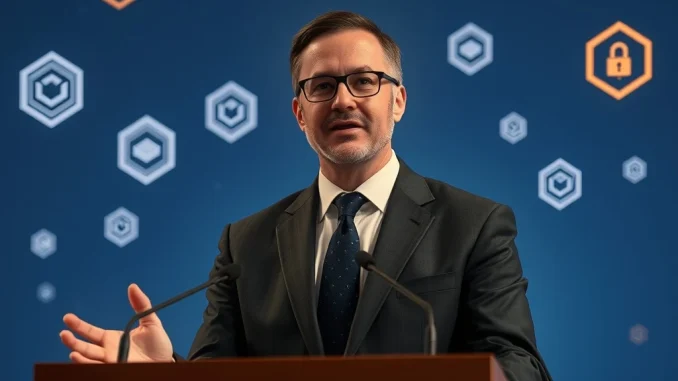
For anyone navigating the evolving landscape of cryptocurrencies and blockchain technology, a recent statement from a key financial figure offers significant reassurance. Federal Reserve Governor Christopher Waller recently declared there is nothing inherently scary about digital asset innovation. This optimistic outlook comes from a prominent voice within the U.S. central banking system. It signals a potentially shifting perception towards a technology often viewed with skepticism by traditional finance. Indeed, Waller’s comments provide a vital counter-narrative to common concerns, inviting a closer look at the transformative power of digital assets.
Understanding Digital Asset Innovation and Its Potential
During his speech at Jackson Hole, Governor Christopher Waller delivered a clear message: the underlying technologies driving digital asset innovation are not to be feared. He specifically highlighted smart contracts, tokenization, and distributed ledgers. These technologies represent fundamental shifts in how value can be transferred, stored, and managed. Smart contracts, for instance, are self-executing agreements. They automatically enforce terms once conditions are met, removing the need for intermediaries. This can streamline countless processes, from legal agreements to supply chain management.
Furthermore, tokenization involves converting rights to an asset into a digital token on a blockchain. This process can apply to real estate, art, or even commodities. Tokenization enhances liquidity and fractional ownership. Distributed ledgers, which underpin blockchain technology, provide secure and transparent record-keeping. They create immutable records across a network. Consequently, these innovations promise greater efficiency, security, and accessibility across various sectors. Waller’s statement encourages a focus on these benefits rather than perceived risks.
Federal Reserve Crypto Stance: A Nuanced Approach Emerges
Governor Waller’s remarks offer insight into the evolving Federal Reserve crypto stance. Historically, central banks have approached cryptocurrencies with caution, citing concerns about financial stability, consumer protection, and illicit finance. However, Waller’s perspective suggests a more nuanced understanding is gaining traction. He emphasized that leveraging innovative technology for new payment services is not a new concept. Instead, it represents a natural progression in financial evolution. This viewpoint differentiates between speculative crypto assets and the foundational technologies themselves.
Indeed, the Federal Reserve continues to explore central bank digital currencies (CBDCs) and their potential implications. Waller’s comments align with a broader recognition that digital transformation is inevitable. His stance suggests the Fed is open to integrating these innovations responsibly. This cautious yet open approach aims to harness the benefits of digital assets while mitigating risks. It contrasts with outright prohibition, signaling a path towards thoughtful integration and regulation.
Christopher Waller Remarks: Paving the Way for Clarity
Christopher Waller remarks at Jackson Hole were particularly significant given his long-standing support for crypto and stablecoins. CoinDesk reported on his consistent advocacy, which adds weight to his recent statements. His perspective is not new, but rather a reaffirmation of a consistent belief in the potential of these technologies. Waller’s clarity helps demystify complex concepts for a broader audience. He aims to reduce the apprehension surrounding digital assets.
His speech underscored that regulators should focus on the underlying activities rather than the technology itself. This means applying existing regulatory frameworks where possible. For example, if a digital asset functions like a security, it should be regulated as such. If it acts like a payment instrument, payment regulations apply. This ‘same activity, same risk, same regulation’ principle promotes regulatory consistency. It provides a clearer path for innovators to develop new products and services within established boundaries.
Smart Contracts Tokenization: Transforming Financial Systems
The concepts of smart contracts tokenization are at the forefront of financial innovation. Smart contracts automate processes, reducing human error and increasing efficiency. They can manage escrow services, execute insurance claims, or even facilitate complex derivatives. This automation builds trust directly into the transaction itself. Tokenization, on the other hand, allows for the fractional ownership of high-value assets. Imagine owning a small percentage of a skyscraper or a rare piece of art. This lowers entry barriers for investors and increases market accessibility.
These technologies promise to revolutionize various sectors:
- Real Estate: Streamlining property transfers and enabling fractional ownership.
- Supply Chains: Improving transparency and traceability of goods.
- Intellectual Property: Managing copyrights and royalties efficiently.
- Capital Markets: Facilitating faster, cheaper, and more transparent trading of securities.
Ultimately, these innovations can create more robust and interconnected financial ecosystems. They offer unprecedented opportunities for efficiency and innovation across global markets.
The Future of Digital Payments: Efficiency and Evolution
Waller’s emphasis on leveraging innovative technology for new payment services points directly to the transformative future of digital payments. Digital assets and distributed ledger technology can significantly improve payment systems. They offer faster transaction speeds, lower costs, and enhanced security compared to traditional methods. Cross-border payments, notorious for their slowness and high fees, stand to benefit immensely. Blockchain-based payment rails can settle transactions in minutes, not days, at a fraction of the current cost.
Furthermore, stablecoins, which Waller has previously supported, play a crucial role in this future. Stablecoins are digital assets pegged to a stable asset like the U.S. dollar. They combine the stability of fiat currency with the efficiency of blockchain technology. They can facilitate rapid, low-cost transfers, both domestically and internationally. Waller’s vision aligns with a push for more modern, resilient, and inclusive payment infrastructures. This progression is essential for a globally connected economy, ensuring seamless financial interactions.
In conclusion, Federal Reserve Governor Christopher Waller’s recent remarks at Jackson Hole provide a refreshing and optimistic perspective on digital asset innovation. His assertion that there is ‘nothing to be afraid of’ regarding smart contracts, tokenization, and distributed ledgers signals a growing acceptance within regulatory circles. Waller’s consistent support for crypto and stablecoins reinforces his forward-thinking stance. Ultimately, his comments encourage a focus on the immense potential these technologies hold for transforming payment services and financial systems. This positive outlook paves the way for constructive dialogue and responsible integration of digital assets into the global economy.
Frequently Asked Questions (FAQs)
Q1: What did Federal Reserve Governor Christopher Waller say about digital assets?
A1: Governor Christopher Waller stated at Jackson Hole that there is “nothing to be afraid of when thinking about smart contracts, tokenization or distributed ledgers.” He emphasized that leveraging innovative technology for new payment services is not a new concept.
Q2: Why is Waller’s view on digital asset innovation significant?
A2: Waller’s view is significant because he is a high-ranking official within the U.S. Federal Reserve. His positive and reassuring stance on digital asset innovation can influence regulatory discussions and public perception, signaling a more open approach from a key financial authority.
Q3: What are smart contracts and tokenization?
A3: Smart contracts are self-executing agreements with the terms directly written into code. They automatically execute when predefined conditions are met. Tokenization is the process of converting rights to an asset (like real estate or art) into a digital token on a blockchain, enabling fractional ownership and increased liquidity.
Q4: How does Waller’s stance align with the broader Federal Reserve crypto stance?
A4: While the Federal Reserve generally maintains a cautious approach to cryptocurrencies, Waller’s stance represents a more progressive view within the institution. He focuses on the potential benefits of the underlying technologies for payment systems, aligning with an exploration of responsible innovation rather than outright rejection.
Q5: How can digital asset innovation impact the future of digital payments?
A5: Digital asset innovation can significantly enhance the future of digital payments by offering faster transaction speeds, lower costs, and improved security. Technologies like stablecoins and distributed ledgers can facilitate more efficient domestic and cross-border payments, making financial interactions more seamless and accessible.
Q6: Has Christopher Waller always supported crypto and stablecoins?
A6: Yes, according to CoinDesk, Governor Christopher Waller has long been a supporter of crypto and stablecoins. His recent remarks at Jackson Hole reaffirm his consistent positive outlook on these digital financial innovations.