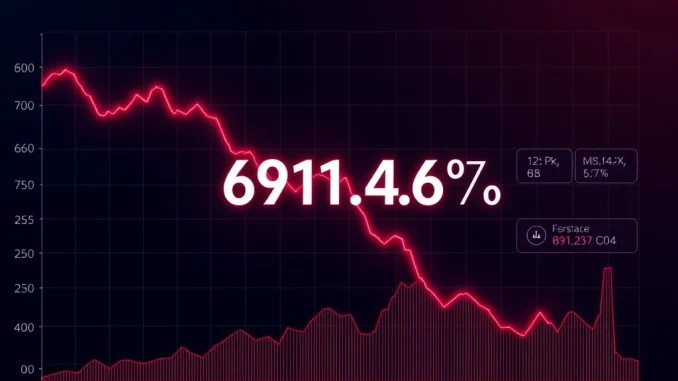
The DF token has experienced a staggering 6912.47% drop in value over the past year following a controversial governance overhaul. This dramatic decline has sent shockwaves through the DeFi community, raising critical questions about decentralized governance models and their impact on token value.
What Caused the DF Token Collapse?
The DF platform’s governance changes, implemented on July 20, 2025, included three major components that triggered market uncertainty:
- Multi-tiered voting system implementation
- New token-weighted governance mechanism
- Delegation of decision-making to validator council
DeFi Governance Challenges Exposed
The DF token drop highlights fundamental tensions in decentralized finance governance:
| Challenge | Impact |
|---|---|
| Delegation model | Potential centralization risks |
| Validator influence | Community concerns about governance capture |
| Token utility | Long-term value proposition questioned |
Market Reactions to DF’s Governance Overhaul
The DeFi market responded with extreme volatility to DF’s changes:
- Major exchanges delisted DF due to liquidity concerns
- Decentralized exchanges saw increased activity
- Institutional investors reduced exposure
Can DF Token Recover From This Crash?
Analysts identify three critical factors for DF’s potential recovery:
- Successful implementation of new governance model
- Regaining community trust
- Improved market liquidity
FAQs About DF Token’s Dramatic Drop
Q: Why did DF token drop 6912.47%?
A: The drop followed a governance overhaul that created market uncertainty about decentralization and token utility.
Q: What changes were made to DF’s governance?
A: The platform implemented a multi-tiered voting system, token-weighted governance, and validator delegation.
Q: Are there security concerns with DF’s smart contracts?
A: Recent audits found no critical flaws but recommended gas optimizations and front-running protections.
Q: Where can DF token still be traded?
A: While some major exchanges delisted DF, it remains available on several decentralized exchanges.