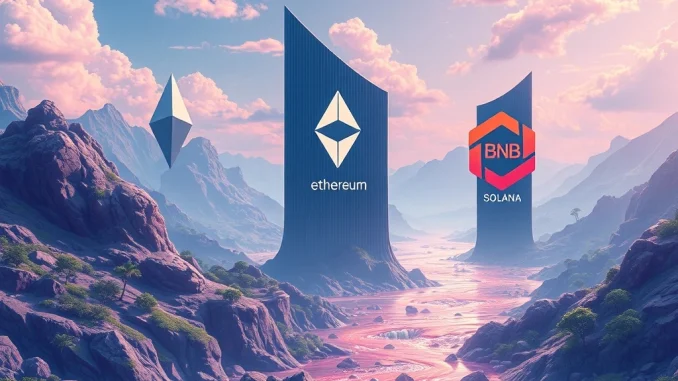
The world of decentralized finance (DeFi) constantly evolves. A recent report by Unfolded reveals a striking truth. Three major players — Ethereum, Solana, and BNB Smart Chain (BSC) — command an astonishing 87% of the monthly DEX trading volume. This significant market share highlights their unparalleled influence within the Layer 1 blockchain ecosystem. Understanding this dominance offers crucial insights for traders and developers alike.
Unpacking the Dominance in DEX Trading Volume
Decentralized exchanges, or DEXs, represent a core component of the DeFi landscape. They enable peer-to-peer cryptocurrency trading without intermediaries. Consequently, their trading volume acts as a vital indicator of network activity and user engagement. Unfolded’s comprehensive analysis, spanning the past year, clearly shows Ethereum, Solana, and BSC collectively capture the vast majority of this activity. This statistic underscores their critical role in shaping the current DeFi market. Furthermore, it suggests a mature, yet concentrated, ecosystem for decentralized trading.
Many factors contribute to this concentrated market share. Established user bases play a crucial role. Robust developer communities also drive innovation. Additionally, strong liquidity pools attract more traders. These elements combine to create powerful network effects. Therefore, these leading Layer 1 blockchains maintain their competitive edge. Their infrastructure supports billions in daily transactions, facilitating seamless crypto exchanges globally. This level of activity cements their status as industry leaders.
Ethereum DEX: The Enduring Giant
Ethereum pioneered smart contract functionality. It remains the bedrock of the DeFi sector. The network hosts the largest number of decentralized applications (dApps) and the deepest liquidity pools. Leading Ethereum DEX platforms like Uniswap and SushiSwap process massive daily volumes. Despite facing challenges, Ethereum continues to attract significant capital and innovation. Its extensive ecosystem and proven security record give it a strong foundation. Moreover, ongoing upgrades, including scalability solutions like rollups, aim to enhance its performance. These efforts ensure its continued relevance and market leadership. Traders often prioritize its security and decentralization. This preference helps maintain its substantial market share.
High transaction fees, commonly known as gas fees, have historically been a concern on Ethereum. Nevertheless, users often accept these costs for the unparalleled security and decentralization offered. The network’s robust infrastructure supports complex financial primitives. This includes lending protocols and yield farming strategies. These features solidify its position. Consequently, many large institutional players and sophisticated DeFi users prefer Ethereum. They value its established reputation and extensive track record. The Dencun upgrade further improved data availability for Layer 2 solutions. This helps reduce transaction costs indirectly. Ultimately, Ethereum’s ecosystem continues to evolve, adapting to market demands.
Solana DEX: The Speed and Scalability Contender
Solana emerged as a formidable challenger in the Layer 1 space. It boasts incredibly high transaction speeds and remarkably low fees. These features make it highly attractive for high-frequency trading. The Solana DEX ecosystem has grown rapidly. Platforms like Raydium and Jupiter offer swift and cost-effective trading experiences. Traders seeking efficiency often migrate to Solana. Its innovative consensus mechanism allows for thousands of transactions per second. This capacity addresses a key pain point found in older blockchains. Therefore, Solana has captured a significant portion of the retail trading volume. Its focus on performance resonates strongly with a new generation of DeFi users. This rapid growth positions Solana as a key innovator.
Solana’s architecture facilitates a seamless user experience. It reduces latency and improves overall responsiveness. This translates into quicker trade executions. Consequently, it appeals to both automated trading bots and individual users. The network has also attracted a diverse range of projects. These include NFTs, gaming, and various DeFi applications. Such broad utility strengthens its appeal. While it has faced some network stability issues, its development team actively works to resolve them. Its commitment to scalability remains a core advantage. Solana continues to innovate, pushing the boundaries of what a blockchain can achieve. This makes it a crucial part of the 87% dominance.
BNB Smart Chain: A Strategic Player in Layer 1 Blockchains
BNB Smart Chain (BSC) offers a compelling alternative. It provides lower transaction costs compared to Ethereum. Its compatibility with the Ethereum Virtual Machine (EVM) makes it easy for developers. Many dApps can migrate or deploy on BSC with minimal effort. PancakeSwap, the leading BNB Smart Chain DEX, has consistently maintained high trading volumes. BSC strategically targets users seeking affordable and fast transactions. Its centralized aspects offer a trade-off for enhanced performance. This approach appeals to a broad demographic of users. Therefore, BSC has carved out a significant niche. It contributes substantially to the overall DEX trading volume. Its accessibility and efficiency are key selling points.
The strategic backing from Binance, one of the world’s largest cryptocurrency exchanges, provides BSC with significant advantages. This includes strong marketing and user onboarding support. Furthermore, its robust infrastructure handles substantial transaction loads. This reliability ensures a smooth trading experience. BSC’s ecosystem supports a wide array of DeFi products. These range from liquidity pools to yield farming opportunities. Its lower barrier to entry attracts new users to DeFi. Consequently, BSC plays a vital role in broadening access to decentralized finance. It effectively serves as a gateway for many entering the crypto space. This strategic positioning solidifies its place among the dominant Layer 1 blockchains.
Factors Driving Layer 1 Blockchains’ Success
Several underlying factors explain the collective success of these three Layer 1 blockchains. Firstly, each possesses a robust and active developer community. This ensures continuous innovation and improvement. Secondly, they all boast significant network effects. More users attract more developers, and more developers attract more users. This virtuous cycle strengthens their ecosystems. Thirdly, deep liquidity across their DEXs provides efficient trading conditions. This minimizes slippage for large trades. Moreover, strong venture capital backing supports many projects on these chains. This funding fuels further growth and adoption. Ultimately, their proven track records build user trust and confidence. These combined elements create a powerful foundation for their sustained dominance.
Furthermore, these blockchains have successfully addressed different market segments. Ethereum caters to high-value, security-conscious transactions. Solana targets speed-sensitive retail traders. BSC offers a cost-effective, accessible entry point. This diversified appeal helps them capture a wide range of users. Their unique value propositions prevent direct, head-on competition in every aspect. Instead, they complement each other, collectively reinforcing the Layer 1 blockchain dominance. The ability to adapt and evolve is also critical. They consistently roll out updates and new features. This keeps their ecosystems dynamic and attractive. Therefore, their ongoing innovation is a key driver of success.
The Competitive Landscape and Future Outlook for DEX Trading Volume
While Ethereum, Solana, and BSC currently dominate, the DeFi landscape is always evolving. Emerging Layer 1s and Layer 2 solutions continuously seek to gain market share. Projects like Arbitrum, Optimism, and Avalanche offer compelling alternatives. They aim to address scalability and cost issues. However, dislodging established giants requires substantial effort. Liquidity and network effects present high barriers to entry. Therefore, significant shifts in DEX trading volume may occur gradually. Innovation in cross-chain interoperability could also reshape the market. This would allow for more seamless asset transfers between different blockchains. Ultimately, competition drives progress. This benefits all users through improved technology and lower costs.
The future of DEX trading volume will likely involve a multi-chain approach. Users may increasingly move assets between networks. They will choose the best chain for specific transactions. This means that while the 87% dominance is strong, it is not immutable. New technologies and user preferences will shape future trends. Decentralized finance continues its rapid expansion. We can expect more sophisticated financial products. We also anticipate greater integration with traditional finance. This dynamic environment ensures continuous evolution. Consequently, staying informed about these developments is essential for all participants. The ongoing innovation guarantees a vibrant and competitive future for DEXs.
The dominance of Ethereum, Solana, and BNB Smart Chain in monthly DEX trading volume underscores their foundational importance. These Layer 1 blockchains provide the infrastructure for the majority of decentralized trading activity. Their unique strengths cater to diverse user needs. As the DeFi ecosystem matures, their influence remains undeniable. However, the competitive landscape guarantees ongoing innovation. Future developments will undoubtedly bring new challengers and solutions. This dynamic environment promises continued growth and evolution for decentralized finance.
Frequently Asked Questions (FAQs)
What is DEX trading volume?
DEX trading volume refers to the total value of cryptocurrency transactions conducted on decentralized exchanges (DEXs) over a specific period. It indicates the level of activity and liquidity on these platforms.
Why do Ethereum, Solana, and BNB Smart Chain dominate DEX trading volume?
These three Layer 1 blockchains dominate due to a combination of factors. These include established ecosystems, deep liquidity, large user bases, strong developer support, and competitive advantages in security, speed, or cost-effectiveness.
What are the key advantages of Ethereum DEX platforms?
Ethereum DEX platforms offer unparalleled decentralization, robust security, and the largest ecosystem of dApps and liquidity. They have a proven track record and are the foundation of many DeFi innovations.
How does Solana contribute to high DEX trading volume?
Solana contributes significantly due to its high transaction speeds and extremely low fees. This makes it ideal for high-frequency trading and appeals to users seeking efficient and cost-effective transactions.
What role does BNB Smart Chain play in the DEX market?
BNB Smart Chain (BSC) provides a cost-effective and EVM-compatible alternative to Ethereum. Its lower fees and strategic backing from Binance attract a broad user base, especially those new to DeFi, through platforms like PancakeSwap.
Will other Layer 1 blockchains challenge this dominance in the future?
The DeFi space is highly dynamic. While Ethereum, Solana, and BSC hold significant market share, emerging Layer 1s and Layer 2 solutions are constantly innovating. They aim to offer competitive advantages, potentially leading to shifts in market share over time.