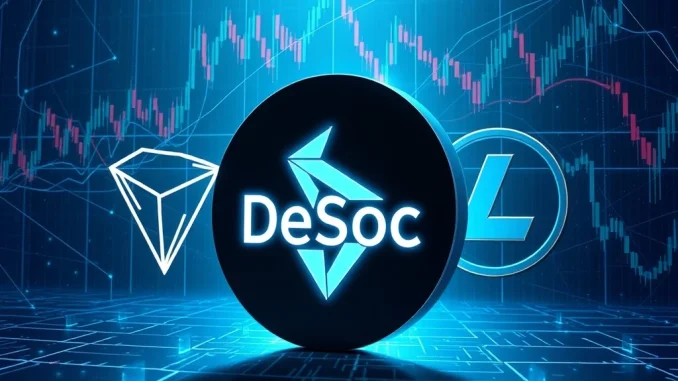
The cryptocurrency world is in constant motion, a vibrant ecosystem where innovation is the ultimate currency. As we look towards 2025, a new contender is rapidly emerging, poised to redefine how we interact with digital assets: DeSoc. With its native $SOCS token, DeSoc isn’t just another blockchain project; it’s a direct challenge to established giants like Tron and Litecoin, promising to reshape the entire crypto landscape by integrating robust governance and monetization features directly into user experience.
DeSoc’s Emergence: Redefining the Crypto Landscape
The digital realm is witnessing a profound shift, moving beyond mere transactional efficiency to prioritize user engagement and community-driven value. DeSoc is at the forefront of this evolution, positioning itself as a potential leader in the 2025 market by embedding monetization and governance features deep within its framework [1]. This approach is fundamentally altering the crypto landscape, moving towards a future where platforms are valued not just for their technical prowess, but for their ability to foster vibrant, self-sustaining ecosystems.
DeSoc’s vision extends to creating a seamless bridge between blockchain and everyday digital interactions. Its focus on social interoperability and creator monetization is a game-changer. Imagine a world where your digital interactions, from simple likes to sharing content, can directly translate into financial incentives. This is the promise DeSoc brings, aligning itself perfectly with the burgeoning creator economy.
The Challenge to Tron and Litecoin: A Shifting Paradigm
For years, platforms like Tron and Litecoin have been mainstays in the cryptocurrency space, lauded for their specific strengths. Tron, for instance, has gained significant traction due to its low transaction fees and high throughput, making it a popular choice for dApp development and content sharing. However, even established players face an evolving market that demands more than just speed and low cost.
- Tron’s Hurdles: While robust, Tron faces limitations in long-term scalability and market valuation. Analysts, like DoshRocket, have suggested a price ceiling of $0.40 for Tron [1], a figure far below its ambitious $1 target. This highlights a struggle to break past certain market perceptions and technical bottlenecks.
- Litecoin’s Resilience, But…: Litecoin, often referred to as ‘digital silver’ to Bitcoin’s ‘digital gold,’ has shown remarkable resilience, recently surpassing $110 amidst market volatility. Yet, its reliance on traditional transaction models leaves it vulnerable. It’s a reliable workhorse, but perhaps not the agile innovator the modern user seeks.
Both Tron and Litecoin underscore a growing divide: the gap between conventional blockchain infrastructure and the escalating demand for user-centric, decentralized solutions. The market is increasingly prioritizing platforms that empower users beyond simple transactions, fostering engagement and direct participation.
DeSoc’s Core Advantage: Governance and Monetization
What truly sets DeSoc apart from its predecessors? It’s the platform’s unwavering focus on the intersection of social interaction, financial incentives, and user empowerment. DeSoc isn’t just about fast transactions; it’s about building an economy around human connection and creativity.
Key differentiators include:
- Embedded Financial Incentives: DeSoc integrates direct monetization into user engagement. This means creators and users can earn through tipping, content exclusivity, and other tokenized rewards.
- Creator Economy Alignment: By providing tools for direct monetization, DeSoc caters directly to the modern creator economy, allowing artists, writers, and content producers to directly benefit from their work without intermediaries.
- Social Media Integration: Its seamless integration with popular social media platforms like TikTok and Instagram amplifies its appeal, creating a natural bridge between Web2 and Web3 experiences.
- Tokenized Governance ($SOCS): The $SOCS token is more than just a medium of exchange. It empowers users to influence platform governance, allowing them to vote on key decisions and shape the future direction of DeSoc. This level of user empowerment is often absent in many legacy systems, including those of Tron and Litecoin.
This holistic approach transforms users from passive consumers into active participants and stakeholders, fostering a sense of ownership and community that traditional platforms struggle to replicate.
The Future of Decentralized Solutions: What 2025 Holds
The potential market impact of DeSoc is substantial. As it gains traction, it could fundamentally redefine user expectations, shifting the focus from mere transactional efficiency to holistic engagement. This shift forces established players to adapt or risk obsolescence. DeSoc’s approach mirrors broader trends within the decentralized finance (DeFi) space and the burgeoning social tokenization movement, suggesting a future where blockchain platforms are judged by their ability to foster community-driven ecosystems rather than just technical performance metrics [1].
For investors and developers, the 2025 timeline represents a critical juncture. The competition between DeSoc and incumbents like Tron and Litecoin will likely hinge on several key factors:
- Scalability: Can DeSoc handle a massive influx of users and transactions without compromising performance?
- Adoption Rates: How quickly can DeSoc onboard new users and developers, especially from mainstream social media?
- Tangible Value Delivery: Does DeSoc consistently provide real, measurable value to its users and creators?
While Tron and Litecoin remain relevant in their niches, their inability to fully integrate social and governance features may hinder their long-term competitiveness against more user-centric decentralized solutions. DeSoc’s emphasis on user empowerment, coupled with its innovative token design, positions it as a compelling model for the next phase of blockchain evolution, signaling a future where community and direct participation are paramount.
In conclusion, the emergence of DeSoc with its unique blend of governance and monetization capabilities presents a formidable challenge to established cryptocurrencies like Tron and Litecoin. As the crypto landscape continues to evolve, platforms that prioritize user-centric design, community empowerment, and integrated financial incentives are likely to lead the charge into 2025 and beyond. DeSoc isn’t just a new coin; it’s a glimpse into the future of decentralized social interaction and value creation.
Frequently Asked Questions (FAQs)
What is DeSoc and how does it challenge existing cryptocurrencies?
DeSoc is a new blockchain platform focused on integrating governance and monetization directly into user engagement, using its $SOCS token. It challenges established cryptocurrencies like Tron and Litecoin by offering advanced social interoperability and creator economy features that go beyond traditional transaction models, aiming to redefine the crypto landscape by prioritizing user empowerment and community-driven ecosystems.
What are the main limitations of Tron and Litecoin in the face of new platforms like DeSoc?
While Tron offers low fees and high throughput, it faces limitations in scalability and market valuation, with analysts predicting a price ceiling below its aspirational targets. Litecoin, despite its resilience, relies on traditional transaction models. Both lack the deep integration of social features, creator monetization, and comprehensive tokenized governance that DeSoc offers, making them vulnerable to disruption in a rapidly evolving market.
How does DeSoc facilitate monetization for creators?
DeSoc embeds financial incentives directly into user engagement through features like tipping, content exclusivity, and other tokenized rewards. This allows creators to directly monetize their content and interactions on the platform, aligning with the modern creator economy and providing a seamless bridge between blockchain and everyday digital interactions.
What role does the $SOCS token play in DeSoc’s ecosystem?
The $SOCS token serves multiple purposes within the DeSoc ecosystem. It facilitates transactions, enabling seamless value exchange. Crucially, it also empowers users with platform governance rights, allowing them to vote on important decisions and influence the future development of the platform, a key feature often missing in legacy crypto systems.
What should investors and developers consider regarding DeSoc and the 2025 crypto market?
For investors and developers, 2025 marks a critical juncture. The success of DeSoc against incumbents like Tron and Litecoin will depend on factors such as scalability, adoption rates, and its ability to deliver tangible value to users. DeSoc’s focus on user empowerment and innovative token design positions it as a potential model for future blockchain evolution, suggesting a shift towards community-driven platforms.