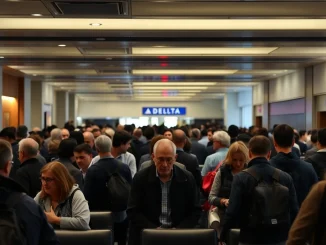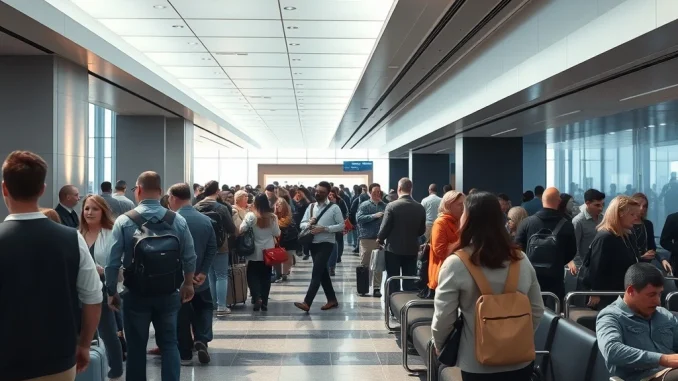
In the evolving landscape of digital assets and exclusive online communities, the value of ‘premium access’ or ‘member-only benefits’ is often a core driver. Whether it’s a token-gated DAO or an NFT granting special perks, the promise of exclusivity resonates deeply. But what happens when that exclusivity becomes diluted? This isn’t just a theoretical question for the blockchain world; it’s a very real challenge facing traditional industries, particularly the travel sector. Take Delta Air Lines, for instance, which is grappling with a surprising side effect of its success: its once-coveted Delta lounges are now experiencing severe overcrowding. This situation offers a fascinating parallel to how perceived value can shift when access becomes too widespread, a lesson that holds relevance for any ecosystem built on exclusivity.
The Allure of Exclusivity: A Fading Promise in Premium Travel?
Post-pandemic, the world has witnessed an unprecedented surge in travel demand. People are eager to explore, reconnect, and indulge in experiences they missed. This ‘revenge travel’ phenomenon, coupled with a broader shift towards premium travel services, has been a boon for airlines like Delta, which reported robust earnings. However, this success has brought an unexpected dilemma: its premium Sky Club lounges, once symbols of distinction and tranquility, are now bursting at the seams. CEO Ed Bastian openly acknowledged this ‘struggle with our own success,’ as the very exclusivity that made these lounges desirable has eroded under the weight of overwhelming demand.
Consider these key factors contributing to the lounge congestion:
- A staggering $300 billion surge in travel demand post-pandemic.
- Increased enrollment in premium credit card programs, like American Express, offering lounge access.
- An overall societal trend where more individuals qualify for ‘elite’ benefits.
Why Are Delta Lounges So Crowded? Understanding the Post-Pandemic Surge
The problem of airport lounge overcrowding isn’t unique to Delta, but it’s particularly acute for the airline due to its strong brand loyalty and extensive premium offerings. Travelers who pay hundreds of dollars annually for elite benefits, expecting a serene escape, now often find themselves waiting in long lines or struggling to find a seat, especially at major hubs like JFK. This paradox—where lounges are simultaneously democratized and diluted—is a direct consequence of their popularity and accessibility.
The core issue stems from the sheer volume of eligible travelers. What was once a perk for a select few has become a standard expectation for a much larger segment of the flying public. While excellent for revenue, this expansion strains infrastructure and dilutes the premium experience for everyone.
Elite Overproduction: Is This the Root Cause of Airport Lounge Overcrowding?
Beyond the immediate travel surge, a deeper societal trend, dubbed ‘elite overproduction‘ by UConn professor Peter Turchin, offers a compelling explanation. This theory posits that societies with abundant resources produce more individuals with elite credentials and wealth than can be accommodated by the available high-status roles or privileges. In the context of travel, the Sky Club, once a bastion of privilege, now exemplifies this issue:
- As premium credit card programs and status tiers expand, access to lounges becomes more widespread.
- The exclusivity that made these lounges desirable diminishes when too many people qualify.
- This leads to a sense of ‘status anxiety’ among the upper middle class, who once saw premium services as a clear reward for achievement.
Analyst Nick Maggiulli of Ritholtz Wealth Management, though not explicitly tying it to Turchin’s theory, observed that the ‘death of the AmEx lounge’ reflects a broader societal shift: ‘There are too many people with lots of money.’ This sentiment perfectly captures the essence of elite overproduction impacting everyday experiences.
Delta’s Battle Plan: Can Sky Club Exclusivity Be Restored?
Delta has not been passive in the face of these challenges. The airline has implemented several measures, albeit with mixed reactions from its loyal customer base, to manage the overwhelming demand and restore some semblance of exclusivity to its Delta lounges:
-
2023 Restrictions:
- Restricted Basic Economy passengers from lounge access.
- Capped lounge visits for certain credit cardholders.
-
Early 2025 Tightening:
- Limited AmEx cardholders to 15 visits annually unless they spent $75,000 or more on their card.
- Introduced a new rule restricting lounge entry to within three hours of departure, reducing extended stays.
-
Infrastructure Investment:
- Investing in larger, redesigned lounges, including 30,000-square-foot Delta One locations in key cities like Seattle and Los Angeles.
- Expanding existing lounges in major hubs like Atlanta to enhance flow and guest capacity.
While these measures aim to preserve the premium experience, peak-hour congestion remains a challenge, particularly in flagship locations. Delta executives project that most crowding will subside by 2026, though operational hiccups and design complexities could delay full resolution. This strategy mirrors that of American Express, which has similarly expanded its Centurion Lounges to accommodate its growing base of high-net-worth cardholders.
What Does This Mean for the Future of Premium Services?
The struggles faced by Delta Air Lines in managing its premium lounges are more than just an operational headache; they are symbolic of a broader societal shift. The concept of exclusivity, once a clear marker of status and reward, is under siege by the democratization of wealth and privilege. As CEO Ed Bastian noted, a $100,000 household income, which defines 40% of U.S. households, is no longer a definitive marker of elite status. Yet, this same cohort increasingly competes for dwindling premium experiences.
Delta’s response—balancing exclusivity with accessibility—reflects the inherent tension within modern capitalism: the promise of reward versus the reality of oversaturation. For consumers, it highlights the need to redefine what ‘premium’ truly means in an increasingly crowded world. For businesses, it underscores the critical importance of sustainable growth strategies that preserve core value propositions, especially when dealing with high-demand services. The airline’s journey offers a valuable case study for any industry navigating the fine line between broad appeal and maintaining a distinct, valuable offering.
Frequently Asked Questions (FAQs)
1. Why are Delta lounges experiencing severe overcrowding?
Delta lounges are overcrowded due to a significant post-pandemic surge in travel demand, a broader shift towards premium travel services, and increased access via premium credit card programs. This has led to more eligible travelers than the lounges were originally designed to accommodate.
2. What is ‘elite overproduction’ and how does it relate to airport lounges?
‘Elite overproduction’ is a theory by Peter Turchin describing how societies produce more individuals with elite credentials and wealth than available high-status roles or privileges. In airport lounges, it means more people qualify for ‘exclusive’ access through credit cards and status tiers, diluting the very exclusivity that made the lounges desirable.
3. What measures has Delta taken to address lounge overcrowding?
Delta has implemented several measures, including restricting Basic Economy passengers, capping lounge visits for credit cardholders (e.g., 15 annual visits for AmEx unless spending $75,000+), limiting entry to within three hours of departure, and investing in larger, redesigned lounges in major hubs.
4. When does Delta expect lounge crowding to subside?
Delta executives project that most lounge crowding issues will subside by 2026, as new and expanded lounge facilities come online and capacity improvements are realized.
5. How does this overcrowding impact premium credit card holders?
Premium credit card holders, such as American Express cardholders, are directly impacted as their previously unrestricted or generous lounge access is now capped or restricted. This means they may encounter long lines, struggle to find seats, or be denied entry during peak times, despite paying high annual fees for these benefits.