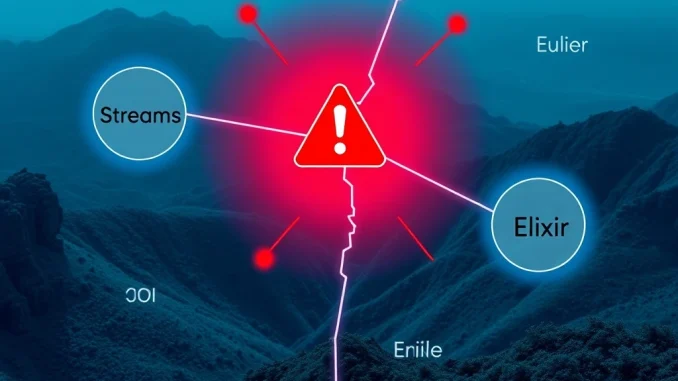
The decentralized finance (DeFi) sector faces a significant challenge. A recent $93 million loss at Stream Finance has ignited concerns about **DeFi contagion risk** across the ecosystem. This incident, linked to assets managed by an external fund manager, highlights inherent vulnerabilities. DeFi research group Yields and More issued a stark warning. Cointelegraph reported on their findings. The group’s analysis indicates potential widespread impact. This situation demands immediate attention from all participants.
Unpacking the Stream Finance Loss and its DeFi Contagion Risk
Stream Finance, a prominent DeFi platform, recently suffered a substantial $93 million loss. This significant financial setback has sent ripples throughout the decentralized finance community. Importantly, this loss stems from assets managed by an external fund manager. Such arrangements introduce a layer of complexity and potential vulnerability. The exact mechanisms of the loss are under intense scrutiny. However, its impact on the broader ecosystem is already a major concern. This event directly contributes to the growing narrative of **DeFi contagion risk**.
DeFi research group Yields and More launched an immediate investigation into the incident. Their findings are alarming. Approximately $284 million in funds connected to Stream Finance are now considered potentially at risk. This figure is more than three times the initial loss. It underscores the interconnected nature of DeFi platforms. One protocol’s misfortune can quickly cascade. Therefore, understanding these connections is vital. The report by Yields and More serves as a critical alert. It highlights the urgent need for robust risk assessments.
The Mechanics of Contagion in DeFi Protocols
Contagion risk in DeFi refers to the potential for financial distress in one protocol to spread to others. This happens due to the highly interconnected nature of the ecosystem. Many **DeFi protocols** rely on shared liquidity pools. They also use collateral from other platforms. A default or significant loss in one area can trigger a chain reaction. For instance, if a protocol holds tokens from another distressed platform as collateral, the value of that collateral might plummet. This could lead to liquidations or solvency issues. Ultimately, this creates a domino effect across the ecosystem. Such systemic risks pose a serious threat to stability.
Furthermore, stablecoins often play a central role in these interconnected systems. A stablecoin’s peg relies on its underlying reserves. If those reserves are tied to vulnerable assets, the stablecoin itself can become unstable. This instability can then affect all protocols that use that particular stablecoin. The Stream Finance situation exemplifies these concerns. It highlights the critical importance of understanding cross-protocol dependencies. Investors and developers must remain vigilant. They need to assess potential exposure points carefully.
Vulnerable DeFi Protocols Identified: A Closer Look
Yields and More specifically identified several **DeFi protocols** as particularly vulnerable to the Stream Finance fallout. These include Euler, Silo, Elixir, and Tribe. Each protocol maintains varying degrees of exposure. This exposure makes them susceptible to the ongoing financial uncertainty. Understanding their specific connections is key to grasping the full scope of the potential contagion.
- Euler: This lending protocol allows users to lend and borrow various crypto assets. Its exposure could stem from direct investments in Stream Finance assets. Alternatively, it could be through shared liquidity or collateral.
- Silo: As another lending protocol, Silo might face similar risks. Its pools could hold tokens linked to Stream Finance. Any depreciation in these assets would directly impact Silo’s solvency.
- Tribe: This protocol often involves governance and stablecoin ecosystems. Its vulnerability might arise from treasury holdings or cross-protocol liquidity provisions.
Elixir and deUSD Stablecoin Security: A Critical Concern
Among the identified protocols, Elixir stands out with a particularly high exposure. Yields and More reported that approximately 65% of the reserve assets for Elixir’s deUSD stablecoin are tied to Stream Finance. This level of concentration is exceptionally high. It presents a significant risk to **stablecoin security**. Stablecoins are designed to maintain a stable value. They typically peg to a fiat currency like the US dollar. Their stability is crucial for the broader DeFi ecosystem. If a stablecoin loses its peg, it can trigger widespread panic. It can also cause massive liquidations.
The deUSD stablecoin’s heavy reliance on Stream Finance assets is a serious concern. Should the remaining Stream Finance funds face further impairment, deUSD’s reserves could be severely affected. This could lead to a de-pegging event. A de-pegging would undermine trust in Elixir. It would also create instability for any protocol using deUSD. Therefore, the implications for **stablecoin security** extend far beyond Elixir itself. It impacts the entire network of applications relying on deUSD for liquidity and value transfer. This situation emphasizes the need for diverse and robust reserve management strategies.
The Broader Impact on Stream Finance and Investor Confidence
The **Stream Finance** loss has immediate consequences for the platform itself. It damages its reputation significantly. This type of incident erodes investor confidence. It makes users question the safety of their funds within DeFi. Trust is a cornerstone of any financial system, especially in decentralized environments. A breach of trust can lead to capital flight. It can also slow innovation. Users may become hesitant to engage with new protocols. This cautious approach, while understandable, can hinder growth.
Moreover, the incident shines a harsh light on the practices of external fund managers within DeFi. While these managers offer specialized expertise, they also introduce third-party risk. Protocols must implement rigorous due diligence processes. They must also establish clear oversight mechanisms. This ensures transparency and accountability. Without these measures, the potential for significant **cryptocurrency losses** remains high. The Stream Finance event serves as a stark reminder. It highlights the importance of robust risk management frameworks across the entire DeFi landscape.
Lessons Learned from Cryptocurrency Losses
The recent **cryptocurrency losses** at Stream Finance offer several critical lessons. Firstly, thorough due diligence is paramount. Protocols must meticulously vet any external entities managing their assets. Secondly, diversification of assets is crucial. Concentrating a large percentage of reserves in a single entity or asset class dramatically increases risk. Thirdly, transparency and regular auditing are essential. Users and other protocols need clear visibility into how funds are managed. This helps in assessing potential risks.
These lessons are not new. However, they gain renewed urgency with each major incident. The DeFi space, while innovative, is still maturing. It requires continuous improvement in security and risk mitigation. Adopting best practices from traditional finance, while adapting them to decentralization, is key. This proactive approach can help prevent future widespread **cryptocurrency losses**. It can also bolster the overall resilience of the DeFi ecosystem. Learning from past mistakes is vital for sustainable growth.
Mitigating Future DeFi Contagion Risk
Addressing **DeFi contagion risk** requires a multi-faceted approach. Protocols must implement more stringent risk assessment models. They need to simulate various stress scenarios. This helps in understanding potential points of failure. Diversifying liquidity sources is also critical. Reducing reliance on a single partner or asset class strengthens resilience. Furthermore, protocols should establish clear emergency protocols. These protocols would outline how to respond to significant losses or de-pegging events.
Enhanced monitoring and early warning systems are also essential. Real-time data analysis can identify unusual activity. It can also flag potential vulnerabilities before they escalate. Community governance plays a vital role in this process. Decentralized autonomous organizations (DAOs) can vote on risk parameters. They can also initiate rapid responses to threats. This collective oversight fosters greater security. Ultimately, a proactive and collaborative effort is necessary. It protects the entire DeFi ecosystem from systemic risks. This approach ensures its long-term viability and growth.
Conclusion
The $93 million loss at Stream Finance serves as a critical wake-up call for the DeFi sector. It underscores the ever-present threat of **DeFi contagion risk**. The detailed analysis by Yields and More highlights the interconnected vulnerabilities. Protocols like Euler, Silo, Elixir, and Tribe face significant exposure. The specific risk to Elixir’s deUSD stablecoin reserves is particularly concerning. This incident reinforces the need for robust security measures. It also demands greater transparency. All participants in the DeFi space must prioritize risk management. This includes developers, fund managers, and individual users. Vigilance and proactive strategies are essential. They will safeguard the integrity and future growth of decentralized finance.
Frequently Asked Questions (FAQs)
Q1: What is DeFi contagion risk?
A1: DeFi contagion risk refers to the potential for a financial problem or failure in one decentralized finance (DeFi) protocol to spread and negatively impact other interconnected protocols, leading to broader systemic instability.
Q2: How did the Stream Finance loss occur?
A2: The Stream Finance loss, amounting to $93 million, was linked to assets managed by an external fund manager. While specific details are still emerging, such incidents often involve mismanagement, security breaches, or poor investment decisions by third-party asset managers.
Q3: Which DeFi protocols are most at risk from the Stream Finance incident?
A3: DeFi research group Yields and More identified Euler, Silo, Elixir, and Tribe as particularly vulnerable. Elixir faces a high risk, with approximately 65% of its deUSD stablecoin reserve assets tied to Stream Finance.
Q4: What is the significance of Elixir’s deUSD stablecoin exposure?
A4: Elixir’s deUSD stablecoin has a significant portion (65%) of its reserves linked to Stream Finance. This high concentration poses a critical risk to the stablecoin’s peg. If the underlying Stream Finance assets face further impairment, deUSD could lose its stable value, impacting all protocols that rely on it.
Q5: What can users do to protect themselves from DeFi risks like contagion?
A5: Users should conduct thorough research (due diligence) on protocols, diversify their investments across different platforms, and stay informed about potential vulnerabilities. It’s also wise to understand how protocols manage their reserves and external dependencies.
Q6: How do external fund managers impact DeFi security?
A6: While external fund managers can bring expertise, they also introduce third-party risk. Their actions, or lack thereof, can directly lead to significant cryptocurrency losses if not properly vetted and continuously overseen by the protocols that employ them. Transparency and accountability are crucial.