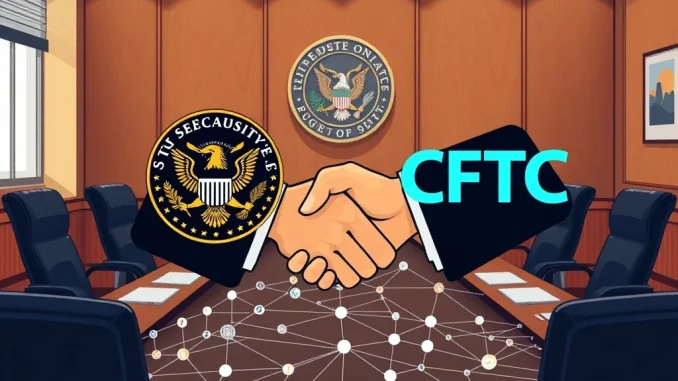
The landscape of digital assets is constantly evolving. For many in the crypto space, clarity from regulators remains a key concern. Recently, a significant development emerged from Washington. It signals a renewed commitment to establishing a clear framework for **cryptocurrency** operations.
Cryptocurrency Regulation Takes Center Stage
During a joint roundtable, SEC Chairman Paul Atkins made a definitive statement. He reaffirmed that **cryptocurrency** holds a top priority for the Securities and Exchange Commission. This joint meeting included the Commodity Futures Trading Commission (CFTC). Their collaboration is essential for the future of digital assets.
Chairman Atkins emphasized the need for close cooperation between the two powerful agencies. He stressed the importance of establishing a robust framework. This framework will ensure smooth collaboration. It will guide regulatory actions across the digital asset market.
SEC and CFTC: Ending the Turf War
Historically, a ‘turf war’ has characterized the relationship between the **SEC** and the **CFTC**. Both agencies have sought jurisdiction over different aspects of digital assets. This created uncertainty for innovators and investors. However, a recent declaration marks a potential turning point.
Acting CFTC Chair Caroline Pham declared that this ‘turf war’ is now over. This statement signifies a significant shift. It suggests a move towards a more unified regulatory approach. This newfound cooperation could streamline processes. Furthermore, it might provide much-needed clarity for the industry. A cohesive strategy benefits all market participants. It promotes stability and growth.
Asset Tokenization: A Key Focus for Regulators
Beyond general **cryptocurrency** oversight, specific areas will receive intense scrutiny. Chairman Atkins highlighted **asset tokenization** as a particular area of focus. Asset tokenization involves representing real-world assets on a blockchain. These assets can include real estate, art, or commodities. Tokenization offers new investment opportunities. It also introduces unique regulatory challenges.
Atkins noted that developing appropriate regulatory safeguards for tokenized assets could take time. He estimated a timeline of one to two years. This period is necessary for careful consideration. It allows for the creation of effective rules. These rules will protect investors. They will also foster responsible innovation. The process requires thorough analysis. It involves understanding the nuances of blockchain technology.
Navigating the Future of Crypto Regulation
The joint efforts of the **SEC** and **CFTC** will shape the future of **crypto regulation**. Their cooperative stance suggests a more predictable environment. This predictability is crucial for businesses. It allows them to plan and innovate with greater confidence. Investors also benefit from clearer rules. They gain better protection and understanding.
The development of a unified framework addresses many industry concerns. It aims to prevent regulatory gaps. It also avoids overlapping jurisdictions. Such an approach can foster a healthier digital asset ecosystem. This will encourage responsible growth. It will also deter illicit activities. Regulatory clarity is paramount for market maturity. It builds trust among all stakeholders.
Implications for the Digital Asset Market
This commitment to collaboration carries significant implications. It suggests a more harmonized approach to classifying digital assets. This could reduce legal ambiguities. It also simplifies compliance efforts for companies. For instance, determining whether a token is a security or a commodity has been a persistent debate. A unified framework might offer definitive guidance. This would be a welcome development for many. It fosters greater market stability.
Moreover, robust regulatory safeguards for **asset tokenization** could unlock new capital markets. By providing clear rules, regulators can encourage mainstream adoption. This includes institutional participation. Enhanced investor protection measures will also increase confidence. This confidence is vital for market expansion. It ensures long-term viability.
What to Expect Next in Cryptocurrency Oversight
The next one to two years will be critical. Regulators will work diligently to craft specific rules. These rules will address the complexities of digital assets. Stakeholders should monitor these developments closely. Engagement with regulatory bodies will also be important. Industry participants can provide valuable insights. Their input helps shape effective policies.
The renewed focus on **cryptocurrency** by both the SEC and CFTC is a positive signal. It indicates a serious commitment to integrating digital assets into the existing financial system. This integration will happen responsibly. It will prioritize market integrity and investor protection. The era of regulatory uncertainty may slowly give way to a structured framework. This framework will support innovation while managing risks.
In conclusion, the statements from Chairman Atkins and Acting Chair Pham mark a pivotal moment. The commitment to inter-agency cooperation is clear. The focus on asset tokenization is also evident. This collaborative spirit aims to build a strong foundation for the future of digital assets. It promises a more stable and regulated environment for **cryptocurrency** markets.
Frequently Asked Questions (FAQs)
1. What is the main takeaway from the recent SEC and CFTC roundtable?
The main takeaway is that **cryptocurrency** regulation is a top priority for both the SEC and CFTC. Both agencies committed to close cooperation. They aim to establish a unified framework for digital assets.
2. Why is cooperation between the SEC and CFTC important for crypto regulation?
Cooperation is crucial to end the historical ‘turf war’ between the agencies. It helps avoid overlapping regulations and regulatory gaps. A unified approach provides clarity and stability for the digital asset market.
3. What is asset tokenization, and why is it a focus for regulators?
**Asset tokenization** involves representing real-world assets on a blockchain. It is a focus because it offers new investment avenues but also presents unique regulatory challenges. Regulators want to develop safeguards to protect investors and ensure market integrity.
4. How long might it take to develop regulatory safeguards for asset tokenization?
SEC Chairman Paul Atkins estimated that developing comprehensive regulatory safeguards for **asset tokenization** could take one to two years. This timeline allows for thorough development and implementation of effective rules.
5. What does ‘ending the turf war’ mean for the cryptocurrency industry?
‘Ending the turf war’ means the **SEC** and **CFTC** are moving towards a more unified and cohesive approach to **crypto regulation**. This could lead to clearer rules, reduced uncertainty, and a more predictable operating environment for businesses and investors in the digital asset space.
6. How will these developments impact investors and businesses in the crypto market?
These developments aim to create a more stable and predictable regulatory environment. This can lead to increased investor confidence and better protection. For businesses, clearer rules mean less ambiguity, fostering responsible innovation and growth within the **cryptocurrency** sector.